How to Effectively Apply Automation to Boost Your Business Efficiency
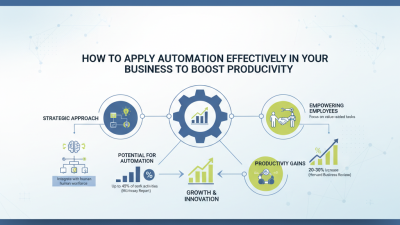
In today’s fast-paced business landscape, effectively applying automation has become a crucial strategy for enhancing operational efficiency. According to a report by McKinsey & Company, businesses that actively implement automation in their processes can increase productivity by up to 40%. This significant potential for improvement underscores the importance of integrating automation into daily operations to remain competitive. As companies increasingly turn to automation solutions, the question arises: how can organizations strategically apply automation to maximize benefits?
Industry expert Dr. Emily Carter, a renowned figure in automation technology, states, "To thrive in the modern economy, businesses must embrace automation not just as a tool, but as a prevalent framework for their operations." Her insights reflect a growing consensus among professionals that automation is no longer an optional enhancement but a necessary evolution for businesses seeking to streamline processes and reduce costs. By understanding the various facets of automation and how to effectively apply it, businesses can unlock new levels of efficiency and innovation, ensuring they are well-positioned for future challenges.

Understanding Business Automation: Key Concepts and Benefits
Business automation refers to the use of technology to execute repetitive tasks or processes within an organization, aiming to enhance efficiency and reduce costs. At its core, automation streamlines operations by minimizing human intervention, allowing businesses to allocate resources more effectively. Key concepts in business automation include workflow automation, robotic process automation (RPA), and intelligent automation, each contributing to smoother operations and quicker decision-making.
The benefits of implementing business automation are manifold. Firstly, it can significantly improve accuracy and consistency by reducing the likelihood of human error. This leads to better data integrity, which is crucial for informed decision-making. Additionally, automation frees up valuable employee time, enabling them to focus on more strategic tasks such as innovation and customer engagement. Ultimately, by embracing automation, businesses not only enhance their operational efficiency but also position themselves for greater agility in a competitive marketplace.
Business Automation Impact on Efficiency
This bar chart illustrates the impact of automation on various efficiency metrics within a hypothetical business context. The data indicates significant time savings, cost reductions, and improvements in both error rates and customer satisfaction as businesses adopt automation strategies.
Identifying Manual Processes Suitable for Automation
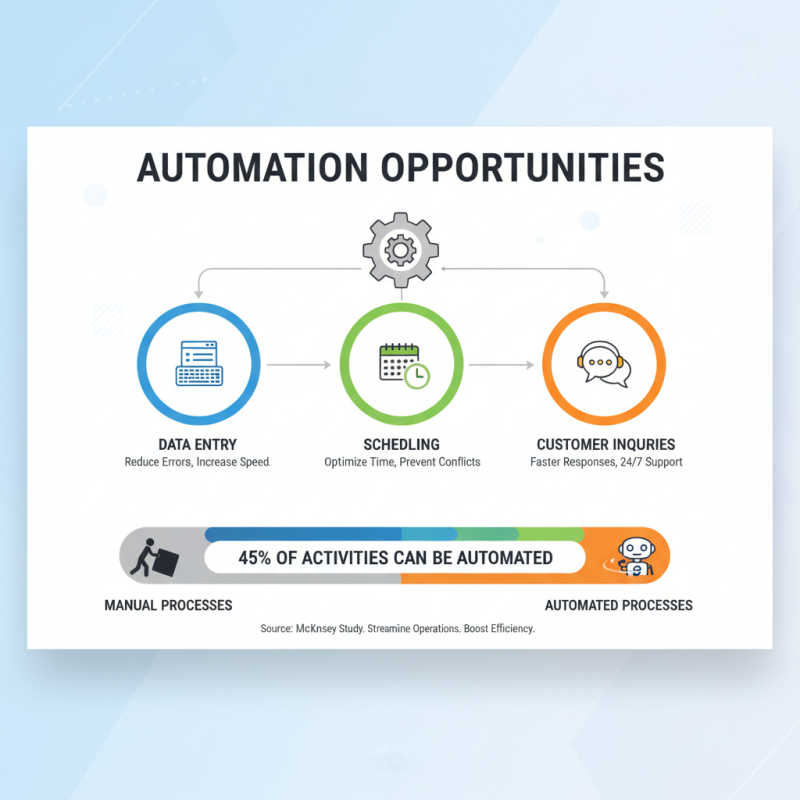
Identifying manual processes that are suitable for automation is a crucial step in improving business efficiency. According to a study by McKinsey, approximately 45% of activities that individuals are paid to perform can be automated using current technology. This indicates a significant opportunity for businesses to streamline operations and reduce costs. Common areas ripe for automation include data entry, scheduling, and customer inquiries. By targeting these processes, businesses can enhance accuracy and free up resources for more value-added activities.
**Tips:** Start by conducting a thorough analysis of your daily operations. Engage employees from different departments to identify repetitive tasks that consume time but add minimal value. Implementing tools like process mapping can also help visualize workflows and highlight areas for automation.
Furthermore, a report from Deloitte reveals that companies implementing automation can increase productivity by up to 30%. This not only leads to enhanced employee satisfaction and reduced burnout, but also allows organizations to scale efficiently. Invest in technologies that align with your specific needs, ensuring they integrate seamlessly without disrupting your current processes.
**Tips:** Test automation solutions on a small scale before full deployment. This approach minimizes risks and provides valuable insights into the effectiveness of the automation you choose to implement.
Choosing the Right Automation Tools for Your Business Needs
Choosing the right automation tools for your business needs is essential for maximizing operational efficiency and optimizing resources. According to a 2021 report by McKinsey, businesses that successfully implement automation can boost productivity by up to 40%. This is largely attributed to the ability of automation tools to streamline repetitive tasks, allowing employees to focus on higher-value activities that require creativity and critical thinking. For instance, automating customer service through chatbots can significantly reduce response times and improve customer satisfaction by ensuring 24/7 support.
When selecting automation tools, it is crucial to assess the specific processes within your organization that can benefit the most from automation. A survey conducted by Gartner revealed that 66% of organizations are currently exploring automation solutions for business process management. Factors such as ease of integration, scalability, and user-friendliness should be prioritized. Furthermore, aligning these tools with your overall business strategy can lead to a more cohesive workflow.
According to a study from the International Data Corporation (IDC), companies that align automation technologies with clear business objectives are two times more likely to experience significant improvements in efficiency and a return on investment. By investing time in selecting the right tools tailored to your unique business needs, you can set the foundation for sustained growth and success.
Implementing Automation: Best Practices and Strategies
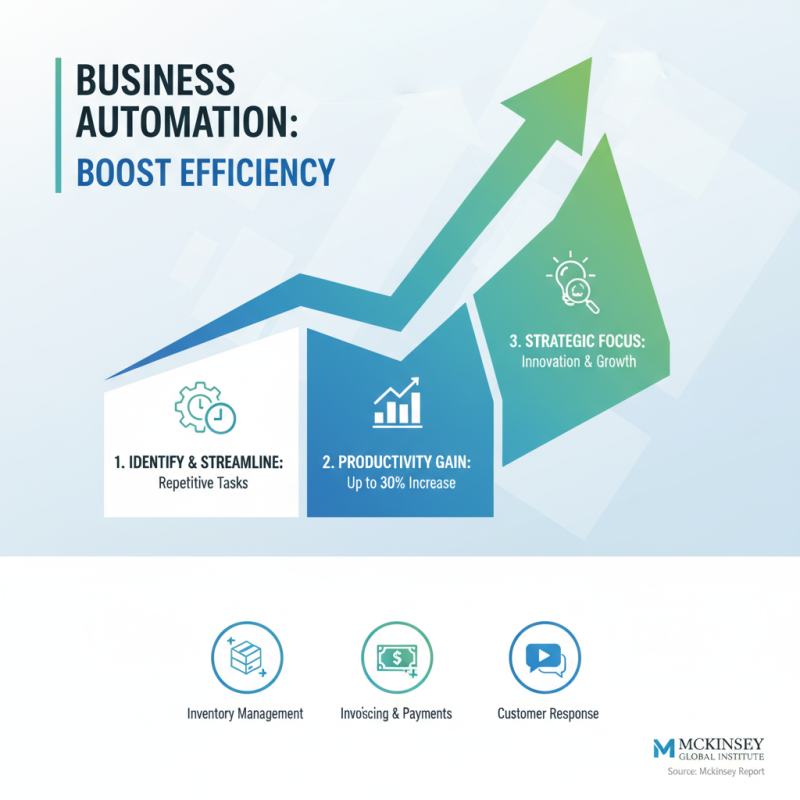
Implementing automation in business processes can significantly enhance efficiency and productivity. According to a report by McKinsey Global Institute, companies that adopt automation can increase productivity by up to 30% in specific tasks. To effectively apply automation, businesses should start by identifying repetitive, time-consuming tasks that can be streamlined. This could include automating inventory management, invoicing, or customer response systems. By focusing on these areas, companies can free up valuable human resources to concentrate on strategic initiatives, allowing for more dynamic growth.
Moreover, successful automation requires a clear strategy and adherence to best practices. Research from the International Data Corporation (IDC) indicates that nearly 45% of work activities could be automated using existing technologies. However, businesses should avoid rushing into automation without a defined strategy. Conducting a thorough analysis of existing workflows and employee input can provide insights into which processes will benefit most from automation. It's also essential to continually evaluate and optimize automated processes to ensure they evolve alongside business needs and technological advancements. By strategically implementing automation, businesses can achieve a substantial competitive edge in today’s fast-paced market.
Measuring the Impact of Automation on Business Efficiency
Measuring the impact of automation on business efficiency involves a comprehensive evaluation of key performance indicators (KPIs) and productivity metrics. A recent report from McKinsey & Company indicates that businesses that effectively leverage automation can see a productivity boost of up to 40%. This improvement stems from the reduction of manual, repetitive tasks, allowing employees to focus on value-added activities. By analyzing workflow efficiencies post-implementation, organizations can identify areas where automation has not only sped up processes but also improved accuracy and reduced error rates.
Furthermore, a study by the International Federation of Robotics found that companies utilizing automation have experienced a decrease in operational costs by an average of 20-25%. This cost reduction often translates into higher profit margins and better allocation of resources. Metrics such as cycle times, labor costs, and output quality should be monitored consistently to paint a clearer picture of the automation impact. As these data points are systematically gathered and analyzed, businesses can make informed decisions on scaling their automation initiatives, ensuring they maximize the benefits derived from technology investments.