How to Apply Automation to Improve Business Efficiency?
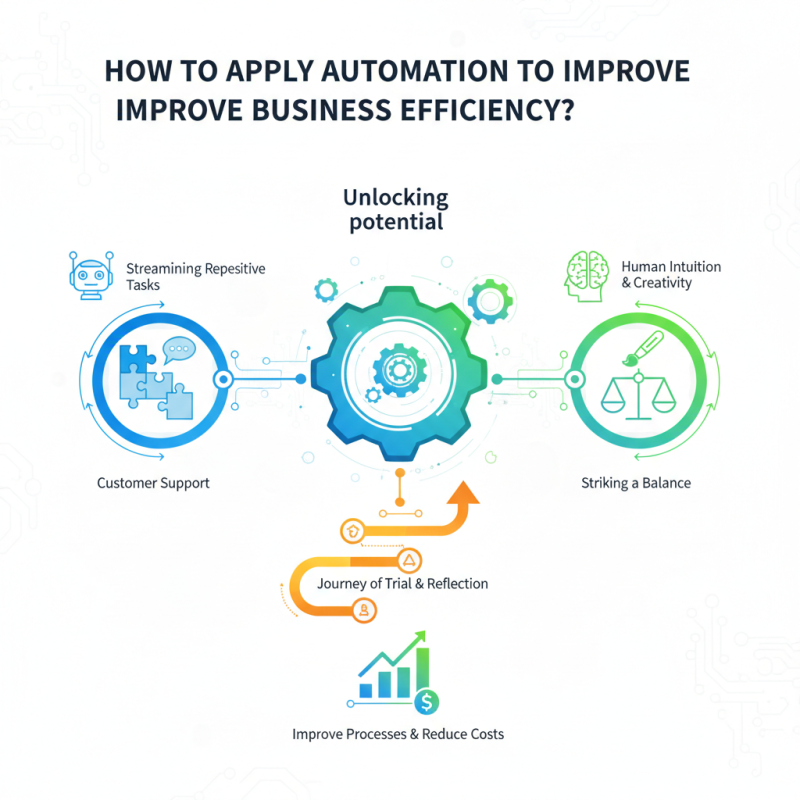
Applying automation in business can transform efficiency. As John Smith, a leading expert in automation, states, "To apply automation is to unlock potential." This principle drives many organizations. They seek ways to improve processes and reduce costs.
Automation can streamline repetitive tasks. For instance, customer support chatbots handle inquiries easily. However, the implementation isn't without challenges. Businesses must consider employee impact and job displacement. Striking a balance is crucial.
Moreover, not every process is suitable for automation. Some tasks require human intuition and creativity. Companies must analyze where to apply automation effectively. It’s a journey of trial and reflection, as the landscape constantly evolves.
Understanding Business Automation and Its Benefits
Business automation is a powerful tool that enhances efficiency. It streamlines processes, reduces errors, and saves time. By automating repetitive tasks, businesses can focus on what truly matters. For example, using software to handle invoicing can free up hours of valuable employee time.
Tips: Identify tasks that consume significant time. Look for manual processes that can be automated. Sometimes, even simple automation can lead to remarkable results.
The benefits of business automation extend beyond time savings. Improved data accuracy is another advantage. When automated systems handle data, the chances of human error diminish. This results in better decision-making. Additionally, customer service can improve. Automated systems can respond to inquiries quickly, which enhances customer experience.
Tips: Start small when applying automation. Test it out on one or two tasks. Monitor results closely to understand the impact. Not every process suits automation perfectly, so reflection is key.
Identifying Areas for Automation in Your Business
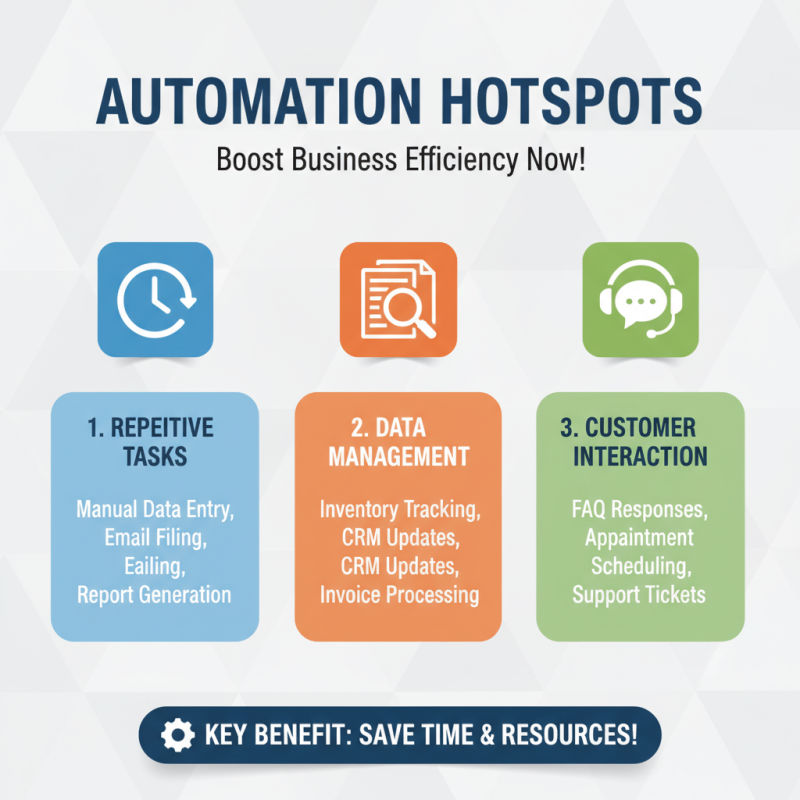
Identifying areas for automation in your business can significantly enhance your efficiency. Begin by analyzing repetitive tasks. Look at processes that involve data entry, inventory management, or customer inquiries. These areas often consume a lot of time and resources.
Tips: Start small. Choose one task to automate. Monitor the results. This will help you understand the impact of automation on your workflow.
Next, consider collaboration tools for team communications. Many businesses struggle with email overload. Implementing a project management system can streamline communication. It reduces confusion and requires less back-and-forth.
Tips: Train your team to use new tools effectively. Initial resistance is common, but persistence pays off. Gather feedback to continuously improve.
Finally, evaluate customer relationship management (CRM). Automating follow-ups or data collection can enhance customer satisfaction. A quicker response time often leads to loyal customers.
Tips: Make sure automation aligns with your audience’s expectations. Too much automation can feel impersonal. Always seek a balance between efficiency and personal touch.
Selecting the Right Automation Tools and Technologies
When exploring automation for business efficiency, it's crucial to select tools that align with specific needs. Consider your workflow and identify repetitive tasks. This helps in narrowing down options. Popular automation tools range from simple task managers to advanced AI solutions. Each has its strengths and weaknesses. Understanding these will guide your decision.
Integration is vital. A tool might excel in one area but fail to work well with existing systems. Test potential tools through trials. This step is often overlooked but essential. Gather feedback from team members. Their insights can reveal what works and what doesn’t. Watch for compatibility issues that could hinder productivity later.
Reflect on your goals. Automation should streamline processes, not complicate them. Stay open to adjusting your approach. Sometimes, a tool might not perform as expected. Reassess its value regularly. Continuous evaluation ensures that the chosen automation tools remain effective as your business evolves. Effective automation is less about the tool itself and more about how well it integrates into your unique environment.
Implementing Automation Strategies for Maximum Impact
Implementing automation strategies can yield significant benefits for businesses. Start by identifying routine tasks that consume valuable time. These tasks often include
data entry,
invoice processing, and
customer support. Automating them can free up resources for more strategic projects. However, merely adopting technology isn’t enough. Teams often resist change.
It's crucial to engage employees early in the process for smoother transitions.
Once you’ve identified opportunities, test your automation solutions in a controlled environment. Gather feedback from users and adjust parameters. Sometimes, technology doesn't fit seamlessly with existing workflows.
Issues may arise that require manual intervention. Embrace the imperfections; they offer learning opportunities. Regularly review the effectiveness of your automation strategies. Metrics such as time saved and employee satisfaction can indicate areas for improvement.
While automation can enhance efficiency, it's not a one-size-fits-all solution. Some processes may require
human judgment that machines can’t replicate. Evaluate the balance between human and automated tasks. Reflect on the outcomes and seek continuous improvement.
The goal is to create a more productive environment while fostering innovation.
Measuring and Analyzing the Effectiveness of Automation Efforts
Measuring the effectiveness of automation is crucial. Companies often struggle to find the right metrics. Traditional KPIs may not capture the full impact of automation. Instead, consider metrics that reflect real-time productivity and employee satisfaction.
Analyzing workflows before and after automation can reveal insights. For example, track the time taken for specific tasks. Then, compare this with post-automation data. This helps in understanding efficiency gains. Employee feedback can also be telling. A feeling of support often leads to better morale.
However, it’s not all straightforward. Sometimes, automation can lead to unforeseen issues. Employees may feel overwhelmed by new tools. This can create resistance rather than efficiency. Regular check-ins and adjustments are vital. Continuous improvement should be the goal.