Why Using Automation Can Revolutionize Your Business Efficiency?
In today’s fast-paced business landscape, efficiency is paramount. Using automation can transform operations by streamlining processes, reducing errors, and saving time. Many businesses struggle with repetitive tasks, which drain resources and hinder productivity. Automation offers a solution, allowing teams to focus on strategic goals rather than mundane operations.
By integrating automated tools, companies gain valuable insights. Detailed analytics can point out inefficiencies and highlight opportunities for improvement. These insights foster a culture of continuous improvement, encouraging teams to adapt and innovate. However, not every automation effort succeeds. Some businesses face challenges in implementation, leading to unforeseen complications.
Ultimately, using automation is not a simple fix. It requires careful planning and execution. Companies must invest in training to ensure successful adoption. Embracing this technology can revolutionize efficiency, but it also demands reflection on existing practices. By assessing needs and potential impacts, businesses can better navigate the journey toward greater efficiency.

Understanding the Concept of Automation in Business Processes
Automation is transforming the way businesses operate today. It streamlines various processes, allowing for faster execution of tasks. Employees can focus on strategic projects rather than repetitive tasks. For example, customer inquiries can be handled through automated chat systems. This reduces wait times and improves customer satisfaction.
The concept of automation extends beyond simple tasks. It integrates various business functions, such as sales, inventory, and customer service. Using automation tools, data can be collected and analyzed quickly. This leads to informed decision-making. However, businesses often underestimate the initial setup time and costs involved. The transition can disrupt workflows, causing temporary confusion among teams.
Not all automation strategies succeed. Some employees may resist change. It's essential to provide training and support during this process. Misunderstandings can arise if people feel threatened by new technologies. Regular feedback loops help in refining automated systems, ensuring they meet business needs. Embracing these challenges can lead to greater efficiency and innovation over time.
Identifying Key Areas Where Automation Can Enhance Efficiency
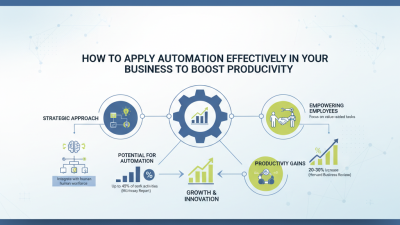
Automation can significantly enhance efficiency in several key areas of a business. Many organizations struggle with repetitive tasks that consume valuable time. According to a recent report by McKinsey, automating routine tasks can boost productivity by up to 40%. This raises a critical question: which areas should businesses target?
One major sector ripe for automation is customer service. Chatbots powered by artificial intelligence can handle basic inquiries instantly. This reduces wait times and improves customer satisfaction. Moreover, a study from Forrester indicates that companies using chatbots can save around $8 billion annually. In the realm of data management, automation tools can streamline data entry and reduce human error. The Harvard Business Review notes that automation can cut data processing costs by 30%, allowing employees to focus on strategic initiatives rather than administrative tasks.
However, not all areas benefit equally from automation. Certain tasks require human creativity and decision-making. Blindly applying automation without assessing the outcomes can lead to inefficiencies. For instance, automating complex processes without adequate oversight may result in errors. Continual reflection and adjustments are necessary to optimize these systems. Companies must strike a balance between automation and the unique touch only humans can provide.
Why Using Automation Can Revolutionize Your Business Efficiency? - Identifying Key Areas Where Automation Can Enhance Efficiency
| Key Area |
Description |
Efficiency Gain (%) |
Implementation Time (Months) |
| Customer Support |
Automated responses can improve customer interaction. |
30% |
3 |
| Inventory Management |
Automation can track inventory levels in real-time. |
25% |
4 |
| Payroll Processing |
Automated payroll systems reduce errors and save time. |
40% |
2 |
| Marketing Campaigns |
Automation tools can personalize user engagement. |
35% |
6 |
| Data Analysis |
Automation can analyze large datasets quickly. |
50% |
5 |
Benefits of Implementing Automation for Cost Reduction and Time Saving
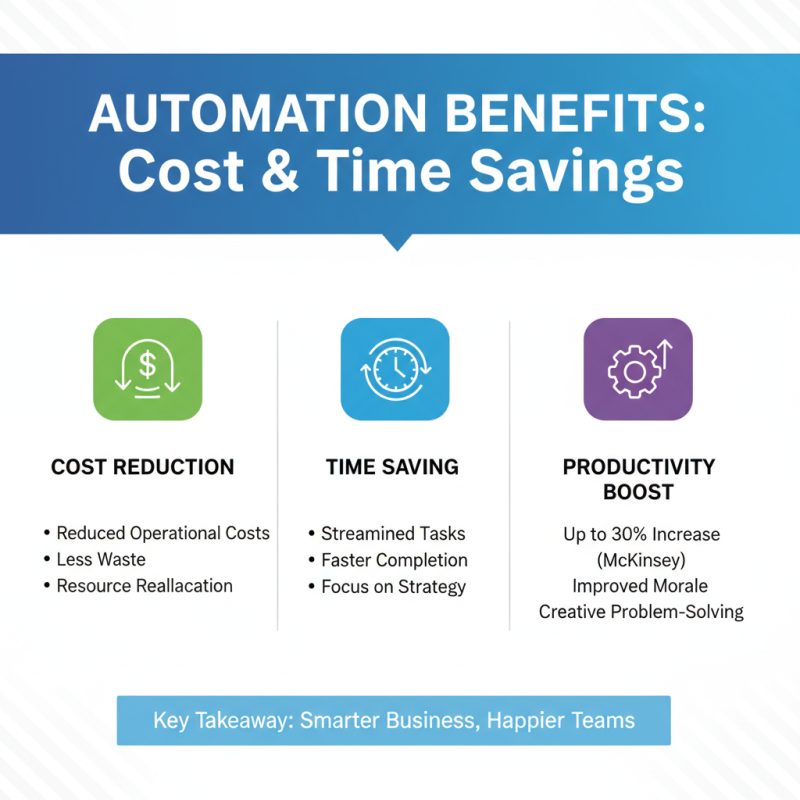
Implementing automation in business can lead to significant cost reductions and time savings. According to a report by McKinsey, automation could increase productivity by up to 30% in various sectors. By streamlining repetitive tasks, businesses can redirect their resources toward more strategic initiatives. This shift not only reduces operational costs but also boosts employee morale. When workers focus on creative problem-solving, the overall productivity can improve.
However, it's essential to approach automation with caution. Not all processes are suitable for automation. Businesses should evaluate which tasks benefit the most. For example, automating data entry can save hours of manual work. But, automating customer service without proper software can lead to frustration. Consider starting with a pilot program to identify potential pitfalls.
**Tips:** Regularly review automation tools. Innovation is fast-paced, and staying updated is crucial. Train staff on new technology to maximize benefits. Communication can also enhance adaptation. A well-informed team will embrace automation with more confidence. Establish metrics to measure the impact to ensure goals are met efficiently.
Overcoming Challenges in Adopting Automation Solutions Effectively
Automation can significantly enhance business efficiency. However, adopting these solutions often comes with challenges. A study by McKinsey revealed that about 60% of jobs could see automation by 2030. Yet, many companies struggle with implementation. The first hurdle is identifying which tasks to automate. Organizations frequently overlook areas that can yield the highest returns.
Employee resistance is another significant barrier. A survey conducted by Harvard Business Review showed that 70% of workers feel threatened by automation. This fear can hinder productivity. Companies must invest in training. Empowering employees with skills for new technologies can ease apprehensions. Building a culture that embraces change is crucial.
Integration issues also arise. Many businesses find their existing systems incompatible with new automation solutions. A report from Deloitte noted that 40% of failed automation projects stem from poor integration. To combat this, proper planning and consultation with experts are vital. Understanding the limitations of current processes can drive more informed decisions. Addressing these challenges head-on will determine the success of automation initiatives.