Skip to content

What Is the Best Injection Molding Equipment in 2026?

In 2026, the best Injection Molding Equipment is not automatically the newest or fastest machine. It is the system that fits the part, material, mold, production volume, and available technical support. A packaging plant running millions of thin-wall parts has different needs from a shop molding small, high-tolerance components. The difference shows up on the factory floor: in cycle times, scrap bins, energy bills, and how reliably parts release from the mold.

John Beaumont, an injection-molding specialist and author on molding systems, offers a useful principle, paraphrased here: “A stable molding process depends on the machine, mold, material, and process working together.” It is a practical reminder, not a verbatim quotation. A buyer comparing all-electric, hydraulic, and hybrid presses should look beyond headline clamp force. Check shot-size range, repeatability, platen dimensions, control functions, energy use, and service access. Ask how the machine handles your actual resin and mold—not only a polished demonstration.

Details matter. A press that fits the budget may still struggle with a long cooling cycle or an awkward mold change. That matters. So does operator training. Even efficient equipment can disappoint when setup knowledge is thin. There is no universal winner, and a simple comparison chart may hide real production constraints. This guide examines the leading equipment types and the criteria that help manufacturers choose well in 2026. It also considers automation and lifecycle costs, while leaving room for an uncomfortable question: is a new machine truly needed, or would process improvements solve more?
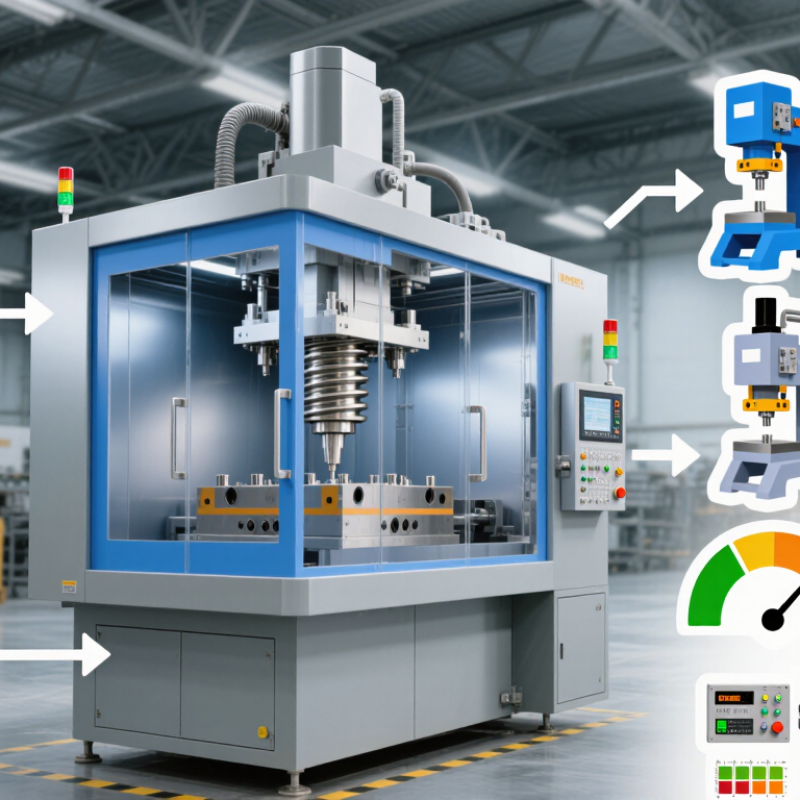
What Is the Best Injection Molding Equipment in 2026?

How Injection Molding Works: The 4 Stages of a Typical Molding Cycle

What Is the Best Injection Molding Equipment in 2026?

How Injection Molding Works: The 4 Stages of a Typical Molding Cycle

Injection molding turns heated plastic into repeatable parts through four linked stages: clamping, injection, cooling, and ejection. The process sounds simple. Small changes in pressure, temperature, or timing can still leave visible defects. Grand View Research estimated the global injection molding market at USD 284.7 billion in 2023, reflecting the process’s broad industrial use.

During clamping, the machine closes the mold and holds it shut against injection pressure. A rotating screw then melts and meters plastic pellets before pushing the measured shot into the cavity. Packing pressure follows, helping compensate for shrinkage as the material cools. Too little pressure can create sink marks; too much may cause flash along the mold split. The details matter.

Cooling often takes the largest share of the cycle, especially for thick-walled parts. Mold channels carry coolant, while heat escapes through the steel. Once the part is firm enough, the mold opens and ejector pins push it free. Circular pin marks can remain. Operators adjust cooling time carefully: early ejection risks warping, but extra cooling reduces output. PlasticsEurope reported 413.8 million tonnes of global plastics production in 2023; that scale makes cycle efficiency important, though each resin and part needs its own settings. There is no universal “best” cycle.

Compare Hydraulic, All-Electric, and Hybrid Machines for Energy and Precision

Choosing the best injection molding equipment in 2026 depends on the part, production schedule, and energy priorities. Hydraulic machines can deliver high clamping force and handle demanding molds. Their energy use depends heavily on pump design, cycle length, and idle time. On a steady, high-volume job, performance may be worthwhile. During long pauses, energy can still be consumed. No free lunch.

All-electric machines use servo drives for injection, clamping, and other movements. This can support repeatable control and reduce energy use, especially when machines spend time waiting between cycles. They are often a strong fit for small, detailed parts with tight dimensional requirements. Still, actual results depend on mold condition, material consistency, and process setup. Precision is not a machine feature alone. It takes careful tuning.

Hybrid machines combine hydraulic clamping or injection with electric motion where control matters. For mixed production, that balance can be practical, though maintenance needs vary by configuration. Compare measured energy per part, cycle time, scrap rate, and shot-to-shot variation using the same mold and material. A brief test can reveal more than a brochure. I would also check energy during idle periods; that detail is easy to overlook.

Match Clamping Force to Part Area: Industrial Presses Range from 50 to 4,000+ Tons

What Is the Best Injection Molding Equipment in 2026?
Match Clamping Force to Part Area: Industrial Presses Range from 50 to 4,000+ Tons

The right press starts with projected area, not part weight. Add every cavity and runner area visible along the clamping direction. The Society of Plastics Engineers’ Injection Molding Handbook describes clamping-force estimation from projected area and cavity pressure. As a planning example, a mold with 100 square inches of projected area needs about 300 tons at an assumed 3 tons per square inch. That is a starting estimate, not a final specification. Thin walls, long flow paths, and material behavior can raise pressure needs. Small details matter.

Industrial presses span roughly 50 to more than 4,000 tons, but bigger is not automatically better. An oversized machine may use more energy and offer poor shot-size fit. A press that is too small can allow flash or make mold protection harder. Check the full projected area, including runners, then compare the estimate with mold dimensions, shot capacity, and tie-bar spacing. I would leave a practical margin, but not choose one by habit alone. That part deserves a second look. ISO 20430:2020 covers safety requirements for injection molding machines; it does not prescribe a universal tonnage formula. Have a molder verify the pressure assumptions against the actual resin, mold, and process window.

Injection Molding Machine Clamping Force

Industrial presses span a wide range of clamping forces, from compact 50-ton machines to presses rated at 4,000 tons and above.

The values show representative machine ratings, not a required press size for a specific part. Select clamping force based on projected part area, material, cavity count, and process requirements.

Select Screw and Shot Capacity for Resin Type, Part Weight, and Production Volume

What Is the Best Injection Molding Equipment in 2026?

Select Screw and Shot Capacity for Resin Type, Part Weight, and Production Volume

Start with the resin, not the machine’s advertised maximum shot. CAMPUS plastics material data lists typical densities near 0.90 g/cm³ for polypropylene, 1.04 for ABS, and 1.20 for polycarbonate. A 100-gram part therefore needs about 111 cm³ of polypropylene or 83 cm³ of polycarbonate, before adding runners. Check the exact grade’s technical data sheet; fillers and formulation changes shift the calculation.

Small details matter.

Size the shot for the complete molding, including runners, and compare it with the machine’s usable capacity. Plastics Technology’s machine-sizing guidance describes a practical operating window of roughly 20–80% of rated shot capacity; confirm the limit for the specific screw and resin. A shot that is too small can make metering less consistent, while an oversized barrel may increase residence time and risk heat-sensitive resin degradation. For glass-filled or viscous materials, review screw design and compression, not diameter alone. Production volume also matters: a multi-cavity tool or larger runner system can push total shot weight up quickly. I’d still verify this with trial data—spreadsheet estimates miss things. Track cushion, cycle time, and part-weight variation during sampling, then adjust the screw and shot size against actual results.

Evaluate 2026 Equipment by Cycle Time, Uptime, and Potential 30–70% Energy Savings

What Is the Best Injection Molding Equipment in 2026?

When comparing injection molding equipment, start with parts per hour, not the fastest cycle shown in a brochure. A six-second cycle means little if the machine needs frequent adjustment or produces inconsistent parts. Track cycle time across real production runs, including material changes, mold setup, and routine pauses. Small details matter: a slow mold opening or a few extra seconds of cooling can add up over a full shift.

Uptime deserves equal attention. Ask how quickly operators can diagnose faults, access service support, and obtain replacement components. Review maintenance records from comparable applications, not just factory test results. A machine that runs steadily through a demanding shift may outperform a faster unit with repeated interruptions. It is not always obvious from a demonstration.

Energy use can also shape the decision. Modern electric and hybrid systems may offer potential energy savings of 30–70% compared with older hydraulic equipment, but actual results vary. Part size, resin, cycle settings, and auxiliary equipment all affect consumption. Request measured kilowatt-hours per kilogram or per finished part, and compare equivalent jobs. One honest caveat: energy estimates can look impressive before real production data arrives.

What Is the Best Injection Molding Equipment in 2026? — Evaluate 2026 Equipment by Cycle Time, Uptime, and Potential 30–70% Energy Savings

A practical comparison of common machine architectures. Energy figures are screening estimates against older fixed-speed hydraulic machines; actual results depend on the part, mold, resin, process settings, and operating profile.

Equipment type Cycle-time considerations Uptime evaluation Potential energy savings Best suited to What to verify before purchase
All-electric injection molding machine Fast, repeatable electric motions can support short, consistent cycles. Actual cycle time is governed mainly by cooling, mold design, part geometry, and resin. Compare documented availability, unplanned downtime, mean time to repair, and local service response. Electric drive type alone does not guarantee higher uptime. About 30–70% potential
Often a strong energy-saving candidate, especially for applications with frequent movement and long operating hours.
Precision parts, clean production, medical or electronics work, and energy-conscious high-volume operations. Run the production mold and resin; record cycle time, kWh/kg, reject rate, and availability during a sustained trial.
Hybrid machine Can combine responsive electric injection with hydraulic clamp or auxiliary functions. Cycle-time advantage depends on the machine configuration and process. Assess the specific drive, hydraulic, and control components, along with service coverage and the supplier’s field-repair history. About 20–50% potential
Savings vary with how much machine motion is electrically driven and how the machine is loaded.
Applications needing a balance of injection control, clamping force, flexibility, and energy reduction. Confirm which axes are electric, the installed power, expected energy use for the actual job, and the maintenance requirements.
Servo-hydraulic machine Variable-speed pump control can improve response compared with fixed-speed hydraulics. Mold cooling and process settings remain major cycle-time drivers. Check pump and hydraulic-system maintenance intervals, parts availability, service response, and measured production availability. About 20–50% potential
Potential savings are generally greatest when replacing a fixed-speed hydraulic machine with substantial idle time.
General-purpose molding, larger clamp-force requirements, and plants upgrading existing hydraulic processes. Compare kWh per kilogram on the same mold, material, and output rate; include startup, idle, and auxiliary energy where practical.
Fixed-speed hydraulic machine Can meet the required cycle for many jobs, but cycle performance depends on hydraulic response, machine condition, mold, and process setup. Evaluate using actual downtime records, maintenance history, and spare-parts availability rather than age or machine type alone. Baseline: 0% reference
Used here as the comparison point; it is not necessarily the least efficient option for every job.
Existing production where the machine is already qualified, capital budgets are limited, or hydraulic force and process capability are priorities. Establish a measured baseline for energy, cycle time, rejects, and downtime before comparing replacement options.

How to compare fairly: Run the same mold, resin, part quality requirements, and production schedule on each candidate machine. Record cycle time, energy consumption in kWh/kg, reject rate, and availability over a representative production period. Availability can be calculated as operating time divided by planned production time; it is not the same as OEE. The energy-saving ranges are indicative estimates, not guaranteed results, and should be validated with measured trials and a site-specific energy assessment.