How to Boost Your Business Efficiency with Production Automation?
In today’s competitive landscape, businesses must leverage production automation to enhance efficiency. According to a recent report by Deloitte, 63% of companies experienced significant productivity gains through automation technologies. This shows that adopting production automation is not just beneficial; it’s essential for survival.
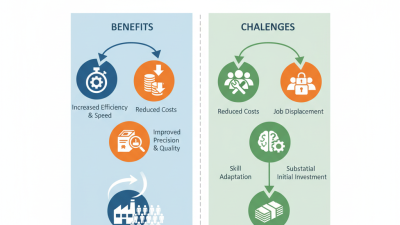
Integrating automation into operational processes can lead to remarkable improvements. For instance, manufacturers using automated systems can increase output while reducing labor costs. However, transitioning to automation comes with challenges, including the need for employee training and potential initial capital investment.
Though the benefits are clear, not every business fully embraces production automation. Many hesitate due to misconceptions about complexity or costs. It's crucial to evaluate these barriers and consider the measurable advantages automation offers. Recognizing both the potential and the hurdles can guide strategic planning for future growth.

Understanding Production Automation and Its Benefits for Businesses
Production automation transforms how businesses operate. It streamlines processes and reduces human error. By automating repetitive tasks, companies can focus on innovation and growth. For instance, manufacturing units using robotic arms can produce items faster than manual methods. This leads to increased output, meeting higher demands more efficiently.
Understanding production automation is crucial for maximizing its benefits. It involves not just machines, but software systems coordinating operations. This requires skilled personnel to manage these technologies. While automation improves efficiency, it also highlights gaps in workforce training. Companies must ensure their employees are ready for these changes. Rigid structures can hinder adaptation. Flexibility is key to fully leverage automation's potential.
Impact of Production Automation on Business Efficiency
This chart illustrates the increase in productivity and efficiency metrics for businesses that have implemented production automation over a five-year period.
Identifying Areas in Your Business Suitable for Automation Implementation
Identifying areas for automation within your business can significantly enhance efficiency. Start by examining repetitive tasks. Tasks such as data entry, inventory management, and customer communication often consume valuable time. Manual work can lead to errors, which affect overall productivity. These tasks are usually prime candidates for automation.
Next, consider areas where decision-making is based on data. Analytics and reporting often involve complex calculations. Automating these processes can free up your team. It allows them to focus on strategic planning rather than data crunching. Furthermore, think about customer interactions. Automation tools can handle inquiries instantly, improving customer satisfaction.
Review your current workflows regularly. Look for bottlenecks that slow down processes. Engaging employees in this review is crucial. They can provide insight into pain points you might overlook. Reflecting on these factors can guide you in selecting the right automation tools. In this way, you build a more efficient business structure.
Selecting the Right Automation Tools and Technologies for Your Needs
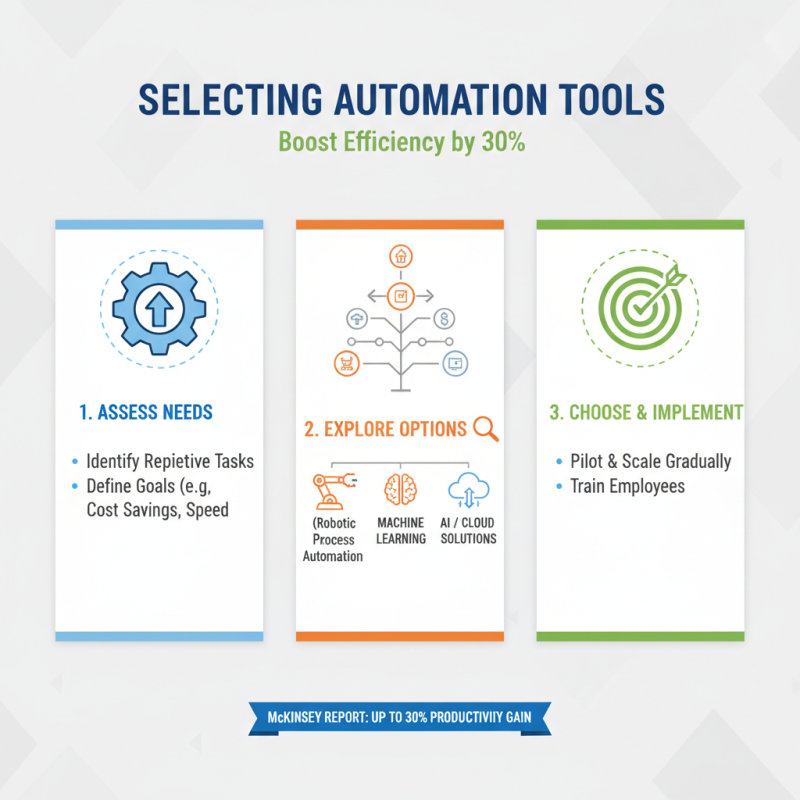
Selecting the right automation tools is crucial for enhancing business efficiency. According to a recent report by McKinsey, organizations that implement automation can boost productivity by up to 30%. However, choosing the right technology can be challenging. Many businesses face a variety of options, from robotic process automation to machine learning solutions. Understanding the specific needs of your operations is key.
Consider the scale and complexity of your processes. Simpler tasks might benefit from basic automation tools, while more complex processes may require advanced technologies. A report from Deloitte indicates that 53% of companies lack a clear strategy for automation. This can lead to wasted resources and underperforming tools. Firms should evaluate their internal capabilities before investing. Recognizing your limits ensures that the tools selected align effectively with your goals.
Moreover, regular feedback loops are essential. Gathering input from team members can reveal inefficiencies and improvement areas. A Harvard Business Review study highlighted that organizations with continuous feedback systems see an increase in employee engagement by 15%. Business owners should be open to refining their automation strategies. This willingness to adapt can dramatically enhance overall productivity.
Best Practices for Integrating Automation into Your Existing Workflow
Integrating automation into your existing workflow can be a game changer for business efficiency. According to a recent report by McKinsey, nearly 50% of all work activities could be automated using current technology. This statistic highlights the potential for significant productivity gains.
Start by identifying repetitive tasks within your processes. Automating these can free up valuable employee time. For instance, automating data entry tasks can reduce errors and streamline operations. Focus on implementing solutions that integrate seamlessly with your current systems. Compatibility is crucial to minimize disruptions.
Tips: Prioritize training for your staff. Automation can change how teams work, and providing proper training increases acceptance. Moreover, consider a phased approach. Implement automation gradually, allowing teams to adapt without feeling overwhelmed. Research suggests that organizations that embrace incremental changes experience smoother transitions.
Don’t overlook the importance of feedback. Collect input from your team as automation tools are integrated. Sometimes, automation can lead to unforeseen challenges. Keeping communication channels open can help identify these issues early. Regularly revisit your automation strategies to ensure they align with your evolving business goals.