How do you choose a manufacturer for a Sheet Metal Top Cover that fits, protects, and lasts? The answer depends on more than the quoted price. A cover may look simple, yet a small bend error can leave a visible gap or interfere with an enclosure. Material thickness, alloy, forming method, cutout locations, and surface finish all affect the finished part.
Start by checking whether the supplier understands your drawings and intended use. Ask how they control dimensions, inspect bends, and manage changes between prototype and production. A capable team should explain its process in practical terms, not just promise “high quality.” Details matter. Request samples or production records when appropriate, and clarify how defects are reported and corrected. For outdoor or washdown environments, discuss corrosion resistance and coating performance; for visible equipment, inspect color consistency and edge quality. Small gaps matter.
Price still matters, but compare quotes with the same material, tolerances, finish, packaging, and delivery assumptions. Ask about tooling charges, minimum order quantities, lead times, and the ability to scale without changing the approved design. Communication is part of manufacturing quality. A delayed question about a drawing can become scrap later. Still, no checklist guarantees a perfect partnership, and a polished sample may not represent every production run. Use a trial order, review the results, and keep the requirements documented. This guide outlines the questions that help identify a reliable Sheet Metal Top Cover manufacturer and avoid costly surprises.
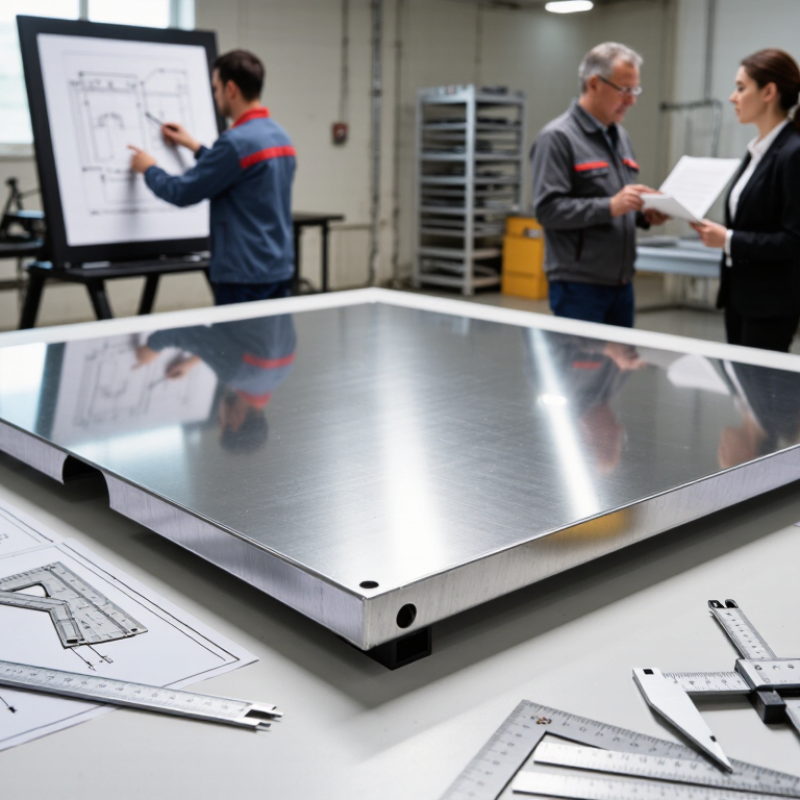
Define the Sheet Metal Top Cover Requirements
Start with the cover’s job, not a preferred material. Record its overall dimensions, mounting points, openings, load, and access needs. A cover protecting a dusty control box may need folded edges and a gasket land; a cosmetic panel may prioritize a smooth visible face. Small gaps matter. Specify the operating temperature, moisture, cleaning agents, and expected vibration. These details influence material, thickness, coating, and fastening choices.
Give the manufacturer a dimensioned drawing with hole locations, bend directions, edge conditions, and critical tolerances. Identify the material grade and finish, or ask the supplier to propose options with trade-offs. State whether sharp edges, weld marks, or visible scratches are acceptable. Include the quantity and inspection criteria. World Steel Association’s World Steel in Figures 2024 reports 1,888.2 million tonnes of crude steel production in 2023. That scale indicates a broad material supply, but it does not tell you which sheet suits your cover. A specification must do that work.
Be precise about fit. If the cover must align with a gasket or neighboring panels, provide the mating dimensions and allowable gap, rather than writing “close fit.” Ask how the supplier controls bend variation and checks hole positions. One detail teams sometimes miss: a coating adds thickness and can affect fastener fit. Review a sample or first article before approving a full run. Some requirements may change after assembly; record those revisions instead of relying on memory.
| Requirement | What to Define | Practical Example or Acceptance Criteria | How to Verify |
|---|---|---|---|
| Function and operating conditions | Explain what the cover protects, how it is installed, and the conditions it will encounter, such as indoor or outdoor use, temperature, moisture, dust, or vibration. | State whether the cover is cosmetic, protective, structural, or part of an enclosure. Define any required ingress-protection rating for the complete assembled enclosure. | Review the application description, assembly drawings, and any applicable enclosure test requirements. |
| Material and thickness | Specify the material grade, sheet thickness, and any material-property or certification requirements. | For example, specify a particular steel or aluminum grade and a nominal thickness such as 1.5 mm. Confirm whether the thickness is measured before or after coating. | Check material certificates or inspection records, and measure sheet thickness with a suitable calibrated gauge. |
| Geometry and dimensions | Provide a dimensioned 2D drawing and, where useful, a 3D model. Define overall size, bends, flanges, radii, cutouts, and formed features. | Identify critical dimensions and datum references. State the dimensional tolerance standard or specify tolerances directly on the drawing; do not assume one tolerance fits every feature. | Inspect samples using calibrated measuring tools, templates, or a coordinate-measuring system where appropriate. |
| Mounting and interfaces | Define hole locations, slot sizes, fastener types, mating surfaces, clearances, and required alignment with the base or chassis. | Show hole-center dimensions from defined datums and identify threaded, countersunk, or clearance holes. Include mating-part information when fit is critical. | Compare the part with the drawing and perform a trial assembly using representative mating components. |
| Edges, burrs, and formed features | Set expectations for deburring, sharp edges, bend quality, corner treatment, and any louvered or embossed features. | Specify that cut edges are free of harmful burrs and sharp projections. Define any required edge radius or limits for visible deformation. | Use visual and tactile inspection, plus dimensional checks for bends and formed features. |
| Surface finish and appearance | Specify the finish process, color, gloss, texture, and which surfaces are cosmetic or concealed. | Identify the required coating type and color reference, if applicable. Set acceptance criteria for visible scratches, dents, coating defects, and color variation. | Inspect under agreed lighting and viewing conditions. Measure coating thickness or color when those properties are specified. |
| Strength and load requirements | Describe expected loads, support points, deflection limits, and any handling or impact conditions. | Provide a defined load case and allowable deflection where the cover supports equipment or must resist pressure, vibration, or handling forces. | Review the design analysis or conduct a documented load or fit test using the agreed method. |
| Joining and assembly | Identify required welds, clinch features, inserts, studs, adhesives, or other joining methods, along with their locations and acceptance criteria. | Show joining locations and dimensions on the drawing. Specify weld appearance or strength requirements only where they are relevant to the part’s function. | Inspect joining features and verify assembly fit; use a defined strength test if required by the application. |
| Production volume and delivery | State prototype quantity, expected production volume, batch size, packaging needs, and delivery schedule. | Distinguish one-time samples from recurring production quantities, since tooling and process choices can vary with volume. | Request a quotation that identifies lead time, minimum order quantity, tooling charges, and packaging assumptions. |
| Quality records and compliance | Define inspection documents, traceability, material declarations, and any market-specific regulatory requirements. | List required records, such as an inspection report or material declaration. Name applicable substance or product regulations only when they apply to the finished product and target market. | Review sample records and confirm that the manufacturer can provide the specified documentation for production lots. |