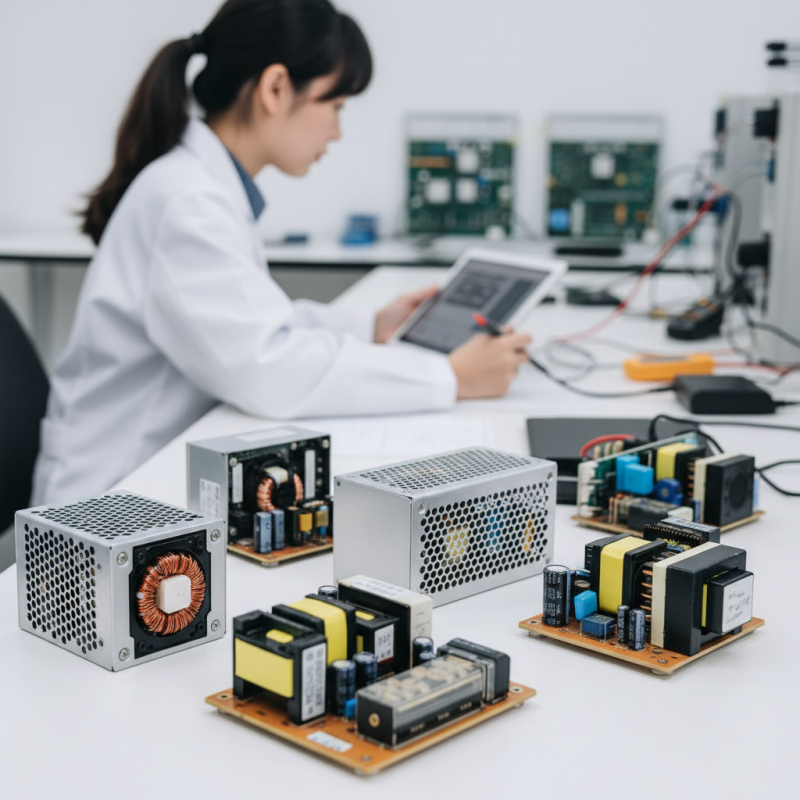
How to Choose the Right Switching Power Supply for Your Needs?
Choosing the right Switching Power Supply can be challenging. Many factors influence your decision. Renowned expert Dr. Emily Chen, a leader in the field, once stated, "The right power supply can make or break the system's performance." Her words resonate deeply in an era focused on efficiency.
When selecting a Switching Power Supply, consider your specific needs. The application requirements dictate voltage, current, and size. Failing to meet these criteria can lead to inefficiency or device failure. Every project is unique, and the right choice impacts reliability.
However, not every supplier offers high-quality solutions. Skipping research can lead to costly mistakes. Many overlook the importance of reviews and specifications, which may seem tedious but are crucial for long-term success. Reflection is necessary; often, we focus too narrowly on price rather than value.
Understanding the Basics of Switching Power Supplies
Switching power supplies are essential for many electronic devices. They convert electrical power from one form to another efficiently. Understanding these basics can help you choose the right supply for your projects.
Consider the voltage and current requirements of your device. Does it need 5V or maybe 12V? Power supplies also differ in their output current. Selecting one that matches your device's needs is crucial. A mismatch can lead to performance issues or even damage.
Tips: Check the efficiency rating. A higher efficiency means less energy wasted. Look for a power supply with protections for over-voltage and over-current. These features can prevent potential hazards.
Design also matters. Compact models save space but may have cooling issues. Don’t overlook heat management. Heat can affect performance and lifespan. It's often a balancing act between size and efficiency.
Tips: Investigate the cooling options available. Fans can help but may introduce noise. Passive cooling relies on heat sinks, which can be quieter. Each option has different pros and cons. Make sure to evaluate them based on your specific needs.
Identifying Your Power Requirements and Load Specifications
When choosing a switching power supply, understanding your power requirements is crucial. Start by assessing the voltage and current needs of your devices. Each device often has specific voltage ratings. Check the specifications carefully. It’s common to overlook small details, but they can make a big difference.
Next, consider the total load specifications. Calculate the combined wattage of all connected devices. It’s easy to underestimate power needs. A good rule is to add a buffer. Aim for about 20% more capacity than your calculations suggest. This extra capacity can prevent overheating and improve longevity.
Analyze efficiency ratings as well. Some power supplies are more efficient under certain loads. If a device runs intermittently, the power supply might work harder during spikes. This can lead to wasted energy, altering overall performance. Reflecting on these aspects bolsters your ability to select the right supply.
Evaluating Efficiency and Thermal Performance Factors
When selecting a switching power supply, efficiency and thermal performance should be top priorities. Efficiency ratings often vary, with most modern designs aiming for at least 85% efficiency. Reports indicate that optimizing the supply can lead to energy savings of about 30% over time. A power supply that operates at higher efficiency generates less heat. This aspect is crucial because excessive heat can adversely affect the lifespan of components.
Thermal performance is measured through thermal resistance and heat dissipation capabilities. Many designs use fans or heat sinks to manage heat. However, in quieter environments, passive cooling solutions can be vital. A study from Energy Star illustrates that poor thermal management can reduce the overall lifespan of the system by as much as 50%. This highlights the need for effective cooling strategies that align with the power supply’s specifications.
It’s essential to factor in the operational environment. If a power supply runs in a confined space, heat buildup can be significant. Many users overlook this when evaluating their needs. Adequate airflow and regular maintenance play a critical role in sustaining efficiency. In the end, balancing these factors can be a trial-and-error process, but it's necessary for optimum performance.
How to Choose the Right Switching Power Supply for Your Needs? - Evaluating Efficiency and Thermal Performance Factors
| Parameter | Description | Example Value |
| Input Voltage Range | The range of input voltages the power supply can accept. | 85V - 265V AC |
| Output Voltage | The voltage supplied to the load. | 12V DC |
| Output Current | The maximum current the output can provide. | 5A |
| Efficiency | The ratio of output power to input power, expressed as a percentage. | 85% |
| Thermal Performance | How well the power supply dissipates heat under load. | Temperature Rise < 40°C |
| Load Regulation | The ability to maintain constant output voltage despite variations in load current. | ±5% |
| Ripple Voltage | The AC voltage component superimposed on the DC output. | < 100mV |
Considering Size, Form Factor, and Mounting Options
Choosing the right switching power supply involves various factors. The size, form factor, and mounting options can significantly affect your decision. When designing a project, always consider the dimensions of the power supply. A compact unit can save space in tight areas. However, ensure it still meets your power requirements.
Tips: Measure the available space before purchasing. This avoids future headaches.
Form factor is another key aspect. Some designs may demand specific shapes or configurations. Take into account the layout of your project. A power supply with a non-standard form factor might complicate installations.
Tips: Sketch your layout. Visualizing the space helps in choosing the right supply.
Mounting options cannot be ignored. Different power supplies offer various mounting styles, such as panel mounts or DIN rail mounts. Choose a style that suits your setup.
Tips: Research assembly options. A poor mounting choice can create accessibility issues later.
Balancing size, form, and mounting will lead to better performance in your designs. A careful approach ensures your project runs smoothly and efficiently.
Analyzing Cost vs. Quality for Long-Term Reliability
When selecting a switching power supply, cost and quality are crucial. Investing in a low-cost option may seem appealing. However, these savings often lead to issues in the long run. A cheaper supply might fail faster, leading to downtime and repair costs. Find a balance that meets your budget and long-term needs.
Quality components play a vital role in reliability. Look for supplies with reputable certifications. These can indicate better performance and safety. Remember, ignoring quality can result in increased energy consumption. This could raise your operating costs significantly over time. It’s not always about the upfront price.
Consider the intended use of the power supply. If it’s for critical applications, prioritizing quality is essential. Sometimes people get caught up in price tags. They forget that a reliable supply can prevent larger problems. Choose wisely, and think about the future. The right balance of cost and quality can provide peace of mind.
Cost vs. Quality Analysis of Switching Power Supplies
This chart compares the cost and reliability scores of switching power supplies across different quality levels. As illustrated, while low-quality power supplies are the least expensive, their reliability is significantly lower than that of medium and high-quality options. This helps in making informed decisions based on your budget and reliability needs.