What is Form Automation and How Can It Transform Your Business Processes
In today's rapidly evolving business landscape, the need for efficiency and agility is more pressing than ever. Form automation has emerged as a pivotal solution, enabling organizations to streamline their processes and significantly reduce manual workload. According to industry expert Dr. Sarah Thompson, “Form automation not only saves time but also enhances accuracy and compliance, allowing businesses to focus on what truly matters—innovation and growth.” This compelling statement underscores the transformative potential of form automation in redefining traditional workflows.
Implementing form automation allows businesses to convert cumbersome paper-based processes into digital formats, effectively minimizing human error and saving valuable resources. By automating repetitive tasks, companies can reallocate their workforce to higher-level operations that drive strategic value. As organizations recognize the importance of agility in a competitive market, form automation stands out as a critical tool for fostering operational excellence.
In essence, form automation is not just about replacing paper with digital forms; it represents a fundamental shift in how businesses operate. By embracing this technology, organizations position themselves to enhance productivity, compliance, and customer satisfaction. As we delve into the various aspects of form automation, we will explore how it can catalyze positive change in business processes and drive long-term success.

Definition and Overview of Form Automation
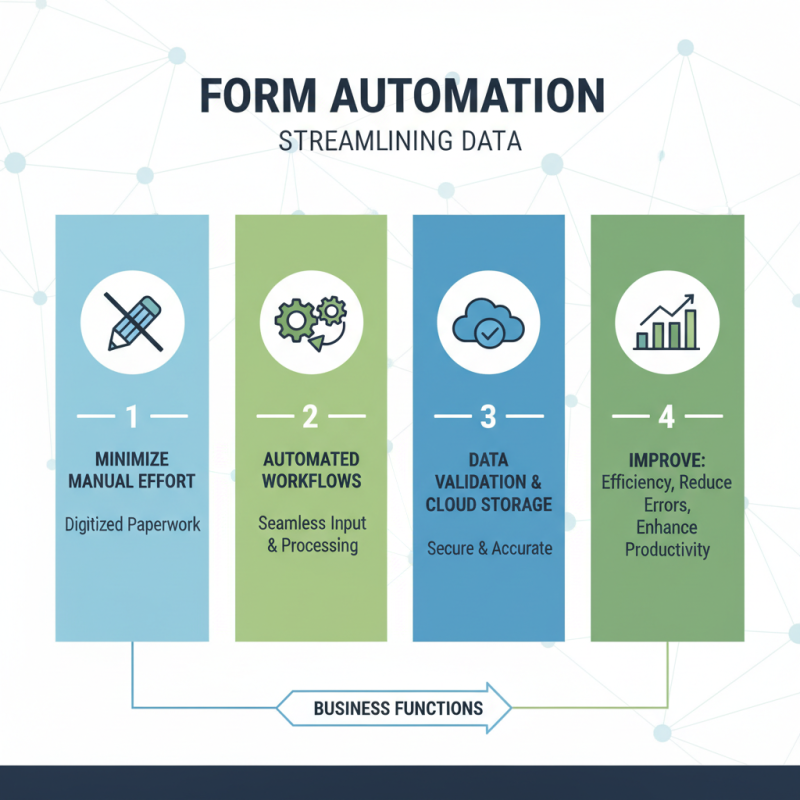
Form automation is a systematic approach that utilizes technology to streamline data collection processes, minimizing the manual effort required in filling out and managing forms. It involves digitizing traditional paperwork and integrating automated workflows that allow for seamless data input, processing, and storage. By using tools like digital forms, automated data validation, and cloud storage solutions, organizations can improve efficiency, reduce errors, and enhance productivity across various business functions.
This transformation enables businesses to quickly gather and analyze data, facilitating informed decision-making. Automated forms can be customized to suit specific organizational needs, allowing for the integration of conditional logic, which ensures that users provide only relevant information. As a result, form automation minimizes redundancy, accelerates processing times, and fosters a more agile response to changing business landscapes. By implementing such solutions, companies can significantly reduce the time spent on manual tasks, redirecting valuable resources towards strategic initiatives that drive growth and innovation.
Key Benefits of Implementing Form Automation
Form automation has emerged as a transformative tool for businesses looking to streamline their operations and improve efficiency. According to a report by McKinsey, organizations that automate their processes can achieve up to a 30% increase in productivity. By minimizing manual tasks and reducing human error, businesses can save both time and resources. The automation of form submission and data collection allows employees to focus on higher-value tasks, leading to enhanced innovation and overall employee satisfaction.
The key benefits of implementing form automation extend beyond productivity gains. A study from Forrester Research highlights that automation can lead to a 70% reduction in processing time for routine tasks. This not only accelerates service delivery times but also improves the customer experience, enabling faster response rates and higher satisfaction levels. Furthermore, businesses can leverage real-time data analytics gathered through automated forms to make informed decisions swiftly, enhancing strategic planning and operational agility. This harnessing of data plays a critical role in achieving competitive advantages in increasingly dynamic markets.
Common Tools and Technologies for Form Automation
Form automation is rapidly becoming an essential component in enhancing business efficiency across various industries. Common tools for form automation include electronic forms, workflow management systems, and data collection platforms. According to a report by Gartner, organizations that implement form automation can reduce processing time by up to 60%, significantly increasing operational efficiency. By leveraging tools such as low-code platforms and cloud-based solutions, businesses can create automated forms that streamline data collection, minimize errors, and improve overall productivity.
Furthermore, integrating form automation technologies can lead to substantial cost savings. A study by Forrester Research found that automating form-based processes can reduce labor costs by approximately 30%. This is largely attributed to the elimination of manual data entry and the associated errors that can slow down processes. As more companies embrace digital transformation, adopting form automation tools will become crucial in staying competitive in a fast-paced market. By facilitating real-time data access and enhancing collaboration, these technologies empower organizations to make informed decisions quickly and effectively.
Form Automation Impact on Business Processes
This chart illustrates the significant improvement in process efficiency before and after implementing form automation in business processes.
How Form Automation Enhances Business Processes
Form automation is increasingly recognized as a powerful tool that can significantly enhance business processes by streamlining data collection and management. Reports indicate that businesses that implement form automation can reduce manual data entry errors by up to 50%, while also cutting processing time by nearly 30%. This efficiency not only saves valuable employee time but also leads to improved data accuracy, enabling organizations to make quicker and better-informed decisions.
Moreover, automated forms facilitate seamless integration with various software systems, allowing for real-time data updates across departments. A study by the Document Automation Network found that companies utilizing form automation see an average increase in overall productivity by approximately 20%. As forms are digitized, companies can also foster better collaboration, as employees can access and share data effortlessly, moving projects along faster than ever before.
Tips for successful form automation include focusing on user-friendly design to ensure high completion rates and integrating analytics tools to track form performance. Regularly reviewing and optimizing your automated forms can help identify bottlenecks and areas for improvement, ensuring that the automation process continually drives efficiency and effectiveness in your business operations. Embracing form automation can not only transform workflows but also enhance customer satisfaction by providing faster, more reliable services.
Case Studies: Successful Implementation of Form Automation
Case studies in the realm of form automation reveal significant transformations across various industries. A report by McKinsey states that automation can reduce process costs by up to 30%, allowing companies to redirect their resources towards innovation and growth. One notable example is a leading healthcare provider that implemented a form automation solution, resulting in a 50% reduction in patient intake times. By digitizing patient information and streamlining data collection, the organization not only enhanced the patient experience but also improved data accuracy and compliance with healthcare regulations.
Another compelling case comes from the financial services sector, where a prominent bank adopted form automation to manage loan applications. This transition led to a 40% increase in processing speed, allowing the institution to respond to clients more quickly and improve customer satisfaction rates. Industry reports suggest that companies leveraging automated forms can experience a 70% boost in employee productivity, as staff are freed from repetitive data entry tasks to focus on more strategic activities. The successful implementation of form automation demonstrates its potential to redefine operational efficiency and drive substantial business outcomes across diverse sectors.