How to Leverage New Technology in Automation for Procurement?
In today's fast-paced business environment, leveraging new technology in automation has become crucial for enhancing procurement processes. Companies are increasingly adopting innovative tools to streamline operations. However, integrating these technologies is not without its challenges.
Many organizations struggle with the implementation of new systems. Employees may resist change or lack the necessary skills. Moreover, it is essential to align new technology with existing workflows. Without careful planning, the benefits of automation can be lost.
On the other hand, successful adoption of new technology in automation can lead to significant improvements. Enhanced data analysis and faster decision-making are just a few advantages. By focusing on training and communication, businesses can harness automation effectively. Embracing the right technology can transform procurement into a strategic advantage.
Understanding the Role of Automation in Modern Procurement Processes
In today's fast-paced business environment, automation is becoming essential in procurement. A report from Deloitte indicates that 79% of procurement professionals believe automation can improve operational efficiency. This transformative technology streamlines processes, reduces manual errors, and enhances supplier management.
However, many organizations face challenges when implementing automation. Often, they lack sufficient training for staff or neglect to integrate new tools effectively. Addressing these issues is crucial for success. It's also important to evaluate the technology continuously. Tools that do not align with procurement goals could waste resources.
Tips: Consider starting with pilot projects. Focusing on a small area can help identify strengths and weaknesses. Regular feedback sessions can ensure the team remains engaged. Additionally, invest in training programs for users. Equipped team members will drive the adoption of automation.
The role of automation goes beyond just speed. It fosters analytical capabilities to better understand spending patterns and supplier performance. However, companies must avoid over-reliance on technology. Human oversight remains vital to navigate complex supplier relationships and strategic planning. Automation should complement, not replace, human expertise.
Key Technologies Revolutionizing Procurement Automation Today
In today's fast-paced business environment, procurement is evolving rapidly through technology. Key advancements include artificial intelligence (AI), machine learning, and blockchain. These technologies streamline processes, enhance transparency, and improve collaboration. AI analyzes data efficiently, identifying potential savings and supplier risks. Machine learning predicts market trends, helping procurement professionals make informed decisions involving resource allocation.
Automation is not without challenges. Implementing new technologies demands significant investment and training. Organizations may face resistance to change from staff. It requires a cultural shift towards embracing these tools. Additionally, reliance on technology raises concerns regarding data security and privacy. Protecting sensitive information is crucial as procurement strategies become more digitized.
Beyond efficiency, technology can improve supplier relationships. Transparent processes foster trust and open communication. However, automation may lead to a lack of personal touch. Balancing tech-driven efficiency with human interaction is essential. Continuous reflection and adaptation to these new strategies are necessary for procurement professionals.
How to Leverage New Technology in Automation for Procurement? - Key Technologies Revolutionizing Procurement Automation Today
| Technology |
Description |
Benefits |
Key Features |
| Artificial Intelligence (AI) |
Utilizes machine learning algorithms to analyze procurement data and predict purchasing trends. |
Reduces costs, enhances decision-making, and improves supplier relationships. |
Predictive analytics, supplier risk assessment, automated ordering. |
| Robotic Process Automation (RPA) |
Automates routine procurement tasks like order processing and supplier onboarding. |
Increases efficiency, reduces errors, and frees up personnel for strategic tasks. |
Task automation, integration with existing systems, compliance tracking. |
| Blockchain |
Ensures transparency and security in procurement transactions through decentralized ledger technology. |
Enhances trust, reduces fraud risk, and improves traceability of products. |
Smart contracts, tamper-proof records, real-time tracking. |
| Cloud Computing |
Facilitates procurement data management and system accessibility from anywhere. |
Improves collaboration, lowers infrastructure costs, and enhances scalability. |
Remote access, data storage, integration with other cloud services. |
| Data Analytics |
Analyzes procurement data to derive insights and inform strategic decisions. |
Informs sourcing strategies, optimizes spend analysis, and identifies supplier performance. |
Real-time reporting, dashboard visualization, trend analysis. |
Benefits of Integrating AI and Machine Learning in Procurement Automation
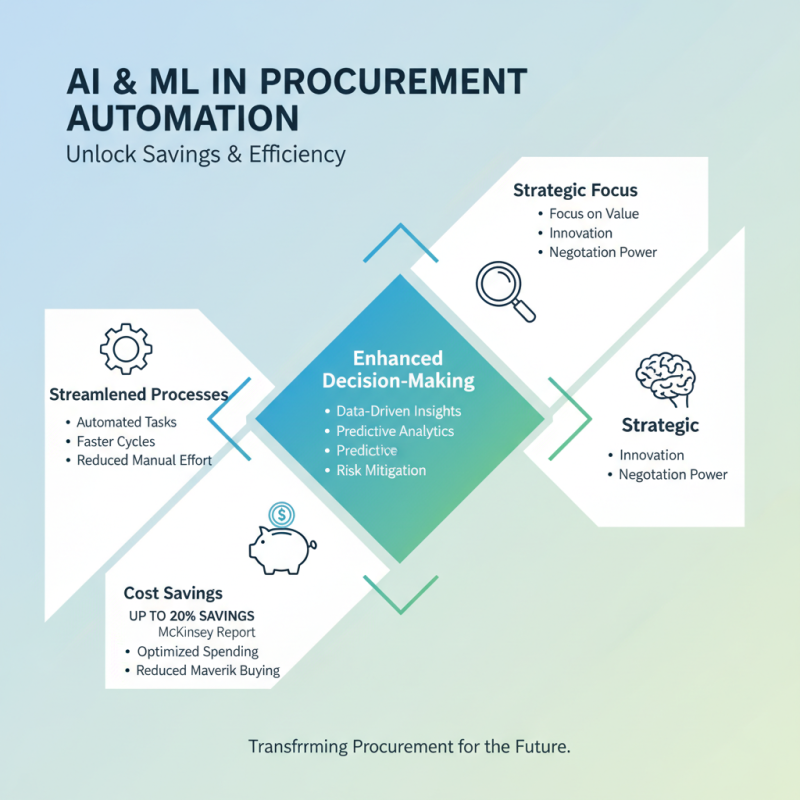
Integrating AI and machine learning into procurement automation offers significant advantages for organizations. According to a report by McKinsey, businesses that adopt AI in procurement can achieve up to 20% savings on procurement costs. These technologies streamline data analysis and enhance decision-making, leading to more efficient procurement processes. Automating repetitive tasks allows procurement professionals to focus on strategic initiatives.
Utilizing AI can also improve supplier relationship management. A study by Deloitte indicates that 58% of procurement leaders believe AI enhances communication with suppliers. Algorithms analyze supplier data, predict trends, and identify risks. This proactive approach fosters collaboration and ensures better quality and timely deliveries. However, organizations must still address data security and integration challenges.
Despite the benefits, not every company reaps the rewards of automation. Some face difficulties in adopting new technologies. A report from Gartner reveals that 30% of organizations struggle with technology implementation in procurement. This highlights the importance of continuous training and adaptability among employees to leverage these innovations effectively.
Analyzing Industry Data on Cost Savings from Automated Procurement Solutions
The procurement industry is undergoing a significant transformation with automation. Recent data shows that companies implementing automated procurement solutions can achieve substantial cost savings. For instance, organizations report reductions of up to 30% in overall procurement expenses. These savings arise from improved efficiency and reduced human errors.
In the analysis of industry trends, automated systems have proven effective in streamlining processes. Many firms now utilize technology to manage purchase orders and vendor relationships more effectively. Despite the clear advantages, some businesses struggle to fully embrace automation. Resistance often stems from concerns about cybersecurity and the reliability of automated systems. Addressing these issues is crucial for maximizing benefits.
Not all organizations see immediate returns on investment. Some report that integration costs can be high. Moreover, training staff to use new technologies may take time. As companies weigh these challenges, they must also consider the long-term advantages of automation. The potential for enhanced procurement efficiency and savings presents a compelling case for innovation in this sector.
Best Practices for Implementing Automation Technologies in Procurement Operations
In the evolving landscape of procurement, automation technologies have become critical. According to a recent Deloitte report, 79% of procurement leaders believe automation will significantly enhance their operations. However, the implementation of these technologies requires a thoughtful approach.
Identifying the right processes for automation is essential. Focus on repetitive tasks like data entry and invoice processing. These areas often consume significant time. The same Deloitte report indicates that automating these processes can reduce operational costs by up to 30%. A phased implementation strategy can also help address potential disruptions.
Start small, gauge impact, and adjust accordingly. Training and change management are vital components. Employees may resist new technologies. Create an environment that promotes learning and adaptability.
A McKinsey survey finds that organizations that prioritize training see a 50% higher success rate in automation projects. Reflect on your team’s readiness and actively engage them in the transition. This participation fosters ownership and mitigates fears about job security.