How to Leverage New Technology in Automation for Global Sourcing?
In today's fast-paced business environment, leveraging new technology in automation holds significant promise for global sourcing. Reports indicate that 67% of companies are investing in automation technologies to streamline their sourcing processes. This shift not only enhances efficiency but also minimizes errors, reducing costs by up to 30%. However, challenges in adopting new automation tools remain. Businesses often underestimate the learning curve associated with implementing these technologies.
Global sourcing must address these hurdles head-on. A McKinsey study revealed that organizations effectively using automation could improve their sourcing agility by 50%. Yet, many enterprises find themselves grappling with the integration of automation into existing frameworks. This gap highlights the importance of thorough planning and training. As companies become more reliant on automation, they must also be cautious of over-automation. Striking the right balance between human oversight and automated processes is crucial.
The potential of new technology in automation is evident. However, understanding its limitations is equally vital. Companies should assess their unique needs. A careful approach could lead to greater innovation in global sourcing strategies, transforming challenges into opportunities.

Understanding the Impact of Technology on Global Sourcing Automation
The rapid evolution of technology profoundly affects global sourcing automation. Companies are now using AI and machine learning to enhance their sourcing strategies. These tools analyze vast data sets quickly, identifying potential suppliers based on specific criteria. This reduces the time spent on traditional sourcing methods.
However, with the benefits come challenges. Not all stakeholders fully understand how technology integrates into their workflows. Miscommunication can lead to resistance against adopting new tools. Furthermore, companies must consider data privacy when utilizing technology for sourcing. Balancing innovation with ethical practices is essential for long-term success.
Adapting to new technology requires ongoing training and flexibility. Teams must be willing to embrace change and learn continuously. The pressure to stay competitive can lead to rushed decisions that may not align with the company’s values. Reflecting on past implementations can help identify areas for improvement and guide future strategies.
How to Leverage New Technology in Automation for Global Sourcing? - Understanding the Impact of Technology on Global Sourcing Automation
| Technology |
Impact on Automation |
Global Sourcing Benefits |
Challenges |
| Artificial Intelligence |
Enhances decision-making & demand forecasting |
Increased efficiency and cost savings |
Data privacy concerns |
| Blockchain |
Improves transparency and traceability |
Reduces fraud and increases trust |
Scalability issues |
| Robotic Process Automation |
Automates repetitive tasks and processes |
Frees up human resources for complex tasks |
Integration with existing systems |
| Cloud Computing |
Facilitates remote access and collaboration |
Increases scalability and flexibility |
Security vulnerabilities |
| Internet of Things |
Real-time data collection and analysis |
Enhances inventory management |
High initial investment |
Identifying Key Technologies Transforming Sourcing Processes
The sourcing landscape is rapidly changing due to emerging technologies. Key technologies reshaping sourcing processes include artificial intelligence (AI), blockchain, and advanced analytics. According to a report from McKinsey, AI can reduce procurement costs by 10-20%. This shows a significant opportunity for businesses to optimize their sourcing strategies.
AI streamlines supplier selection and negotiation. It analyzes vast amounts of data, providing actionable insights. However, the implementation of AI isn't without challenges. Companies must ensure their data is clean and accessible to reap the benefits. Integrating AI tools typically requires a cultural shift, and many businesses struggle with this aspect.
Blockchain technology introduces transparency and security in the supply chain. It allows for better tracking of goods and can foster trust with suppliers. However, the adoption rate is still low, with Gartner estimating only 10% of companies using it effectively. Firms must consider the complexities of integrating blockchain into existing systems, along with ongoing maintenance concerns. The potential for transformation is immense, yet the journey is fraught with hurdles.
Integrating Automation Tools for Enhanced Supply Chain Efficiency
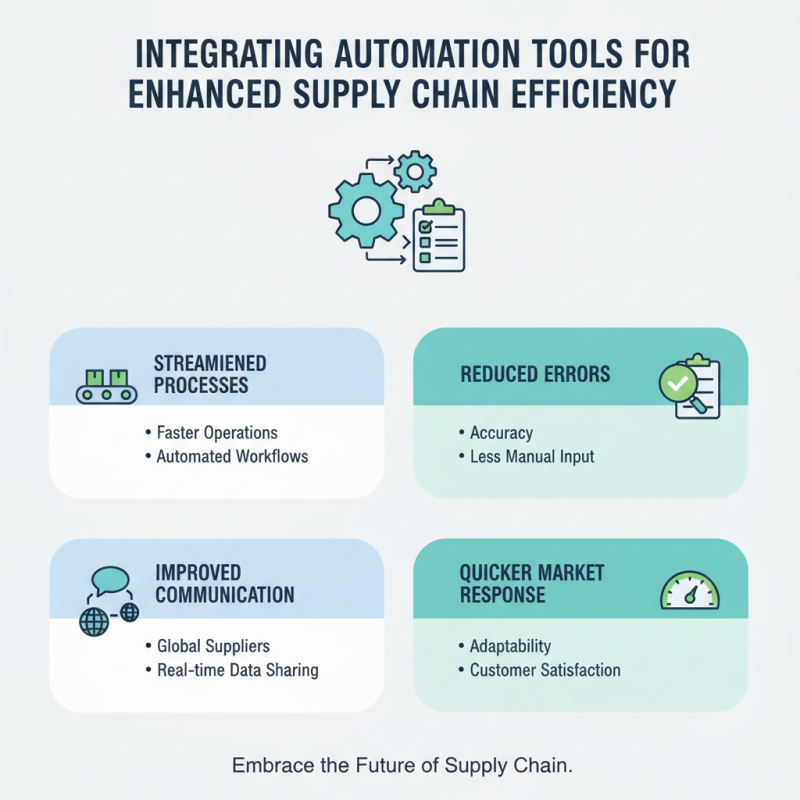
In today's fast-paced world, integrating automation tools into your supply chain can significantly enhance efficiency. With the rise of emerging technologies, many organizations are shifting towards automated solutions. These tools can streamline processes, reduce errors, and improve communication among global suppliers. Companies that embrace automation see quicker responses to market demands.
Tips for successful integration often focus on customization. Tailoring tools to meet specific needs is crucial. Don’t adopt a one-size-fits-all approach. Evaluate your existing processes and identify areas that require improvement. Consider the user interface; functionality should be intuitive for all team members. Employees must feel comfortable using these technologies.
However, the adoption of new automation tools may present challenges. Training staff could take time and effort. There may also be resistance to change, as some employees prefer traditional methods. Open dialogue about these shifts can help mitigate fears. Encourage feedback during the implementation process. This collaboration will foster a positive environment for the transition to automation.
Best Practices for Implementing New Technologies in Sourcing
In today's fast-paced world, leveraging new technology in automation for global sourcing has become essential. Companies must understand the right practices for implementation. Integrating automation tools can streamline sourcing processes, enhance efficiency, and reduce costs. Utilizing data analytics helps in identifying trends and making informed decisions. It is crucial to base these analyses on reliable and accurate data.
However, organizations should remain cautious while adopting these technologies. The learning curve can be steep. Not every team is prepared to handle advanced tools. Training programs are essential but can be time-consuming and costly. Assessing team readiness ensures a smoother transition. Importantly, new technology should complement existing processes, rather than replace them haphazardly.
Effective communication among teams is vital. Misunderstandings can lead to delays and setbacks. Establishing clear objectives and guidelines helps in aligning everybody's efforts. Regular feedback loops promote iterative improvements. Companies need to be flexible and willing to adapt based on outcomes. This iterative approach may uncover areas that need future enhancement or adjustment.
Measuring the Success of Technology Adoption in Global Sourcing
Measuring the success of technology adoption in global sourcing is crucial for organizations aiming to remain competitive. According to a recent report by the Institute for Supply Management, companies that adopt advanced technologies in their sourcing processes have seen a 30% reduction in operational costs. This statistic highlights the immediate financial benefits of leveraging technology. However, success isn't solely about cost reduction; companies must also look at performance metrics and stakeholder satisfaction.
Data reveals that 72% of sourcing professionals believe advanced analytics enhances their decision-making abilities. Yet, not all organizations implement these tools effectively. A survey by McKinsey noted that 60% of companies encountered challenges during digital transformation. This includes resistance from employees and lack of clear strategies. Organizations need to recognize that technology is not a catch-all solution. Focusing solely on automation can lead to oversight in human factors. Human expertise is still vital for negotiations and relationship management in global sourcing.
Moreover, metrics such as return on investment (ROI) and time-to-market are essential. A study showed that companies employing technology saw a time reduction in sourcing cycles by up to 40%. However, these figures can be misleading without context. Companies must gauge whether the technology aligns with their unique sourcing strategies. Continuous evaluation is necessary to address the complexities of global sourcing in an ever-evolving landscape.