Choosing Plastic Squeeze Tubes is more than selecting a container that looks good on a shelf. The tube must suit the product, the user, and the conditions it will face during storage and shipping. A thick cream may need a wider opening than a light lotion. A formula sensitive to air or light may call for different material or packaging features. Small details matter.
Fit comes first.
Before comparing colors or finishes, consider how the contents flow, how much pressure dispensing requires, and whether the cap stays secure between uses. Tube capacity, shape, wall thickness, and opening size can all affect handling. So can the way a package feels in a wet hand or fits inside a travel bag. These are practical checks, not mere design preferences.
The ten tips in this guide offer a clear way to assess those choices. They cover material compatibility, dispensing performance, closure options, durability, customization, and supplier communication. Ask for samples when possible, then test them with the actual formula under realistic conditions. A tube that works with water-based lotion may not perform the same way with a thicker product. That point is easy to miss. Packaging decisions also involve trade-offs: a lighter tube may reduce material use, while a stronger structure may better protect the contents during transport. No single option suits every product. Careful comparisons—and a willingness to revise an early choice—can help you select Plastic Squeeze Tubes that perform reliably and feel right for their intended use.
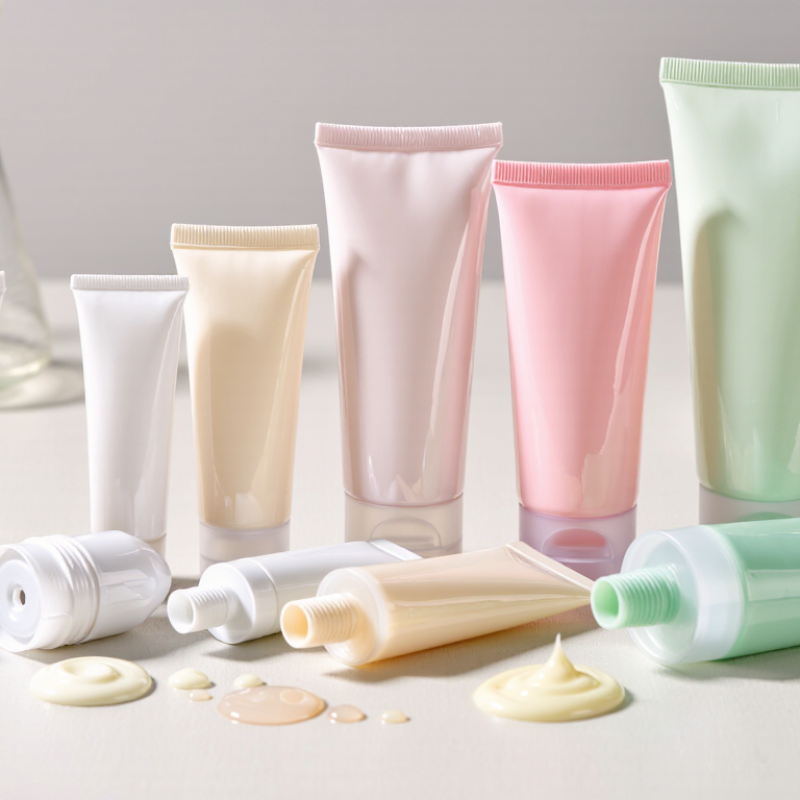
Before comparing tube dimensions, define what the product must do. A hand cream used at a desk has different needs from a cleanser carried in a gym bag. Consider how much a person uses per application and how often the tube should need replacing. Small amounts. A concentrated balm may need modest capacity and a narrow opening, while a thin lotion may dispense more quickly. That difference affects both tube volume and opening size.
Estimate capacity from real usage, not shelf appearance. For example, if someone applies about 2 grams twice daily, a 60-gram tube holds roughly 15 days, before accounting for residue. Actual use varies. Allow room for filling and product movement, then test samples with the intended formula. A thick gel can cling to the tube’s shoulder, leaving more behind than expected; a runny formula may leak from an overly wide opening. Check whether users can squeeze out the final portion without excessive force. It is easy to overestimate. Capacity also affects portability, package weight, and how quickly the contents are exposed to air after opening. A practical choice may not look perfectly balanced at first. Record results from several users before fixing the size.
| Product Purpose | Typical Product | Example Capacity Range | What to Consider |
|---|---|---|---|
| Small, targeted personal care | Lip balm, eye cream, or spot treatment | 5–20 mL | Choose a compact tube that supports controlled dispensing and fits the intended application area. |
| Travel-size skincare | Moisturizer, facial cleanser, or hand cream | 30–100 mL | Allow enough capacity for the expected trip or usage period, while keeping the package easy to carry. |
| Everyday facial care | Cleanser, sunscreen, or facial moisturizer | 50–150 mL | Match the opening and closure to the product’s thickness and the amount users typically dispense. |
| Daily oral care | Toothpaste or tooth gel | 50–150 mL | Consider repeated use, product flow, and whether the tube can be squeezed comfortably as it empties. |
| Family-size personal care | Body lotion, shower gel, or hand wash | 150–300 mL | A larger tube can reduce refill frequency, but should remain stable and manageable during use. |
| Sun protection for regular use | Sunscreen or after-sun lotion | 50–200 mL | Consider how often the product is applied and whether a flip-top cap or other closure suits on-the-go use. |
| Hair styling and grooming | Hair gel, styling cream, or shaving cream | 50–200 mL | Thicker formulas may need a wider dispensing opening; test the package with the actual product. |
| Small-dose topical application | Ointment, gel, or treatment cream | 5–50 mL | Choose a capacity that supports the intended treatment period and a nozzle that enables precise application. |
| Food dispensing | Sauce, condiment, or decorative food topping | 100–500 mL | Use packaging materials and closures suitable for the food and filling process; check dispensing and storage requirements. |
| Craft or household application | Craft glue, repair gel, or cleaning paste | 10–100 mL | Base the capacity on the amount needed per task, and confirm that the tube material is compatible with the formulation. |
Capacity ranges are practical planning examples, not fixed standards. Final tube size should be confirmed through product compatibility, dispensing, filling, and user testing.
Plastic squeeze tubes often use polyethylene, polypropylene, or multilayer structures. Choose based on what the product contains, not just the tube’s price or feel. Oils, fragrances, acids, and solvents can affect plastics differently. A formula may soften a tube, change its color, or migrate through its walls. Test the filled package under expected storage conditions, including heat and repeated squeezing. Watch for swelling, leaks, odor changes, and shifts in product texture. Small samples help, but they do not replace a production-scale trial.
Tip: Match the tube’s resin and barrier layer to the formula. Ask the supplier for chemical-compatibility data, then test the actual product in contact with the finished tube, cap, and seal. Check after storage, not only on filling day.
The Flexible Packaging Association’s 2023 State of the Industry report put U.S. flexible-packaging sales at $42.9 billion in 2022. That figure shows the sector’s scale, but it does not prove that any one material suits a particular formula. Compatibility depends on ingredients, concentration, temperature, and time. A water-based lotion may perform well in a basic polyethylene tube, while a similar-looking formula may need a stronger barrier. I would not assume two products behave alike just because they share a label category. Real-world testing can reveal surprises.
10 Tips for Choosing Plastic Squeeze Tubes
Evaluate Tube Shape, Opening, Closure, and Dispensing Control
A tube’s shape affects grip, shelf fit, and how easily the last portion can be squeezed out. Round tubes feel familiar, while oval profiles can sit neatly in narrow spaces. Check the filled tube in the hand, not just on a screen. Does it roll away? Can someone with damp fingers hold it securely? There is no perfect profile. McKinsey’s 2023 global packaging survey, covering more than 11,000 consumers in 11 countries, reported that about 60% were willing to pay more for sustainable packaging. That makes material use worth considering alongside comfort and function.
Match the opening to the product’s thickness and expected dose. A narrow orifice can help control a thin lotion, but may frustrate users squeezing out a thicker cream. Test the actual formula at room temperature and after storage; flow can change. The closure matters, too. Flip-top caps support one-handed use, while screw caps may provide a firmer seal. Small details count. Check that the cap opens without pinching fingers and closes with an audible, reliable snap.
Dispensing control depends on the whole system: tube stiffness, headspace, orifice size, and cap design. Test repeated squeezes, not just the first one. Watch for sudden spurts, product trapped near the shoulder, or a tube that springs back too slowly. A simple bench test can compare dose consistency across several samples. It will not predict every bathroom or handbag. That gap deserves attention. Record what feels awkward, then revise the shape or opening before tooling is finalized.
Evaluate tube shape, opening, closure, and dispensing control alongside performance, usability, and sustainability requirements.
The chart presents a practical 1–10 priority scale for comparing plastic squeeze tubes. Product compatibility, leak resistance, dispensing control, closure fit, and user-friendly squeezing should be assessed together before selecting a tube design.
A squeeze tube is a barrier, not just a container. Match its resin, layer structure, and closure to the formula. Oils, fragrances, acids, and water can change odor, color, viscosity, or seal strength during storage. Request oxygen- and water-vapor transmission data, then test filled tubes under expected heat, light, and shipping conditions. ASTM F1927 measures oxygen transmission; ASTM F1249 measures water-vapor transmission. Compare results at stated temperature and humidity. Numbers without conditions can mislead.
Check safety evidence for the intended product and market. Request documentation for every layer, colorant, adhesive, and cap, plus migration or extractables testing when appropriate. A “food-grade” resin alone does not prove finished-package suitability. Real use can surprise you. Squeeze and reopen samples after storage; inspect for leaks, stress whitening, paneling, or changes in product taste. These practical checks may reveal issues that a material specification misses.
Barrier upgrades must also fit disposal systems. OECD’s Global Plastics Outlook reports that packaging generated about 142 million tonnes of plastic waste in 2019, roughly 40% of the global total. The U.S. EPA’s Advancing Sustainable Materials Management: 2018 Fact Sheet reports 14.5 million tons of plastic containers and packaging generated, with 13.6% recycled. These figures are not tube-specific, but they make material choice consequential. Check whether the tube’s layers and cap are accepted by local collection programs. Then retest the final design; a small wall-thickness change can affect both squeeze feel and protection.
Choosing plastic squeeze tubes requires more than matching a sample color. Ask for resin type, wall thickness, shoulder geometry, nozzle diameter, closure torque, decoration method, and minimum order quantity. Request production samples, not only digital renderings. A tube that looks premium may collapse unevenly or leave product inside its shoulder. Customization should support dispensing. It should not create unnecessary layers or difficult-to-separate parts. Suppliers should provide migration testing, quality-control records, and batch traceability. These details show expertise better than sales language.
Sustainability claims need numbers. The OECD Global Plastics Outlook reports that only 9% of plastic waste was recycled globally in 2019. It also found that plastic waste doubled since 2000. Ask whether recycled content is verified, whether the tube uses one material, and how local systems handle it. “Recyclable” can be technically true but practically useless.
The Ellen MacArthur Foundation reported that only 14% of plastic packaging was collected for recycling in 2016. Supplier reliability deserves equal attention. McKinsey reports that disruptions lasting one month or longer occur about every 3.7 years.
Check dual sourcing, lead-time history, tooling ownership, backup power, and corrective-action speed. Ask for evidence. A missed delivery can stop a filling line, while a low price may hide this risk. My preference is a supplier that admits limitations early. It feels less polished, but more trustworthy.