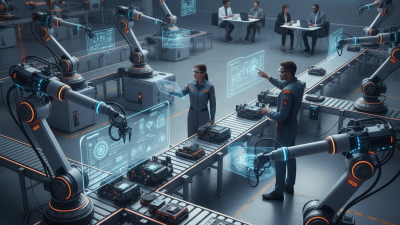
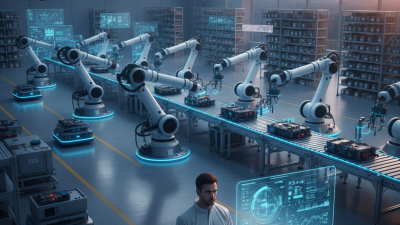
China’s automation sector has moved from a low-cost sourcing option to a major part of global manufacturing. The International Federation of Robotics (IFR), in World Robotics 2024, reported 276,288 industrial robot installations in China during 2023. That represented about 51% of global installations. The scale is striking. Yet installation volume alone cannot tell a buyer whether a supplier will fit a specific production line.
This guide to the Top 10 China Automation Suppliers to Automate Your Business looks beyond headline claims. It considers product range, engineering support, integration capability, documentation, and suitability for different factory needs. A small electronics workshop choosing machine vision has different priorities from an automotive plant selecting robot cells. Lead times, service coverage, software compatibility, and operator training matter once equipment reaches the factory floor. These details can be less visible than a polished product video.
The list is a starting point, not a universal ranking. Supplier capabilities change, and a strong product may still require careful commissioning and ongoing support. Buyers should verify specifications, request references, and assess service arrangements for their location. In practice, companies must also “automate the automation”: connect machines, production data, and maintenance workflows without creating new bottlenecks. That is harder than it sounds. This overview aims to make the shortlist more useful, while acknowledging that no article can replace a technical assessment of your process.
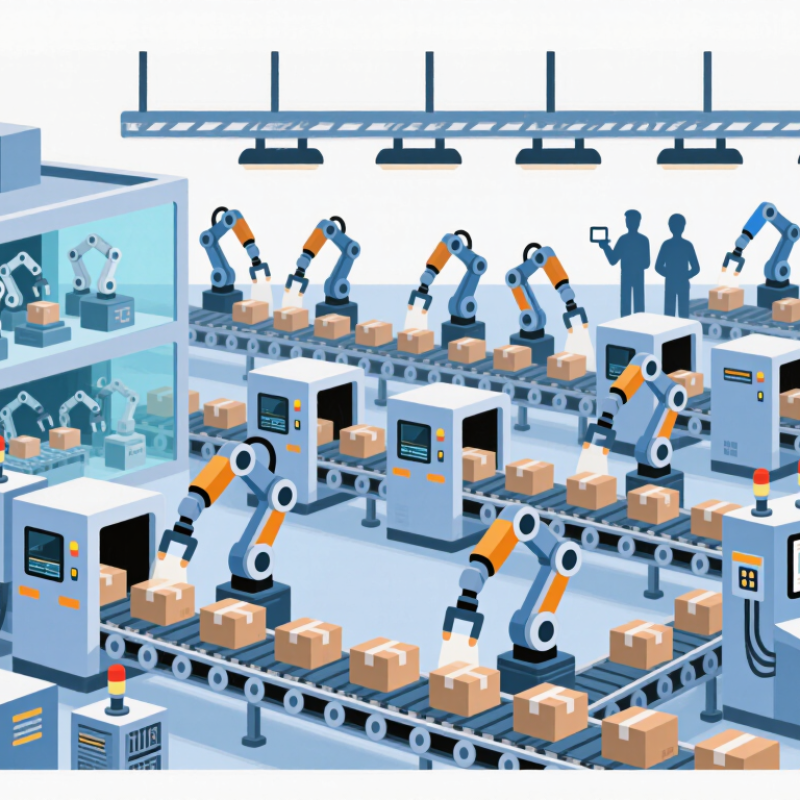
China’s automation market recorded 276,288 industrial robots installed in 2023. That figure signals substantial demand, but installation totals do not show how smoothly each system performs on a factory floor. A robot beside a welding station may reduce repetitive handling, while a packaging line may use it to lift cartons into a steady pattern. The right setup depends on product weight, cycle time, floor space, and worker access.
That is substantial. Yet a purchase count is not a productivity guarantee. Businesses should examine integration support, spare-parts availability, programming skills, and safety planning before selecting equipment. A cell that looks efficient in a demonstration may need adjustments when products vary or materials arrive unevenly. That detail is easy to miss. Buyers can ask suppliers for comparable operating data, clear maintenance plans, and trials using their own parts. The 2023 total offers useful market context, not a shortcut to choosing a system. It also leaves open an important question: how many installations are delivering reliable results over time?
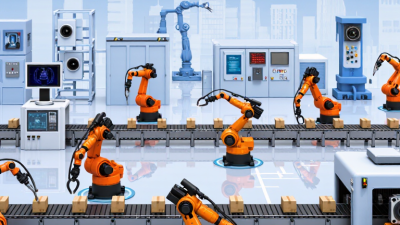
Robots, motion control, sensors, and programmable logic controllers work best as one coordinated system. A robot may handle repetitive loading, while a motion controller manages axis speed and position. Sensors provide the feedback that keeps parts aligned. The PLC connects these signals to machine actions, such as stopping a conveyor when a guard opens. Small timing errors matter. A misplaced sensor can cause missed picks or unnecessary stops.
When evaluating automation suppliers, ask how they test these components together, not just how each performs alone. Request cycle-time data under realistic loads, wiring diagrams, and examples of fault recovery. Check whether operators can adjust recipes without changing safety settings. Clear documentation helps maintenance teams diagnose a loose connector or drifting sensor. It saves time.
Automation plans can still miss things. A line that works in a demonstration may struggle with dusty parts, variable lighting, or frequent product changes. Pilot testing with actual materials can expose these gaps before full deployment. Keep the scope modest at first; that is not always the fastest path, but it often reveals what needs improvement.
China’s automation suppliers often specialize by product and industry, rather than serving every factory equally. Control-system suppliers provide PLCs, industrial computers, and operator panels for machinery and production lines. Robotics suppliers focus on pick-and-place, welding, palletizing, or machine tending. Fit matters. A robot suited to cartons may struggle with reflective metal parts or tight workspaces.
Motion-control suppliers offer servo motors, drives, and linear modules for precise positioning in electronics and machine tools. Machine-vision suppliers combine cameras, lighting, and inspection software for checking labels, dimensions, or surface defects. Sensor suppliers serve packaging, automotive, and process plants with devices that detect temperature, pressure, distance, or product presence. Details matter. Lighting and mounting can change inspection results.
Other supplier groups build conveyors and sorting systems for logistics, packaging equipment for food and household goods, CNC machinery for metalworking, and warehouse automation for storage and order movement. Process-control specialists support chemical, water-treatment, and energy facilities. These are practical categories, not a definitive ranking; supplier capabilities vary, even within one sector. Request sample testing, cycle-time data, service coverage, and spare-parts details before comparing quotes. A polished demo is useful, but it rarely shows every production constraint.
Annual installations show the scale of demand for automation across China’s industries. Figures are in units; source: International Federation of Robotics (IFR), World Robotics 2024.
China’s robot density reached 470 robots per 10,000 workers, according to the figure in this supplier-evaluation headline. That number signals a mature automation landscape, but it does not guarantee that every factory is equally advanced. Density is an average. It can hide sharp differences between industries, regions, and plant sizes. Buyers should check the statistic’s year, workforce definition, and robot categories before using it to compare suppliers.
For a real evaluation, ask how a supplier handles installation, programming, safety checks, and repairs after commissioning. Request a demonstration using a part similar to yours: perhaps a metal component with oily surfaces or a carton that changes size between batches. Watch cycle consistency, not just peak speed. Ask for references from applications with similar production volumes, and clarify spare-part lead times. Small details matter. A fast robot can still become a costly bottleneck if operators need weeks of training or a sensor fails repeatedly. Supplier claims deserve testing. I would also leave room for uncertainty: published density figures describe a broad trend, not the reliability of a particular cell on your factory floor.
Market benchmark: China’s industrial robot density reached 470 robots per 10,000 manufacturing employees in 2023, according to the International Federation of Robotics (IFR), World Robotics 2024. The entries below are supplier categories—not named or ranked companies—and provide a practical evaluation framework.
| No. | Supplier Category | Typical Automation Scope | Common Use Cases | Evaluation Evidence to Request |
|---|---|---|---|---|
| 1 | Industrial robot integrators | Robot cells, tooling, safety systems, and production-line integration | Machine tending, material handling, assembly, and palletizing | Cycle-time study, risk assessment, acceptance-test plan, and comparable project references |
| 2 | Collaborative robot solution providers | Collaborative arms, end effectors, and workstation integration | Light assembly, inspection, and small-part handling | Task-specific risk assessment, payload and reach data, and documented safety validation |
| 3 | Automated guided vehicle (AGV) providers | Route-based, infrastructure-guided material transport | Repeated pallet, cart, and work-in-process movements | Route survey, traffic-management design, load specifications, and operating-hour assumptions |
| 4 | Autonomous mobile robot (AMR) providers | Mobile robots that navigate using onboard sensing and mapping | Flexible intralogistics and point-to-point deliveries | Site-map trial, obstacle-handling demonstration, fleet-management functions, and interface documentation |
| 5 | Machine-vision suppliers | Cameras, lighting, image-processing software, and inspection integration | Presence checks, measurement, identification, and surface inspection | Sample-based accuracy results, false-accept and false-reject definitions, and lighting-condition tests |
| 6 | PLC and motion-control solution providers | Programmable logic controllers, drives, motion systems, and control engineering | Machine sequencing, synchronized axes, and line control | Supported industrial protocols, source-code handover terms, backup procedure, and integration test results |
| 7 | Conveyor and sortation system integrators | Conveyors, sorters, transfers, and material-flow controls | Packaging, warehousing, and production-line transfers | Throughput assumptions, layout drawings, jam-recovery plan, and maintenance access review |
| 8 | Automated storage and retrieval system (AS/RS) providers | Automated storage, retrieval equipment, and warehouse-control integration | High-density storage and inventory movement | Capacity and throughput model, fire and safety coordination, software-interface scope, and recovery procedures |
| 9 | Packaging and end-of-line automation providers | Case packing, sealing, labeling, palletizing, and line controls | Consumer goods, food processing, and general manufacturing | Product-changeover demonstration, package compatibility tests, line-rate assumptions, and sanitation requirements where relevant |
| 10 | Manufacturing execution and industrial software providers | Production monitoring, traceability, scheduling, and equipment connectivity | Shop-floor visibility and coordination between machines and business systems | Data-flow map, cybersecurity controls, integration scope, ownership terms, and a representative pilot |
Source: International Federation of Robotics (IFR), World Robotics 2024. Supplier categories are presented for evaluation purposes and do not represent a company ranking or supplier-specific performance claims.
When comparing China automation suppliers, test the whole production cell, not just the robot arm.
In its World Robotics 2024 report, the International Federation of Robotics recorded 276,288 industrial robot installations in China in 2023—about 51% of global installations. That scale makes supplier capability worth checking carefully. Ask each bidder to run your actual parts through a sample cycle, including loading, inspection, and changeovers. Confirm compatibility with existing controllers, sensors, and production data systems. A polished demonstration is useful, but real parts reveal more.
Safety and service need equal weight.
Request a documented risk assessment, details of guarding and emergency stops, and validation at the intended operating speed. Compare who handles commissioning, operator training, spare parts, and fault response. For total cost of ownership, price integration, tooling, software, energy, maintenance, downtime, and future model changes—not only purchase price. The cheapest quote can still be the wrong one. Some cost estimates will be imperfect; keep a contingency and state assumptions in writing.
Tips: Ask for a line-item quote and a service-response commitment. Walk the proposed cell layout with operators before approval. Small access problems can become daily delays.