Skip to content

China Top 10 Stainless Steel Pipe Manufacturers?

China’s Stainless Steel Pipe sector deserves closer examination, not casual ranking. The International Stainless Steel Forum’s Stainless Steel in Figures 2024 reported global crude stainless steel production of approximately 58 million tonnes in 2023. China supplied the largest share, supported by extensive melting, forming, welding, and finishing capacity.

Scale matters. It does not prove quality.

The China Top 10 Stainless Steel Pipe Manufacturers? guide will examine production experience, grades, standards, inspection systems, export performance, and project references. Useful evidence includes ISO 9001 certification, ASTM A312 compliance, EN 10217 documentation, PMI testing, hydrostatic test records, and traceable heat numbers. Buyers should also compare wall-thickness tolerance, surface finish, delivery consistency, and after-sales support. These details become visible when a 6-meter pipe arrives with clear markings, sealed ends, and a readable mill certificate.

Tim Collins, a former Secretary General of worldstainless, said, “Stainless steel is a material for the future.” Its corrosion resistance and recyclability support that view. However, supplier claims still require verification. Public rankings often rely on incomplete websites, self-reported capacity, or unclear revenue data. That weakness deserves attention. This introduction therefore treats “top” as a practical assessment, not an absolute verdict. The final selection should reflect application risk, operating temperature, media exposure, budget, and required certification. A food-processing line needs different evidence from an offshore pipeline. Mistakes happen when all stainless steel pipe suppliers are judged by price alone.
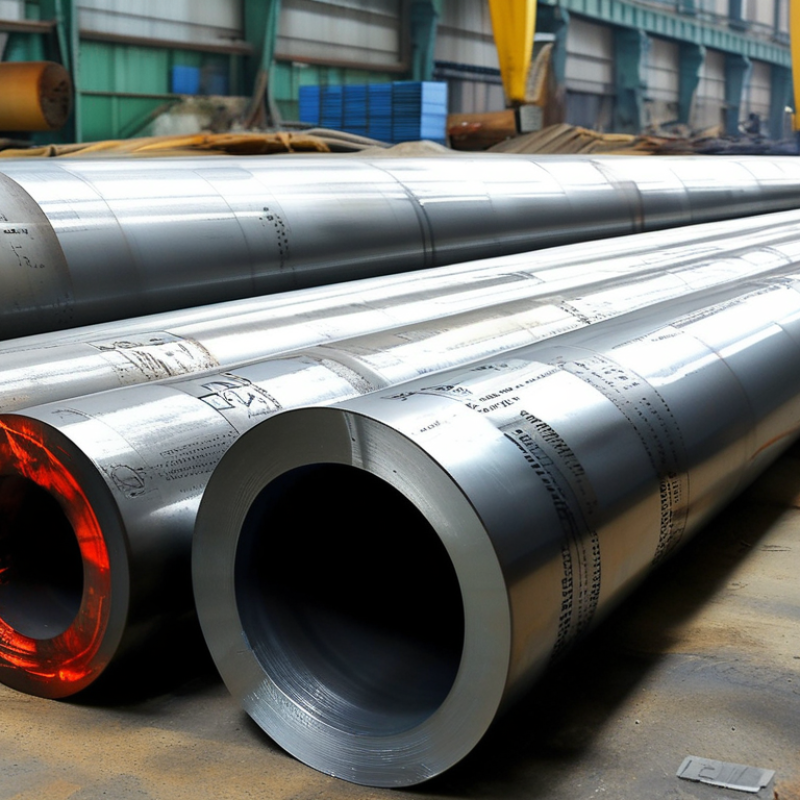
China Top 10 Stainless Steel Pipe Manufacturers?

China’s Stainless Steel Pipe Industry: Grades, Standards, and 2024 Output Data

China’s stainless steel pipe industry is built on several common grades. 304 remains popular for food equipment, architectural tubing, and general process lines. Grade 316L offers stronger resistance to chlorides and acidic environments. Duplex grades provide higher strength, but welding and heat control require greater discipline. Ferritic and heat-resistant grades serve selected industrial applications.

Standards shape how these pipes are purchased and inspected. ASTM A312 commonly covers austenitic seamless, welded, and heavily cold-worked pipe. ASTM A789 applies to many duplex stainless steel pipes. Chinese projects may also reference GB/T standards, while international buyers often request EN or ASME requirements. Important checks include chemical composition, tensile strength, hydrostatic testing, weld quality, dimensions, and surface finish. Mill certificates help, but independent inspection remains valuable.

Industry data needs careful reading. China produced approximately 36.3 million tonnes of stainless crude steel in 2024, based on reported sector statistics. That figure is not the same as stainless pipe output. Pipe-specific numbers vary because producers classify welded, seamless, precision, and fabricated products differently. This is an important weakness in many “top ten” rankings. A high production volume does not automatically prove better pipe quality. Buyers should compare grade accuracy, wall-thickness tolerance, traceability, delivery records, and rejection rates. In practice, a polished surface can hide inconsistent internal dimensions. Supplier claims deserve verification.

China’s Stainless Steel Pipe Industry: Grades, Standards, and 2024 Output Context

Common stainless steel pipe grades are compared by their ASTM A312 chromium and nickel requirements. Values are minimum and maximum limits expressed as weight percentages.

2024 output context: China produced approximately 39.3 million tonnes of stainless crude steel in 2024, according to figures reported by the International Stainless Steel Forum and Chinese industry statistics. This figure covers all stainless steel products and is not limited to pipes.

Reference: ASTM A312/A312M chemical composition requirements; International Stainless Steel Forum 2024 stainless steel production statistics.

How to Rank China’s Top 10 Stainless Steel Pipe Manufacturers

A credible ranking of China’s top stainless steel pipe manufacturers should begin with verifiable evidence, not online popularity. Assess product quality, production experience, and technical capability. Review factory records, equipment lists, and recent project references. Request material certificates, laboratory reports, and sample inspection data. A serious manufacturer should explain its steel grades, heat treatment, welding process, and dimensional tolerances clearly.

Quality control deserves the greatest weight. Check whether inspectors test chemical composition, tensile strength, hardness, surface condition, and pressure resistance. Traceability matters too. Each pipe should connect to a batch number, production date, and inspection record. Independent audits can reveal details that brochures often hide. Factory visits help confirm storage conditions, calibration practices, and actual production capacity.

Delivery performance and commercial reliability also shape the ranking. Compare lead times, export experience, packaging methods, complaint handling, and payment transparency. Calculate total cost, including testing, transport, rework, and possible delays. A low quotation may conceal weak inspection or inconsistent wall thickness. The ranking should use weighted scores, but the weighting requires judgment. Industrial buyers may value certification and consistency more than price. No ranking remains perfect; evidence can become outdated, and customer references may be selective. Recheck key data before publishing the final list.

Top 10 Chinese Manufacturers by Capacity, Certifications, and Export Reach

China Top 10 Stainless Steel Pipe Manufacturers?

China’s stainless steel pipe sector benefits from exceptional scale. World Stainless reported roughly 58 million tonnes of global stainless crude steel production in 2023, with China contributing about 60%. This production base supports ten leading manufacturer groups with large melting, piercing, welding, and finishing capacity.

Capacity alone misleads.

A stronger comparison checks annual pipe output, alloy range, and mill integration. The leading Chinese producers commonly offer seamless and welded pipes in 304, 316L, duplex, and high-temperature grades. Their certifications may include ISO 9001, ISO 14001, PED, ASTM compliance, and pressure-equipment approvals. However, certificates require scope verification. A certificate covering fittings does not automatically cover seamless pipe.

Export reach provides another useful measure. UN Comtrade records for HS 7304 and HS 7306 consistently place China among the world’s major steel-pipe exporters. The strongest ten suppliers usually serve Asia, Europe, the Middle East, and North America through distributors, project contractors, and direct export teams. Customs data also reveals shipment consistency better than promotional claims.

Still, the ranking remains imperfect. Public data rarely separates stainless pipe from total steel pipe capacity. Buyers should request recent mill-test certificates, third-party inspection records, production schedules, and destination references. A supplier with lower stated capacity may deliver more reliably. That matters on a real project.

Product Comparison: 304, 316L, Duplex, Seamless, and Welded Steel Pipes

China’s top 10 stainless steel pipe manufacturers should be compared by grade control, welding quality, testing, and traceability. A polished catalog is not enough. Buyers should review mill certificates, heat numbers, dimensional records, and hydrostatic test results. Independent inspection can expose gaps between promised and delivered quality.

Grade 304 suits many food, architectural, and general industrial systems. It offers balanced corrosion resistance and practical cost. Grade 316L performs better around chlorides, seawater, and chemical exposure because of its molybdenum content. Duplex stainless steel provides higher strength and strong resistance to stress corrosion cracking. However, it requires tighter control during forming and heat treatment. Small errors matter.

Seamless pipe has no longitudinal weld and is often selected for high-pressure or demanding temperature service. Welded pipe can provide consistent dimensions and better cost efficiency for many process lines. The weld zone still needs careful inspection, especially after forming. Ultrasonic testing, radiography, and corrosion checks should match the project risk. A lower price may reflect thinner walls, weaker documentation, or limited testing. That is easy to miss. In practice, even experienced buyers can overvalue surface finish and undervalue traceability. A reliable supplier should explain these trade-offs clearly and provide samples or inspection access before production.

China Top 10 Stainless Steel Pipe Manufacturers? - Product Comparison: 304, 316L, Duplex, Seamless, and Welded Steel Pipes

Anonymized product-profile comparison based on commonly specified stainless steel pipe grades, manufacturing methods, applicable standards, and typical industrial uses.

Profile Pipe Grade Metallurgy Manufacturing Route Common Standards Typical Size Range Weldability Corrosion Performance Typical Applications Key Selection Consideration
01. General-Purpose Austenitic Pipe 304 18Cr–8Ni austenitic stainless steel Seamless or longitudinally welded ASTM A312 / ASME SA312 Commonly supplied from small instrument sizes to large process-pipe diameters Excellent; low-carbon 304L is preferred for extensive post-weld service Good resistance to atmospheric corrosion and many mild chemical environments; vulnerable to chloride pitting Water systems, food-processing equipment, architectural piping, and general process lines Cost-effective default grade when chloride exposure is limited
02. High-Cleanliness Austenitic Pipe 304L Low-carbon 18Cr–8Ni austenitic stainless steel Seamless or welded, with optional pickling and passivation ASTM A312 / ASME SA312 Available in sanitary, process, and industrial dimensions Very good; reduced carbon content lowers the risk of sensitization after welding Similar general corrosion performance to 304, with improved weld-area corrosion resistance Food, beverage, pharmaceutical, dairy, and clean-process piping Preferred over 304 when frequent welding or stringent hygienic finishing is required
03. Heavy-Wall Austenitic Pipe 304 Seamless 18Cr–8Ni austenitic stainless steel Hot-finished or cold-finished seamless pipe ASTM A312 / ASME SA312 Typically selected for smaller to medium outside diameters and heavier wall requirements Excellent, subject to suitable filler metal and heat-input control Good in freshwater and many non-chloride services; not intended for severe chloride environments High-pressure utility lines, chemical equipment, boiler-related piping, and instrumentation headers Useful where a continuous wrought structure and heavier wall are preferred
04. Economical Large-Diameter Pipe 304 Welded 18Cr–8Ni austenitic stainless steel Cold-formed strip with longitudinal seam weld ASTM A312 / ASME SA312 Often more economical for medium and large outside diameters Excellent with qualified welding procedures and appropriate solution annealing where required Good general corrosion resistance; weld-zone quality and surface condition are important Water distribution, structural process lines, tanks, and low-to-medium pressure services Provides a favorable cost-to-diameter ratio when seamless construction is unnecessary
05. Molybdenum-Alloyed Process Pipe 316L 16–18Cr, 10–14Ni, 2–3Mo low-carbon austenitic stainless steel Seamless or longitudinally welded ASTM A312 / ASME SA312 Broad industrial range, including process and hygienic dimensions Very good; low carbon helps resist sensitization in welded service Better pitting and crevice-corrosion resistance than 304 in many chloride-containing environments Chemical processing, marine atmospheres, pharmaceutical systems, and food-processing equipment Choose 316L when molybdenum alloying is justified by chloride or chemical exposure
06. Hygienic 316L Pipe 316L Low-carbon molybdenum-bearing austenitic stainless steel Orbital-weldable sanitary tube or welded pipe with polished internal surface ASTM A270 for sanitary tubing; project specifications may also reference ASME BPE Commonly supplied in sanitary outside diameters with controlled wall thickness Excellent when orbital welding, purge gas, and surface treatment are properly controlled Strong resistance to many cleaning chemicals and chloride-bearing process residues Biopharmaceutical, dairy, beverage, cosmetics, and high-purity water systems Internal roughness, weld quality, passivation, and drainability can be more important than nominal grade
07. Lean Duplex Structural-Process Pipe Duplex 2101 Lean duplex ferritic-austenitic stainless steel Seamless or welded, depending on size and specification ASTM A790 or applicable duplex project specification Selected across process, structural, and utility pipe dimensions Good, but heat input, interpass temperature, and phase balance require control Generally higher yield strength and chloride resistance than 304L; performance depends on grade and environment Storage tanks, water systems, structural piping, and moderate-chloride services Can reduce wall thickness through higher strength, subject to design-code approval
08. Standard Duplex Process Pipe Duplex 2205 Approximately balanced ferritic-austenitic duplex stainless steel Seamless or welded ASTM A790 / ASME SA790 Commonly used for medium and large process-pipe sizes Good with qualified procedures; excessive heat can disturb the desired phase balance Higher strength and better resistance to chloride stress-corrosion cracking than common austenitic grades Offshore equipment, desalination, chemical processing, pulp and paper, and oil-and-gas facilities Requires disciplined welding, heat treatment, ferrite control, and corrosion qualification
09. Super Duplex Corrosion-Resistant Pipe Duplex 2507 High-alloy super duplex ferritic-austenitic stainless steel Seamless or welded ASTM A790 / ASME SA790 Typically specified for critical process and offshore pipe sizes Good only with strict control of welding consumables, heat input, interpass temperature, and phase balance Very high resistance to pitting, crevice corrosion, and chloride stress-corrosion cracking in suitable environments Seawater systems, offshore platforms, desalination, heat exchangers, and aggressive chemical services Higher material and fabrication cost is justified only where environmental severity requires it
10. Heat-Exchanger and Condenser Pipe 316L Low-carbon molybdenum-bearing austenitic stainless steel Seamless or welded heat-exchanger and condenser tube/pipe ASTM A213 for seamless boiler and heat-exchanger tubing; ASTM A249 for welded tubing Usually supplied in controlled outside diameters and thinner walls than process pipe Very good, with strict dimensional, cleanliness, and nondestructive-testing requirements Good resistance to many cooling-water and process-fluid environments; chloride limits still apply Heat exchangers, condensers, evaporators, chemical plants, and power-generation equipment Thermal performance, tube-side cleanliness, leakage testing, and wall-thickness control are critical

Technical note: Size ranges, corrosion performance, and application suitability are typical engineering guidance rather than universal limits. Final selection should be confirmed against design pressure, temperature, fluid chemistry, chloride concentration, fabrication procedure, applicable code, and required inspection level.

Quality, Pricing, Lead Times, and Selection Criteria for Global Buyers

China Top 10 Stainless Steel Pipe Manufacturers?

Global buyers should compare evidence, not attractive rankings. The International Stainless Steel Forum reported 58.4 million tonnes of global crude stainless steel production in 2023, a 5.2% annual decline. This pressure can affect factory capacity and delivery schedules. Pricing also follows raw materials. The World Bank’s Pink Sheet recorded nickel falling from about $27,516 per tonne in 2022 to $21,521 in 2023. However, a lower nickel price does not guarantee a lower pipe quotation. Energy, forming, testing, packaging, and freight still matter.

For quality, request the applicable standard, steel grade, heat number, dimensional tolerance, and surface condition. Ask for chemical analysis, mechanical results, hydrostatic testing, and non-destructive examination where required. A traceable mill certificate should match the physical bundle. Lead times must separate production, inspection, and ocean transit. “Ready in 20 days” is incomplete. Is testing included? Is raw material available? These questions expose weak planning. One practical mistake is choosing the lowest offer before checking exclusions. Cheap is not cheap.

Tips: Compare three like-for-like quotations. Confirm Incoterms, payment stages, packing, test certificates, and replacement procedures. Request recent inspection records, not only sample documents. Check whether the supplier can repeat your tolerance requirements across several heats. A ranking of ten manufacturers is only a starting point; audited quality and dependable communication deserve greater weight. Some buyers still overvalue factory size. That deserves reflection.