Skip to content

Top Active Optical Cable Manufacturers in China

China’s optical connectivity sector is drawing attention as data-center traffic and computing demands continue to rise. An Active Optical Cable (AOC) combines optical fiber with electrical-to-optical conversion, making it useful for short-reach links where flexibility and reduced cable weight matter. It is not the right choice for every connection.

IDC’s Global DataSphere research estimated that 64.2 zettabytes of data were created or replicated worldwide in 2020, and projected 175 zettabytes by 2025. That forecast signals the scale of the infrastructure challenge, though it is not a direct measure of AOC sales. Cisco’s Annual Internet Report, 2018–2023, also projected monthly global internet traffic of 396 exabytes by 2022. Together, these reports help explain why data-center operators scrutinize bandwidth, power use, and cable management.

Choosing among Chinese manufacturers takes more than comparing headline speeds. Buyers should examine product specifications, connector options, interoperability evidence, quality controls, and support for testing or customization. Ask for current documentation. A polished catalog is not proof of performance. Public information can also be uneven, so supplier claims should be checked against test results and customer requirements. This guide introduces notable Active Optical Cable manufacturers in China and outlines practical points for evaluating their products. The comparison is useful, but not definitive: application needs and verification matter.
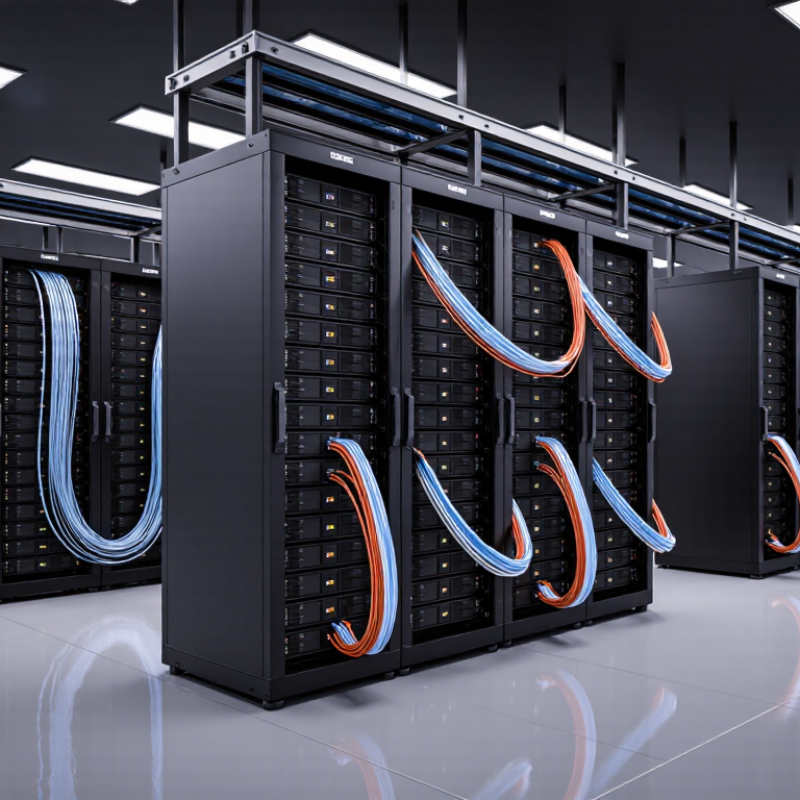
Top Active Optical Cable Manufacturers in China

What Active Optical Cables Are and How They Work

An active optical cable (AOC) combines optical fiber with transmitter and receiver electronics built into its connectors. It carries data between equipment ports by converting electrical signals into light, then converting the light back into electrical signals. Inside the cable, an optical source sends light through thin glass fibers. A detector at the receiving end reads the signal.

That conversion matters.

Unlike a passive fiber link, an AOC contains active components and usually draws power from the connected devices. It can support high data rates over longer distances than many copper cables, while resisting electromagnetic interference. The cable may also be lighter and easier to route through a crowded rack. Still, it has limits. An AOC must match the equipment’s interface, supported data rate, and required distance.

When comparing AOCs from manufacturers in China, check connector type, cable length, power requirements, and compatibility details. A clear specification sheet is useful, but it does not replace testing with the actual switches or servers. Inspect bend radius, too; a tight turn can stress the fiber.

Small details matter. The best choice depends on the installation, not just the headline speed.

And compatibility claims deserve a second look.

China’s Active Optical Cable Industry and Its Applications

China’s active optical cable industry serves data centers, telecom networks, and high-performance computing systems. An active optical cable converts electrical signals into optical signals within its connectors, allowing fast links over longer distances than many copper cables. In a crowded server rack, thinner cables can also make routing and airflow easier. That matters.

Applications vary. Data centers use AOCs for links between switches and servers, while telecom and enterprise networks may use them for high-speed connections between equipment rooms. Industrial settings can benefit from optical links where electromagnetic interference affects signal quality. Still, optical is not automatically better. Cable length, connector type, device compatibility, and operating temperature all need checking. A cable that works in a lab may behave differently in a hot, tightly packed rack.

Tips: Confirm supported data rates and port specifications before ordering. Check bend radius and cable length against the actual installation path. Ask suppliers about testing for signal performance and temperature range, and verify samples in your own equipment. Small details are easy to miss. I would not rely on a specification sheet alone; real-world installation can expose issues that numbers do not show.

Leading Active Optical Cable Manufacturers in China

Leading active optical cable manufacturers in China serve data centers, telecom rooms, and high-performance computing projects. Their work combines optical components, electrical interfaces, cable assembly, and quality testing. AOC designs convert electrical signals to optical signals within the cable ends, helping maintain high data rates over longer links than many copper alternatives. Details matter. Buyers should check supported protocols, reach, connector type, power use, and operating temperature against the equipment they already run.

A reliable supplier should provide clear specifications, sample testing, and traceable production checks. Ask how the cable performs under repeated bending, heat, and continuous operation. For a dense rack, for example, cable flexibility and connector access can affect installation time as much as headline bandwidth. Test it first. Manufacturing capacity alone does not guarantee compatibility or stable performance. Some product descriptions can also leave practical questions unanswered, such as firmware support or interoperability across equipment generations. That gap deserves attention. A careful evaluation pairs datasheet review with real-device testing and checks whether the supplier can explain failures plainly, rather than relying on broad claims.

Key Products, Technologies, and Manufacturing Capabilities

Chinese active optical cable manufacturers serve data centers, high-performance computing, and telecom equipment makers. Their product ranges commonly include multimode cables for short rack links and single-mode designs for longer reaches. Options span 10G to 800G Ethernet, with QSFP, QSFP-DD, and OSFP connectors. MarketsandMarkets estimated the global active optical cable market at USD 3.3 billion in 2023, forecasting USD 5.8 billion by 2028. The forecast signals demand, but market estimates vary by product definition.

Inside an AOC, electrical signals are converted to light at each connector end, then carried through thin optical fibers. This reduces cable weight and electromagnetic interference compared with copper assemblies. IEEE 802.3 Ethernet standards provide relevant interface specifications; manufacturers still need to validate each cable against host equipment and operating conditions. Manufacturing capability therefore involves more than assembly: fiber handling, optical alignment, high-speed testing, and controlled connector processes all matter. Small defects can mean link errors.

A reliable production line tests insertion loss, bit-error performance, temperature stability, and cable flex before shipment. For dense racks, bend radius and airflow deserve attention too. Ask for test methods and traceable batch records, not just headline data rates. Datasheets can look reassuring. Yet they rarely show performance after repeated installation. That gap deserves scrutiny.

Top Active Optical Cable Manufacturers in China - Key Products, Technologies, and Manufacturing Capabilities

Product and capability overview of common active optical cable (AOC) categories. Specifications and supported distances vary by design, application, and supplier.

Product Category Common Data Rate or Standard Typical Applications Optical and Electrical Technologies Manufacturing Capabilities Quality and Validation
USB Active Optical Cables USB 3.2 Gen 1 at 5 Gb/s and Gen 2 at 10 Gb/s; higher-rate USB-C products depend on the applicable specification and product design. Computer peripherals, conferencing systems, cameras, displays, and connections between equipment racks. Optical fibers carry high-speed data; hybrid constructions may include copper conductors for power and low-speed signals. USB-C power delivery depends on cable design and certification. Fiber-to-copper termination, connector assembly, cable-length configuration, and integration of optical and electrical paths. Continuity and pin-mapping checks, data-link testing, optical performance checks, and connector inspection.
HDMI Active Optical Cables Products are available for HDMI 2.0 and HDMI 2.1 applications. HDMI 2.1 supports a maximum link rate of 48 Gb/s; actual cable capability is product-specific. Home theater, digital signage, control rooms, and long-distance connections to 4K or 8K displays. Optical transmission is used for high-speed video channels; copper conductors can support power, control, and lower-speed signals. Hybrid cable construction, directional source/display connector assembly, and configuration for different installation lengths. Signal-integrity and link testing with supported source/display combinations; compliance claims require appropriate certification.
DisplayPort Active Optical Cables Designed for specified DisplayPort link rates. DisplayPort 2.1 UHBR20 defines up to 20 Gb/s per lane across four lanes. Workstations, high-refresh-rate monitors, multi-display setups, and professional graphics systems. Optical lanes extend high-speed video transmission; product design may retain copper paths for auxiliary and control signals. Multi-lane optical assembly, directional connector integration, and production testing for the supported link mode. Link training and video-function checks, optical measurements, and inspection of connector orientation and assembly.
Ethernet and Data-Center AOCs Common product classes include 10G, 25G, 40G, 100G, 200G, and 400G, using applicable Ethernet interfaces and lane configurations. Switch-to-server links, top-of-rack connections, and short-reach links within data centers. Multimode fiber with parallel optical lanes; electrical interfaces and module formats depend on the Ethernet generation and port type. Optical-engine integration, high-speed module assembly, fiber-array alignment, and automated production screening. Optical power and wavelength checks, bit-error-rate testing, temperature screening, and interface interoperability testing.
InfiniBand and HPC AOCs Available in data-rate classes aligned with supported InfiniBand generations and port formats; the exact rate depends on the system interface. High-performance computing clusters, storage networks, and low-latency data-center fabrics. Parallel optical transmission supports high aggregate bandwidth; host-side electrical signaling is converted within the cable ends. High-density connector assembly, polarity control, fiber management, and production configuration for specific port types. BER and link testing, insertion-loss checks, thermal evaluation, and compatibility verification with target equipment.
Custom-Length and Ruggedized AOCs Built around a selected USB, video, Ethernet, or computing interface; performance is determined by the chosen interface and design. Industrial automation, broadcast installations, medical environments, and infrastructure with demanding routing needs. Options may include protective jackets, bend-management features, hybrid copper conductors, and application-specific connector choices. Cut-to-length production, jacket and connector customization, controlled fiber routing, and small-batch or volume assembly. Visual and dimensional inspection, continuity checks, optical measurements, and application-specific environmental testing.

Selection note: Compare the required interface standard, supported data rate, cable length, power needs, connector type, operating environment, and certification status before specifying an AOC.

How to Evaluate Chinese Active Optical Cable Suppliers

A Chinese active optical cable supplier should be evaluated through test evidence, not a polished catalogue. Request the exact cable length, connector type, supported data rate, and host-device compatibility for each model. Then review bit-error-rate results, power consumption, and operation across the stated temperature range. Ask for evidence. Cisco’s 2018 Annual Internet Report forecast global IP traffic would reach 396 exabytes per month by 2022, underscoring why dependable, high-bandwidth links matter. That forecast is not a substitute for product testing, though.

Check whether sample test reports identify the tested model and conditions. Compare measured performance with the relevant IEEE 802.3 interface requirements, and confirm that the supplier can provide traceable production checks. For a rack deployment, test cables in the actual port layout; tight bends and crowded airflow can expose issues that a bench test misses. Also ask how firmware, component changes, and failed units are handled. Small details matter. A supplier may provide strong specifications yet weak follow-up. I would treat that gap as a real risk, not a minor paperwork problem. When possible, request a pilot batch and record link stability, temperature, and power readings over several days.

Top Active Optical Cable Manufacturers in China: How to Evaluate Suppliers

These are common nominal Ethernet link-rate classes, not supplier rankings or claims about product availability. When comparing suppliers, confirm that the offered cable supports the required link rate and check host compatibility, lane configuration, connector type, transmission distance, and compliance documentation against the product datasheet.