Skip to content

China Top Door Entry Systems Manufacturers and Suppliers?

Choosing among China’s top Door Entry Systems manufacturers and suppliers requires more than comparing prices or product photos. A reliable evaluation should examine design quality, communication clarity, testing evidence, and after-sales support. These factors influence whether a system performs smoothly at a residential gate, office lobby, hotel entrance, or industrial site.

Experienced buyers usually inspect video intercom clarity, RFID or mobile access stability, weather resistance, relay protection, and integration with elevators or security cameras. They also request installation guides, sample units, warranty terms, and response times for technical questions. A polished catalogue is useful, but it is not proof of dependable performance. Field details matter.

Bruce Schneier, a respected security technologist, once said, “Security is a process, not a product.” His point applies directly to Door Entry Systems. A strong supplier should support firmware updates, user management, replacement parts, and long-term maintenance. Security does not end when the device is installed.

This guide reviews leading Chinese manufacturers and suppliers through a practical purchasing lens. It considers product specialization, manufacturing capability, certifications, customization, export experience, and service reliability. Some supplier information may change over time. Verify it directly.

A small caution remains. The lowest quotation may hide integration costs, weak documentation, or delayed support. Buyers should test before committing. A careful shortlist can reduce avoidable mistakes and create safer, more convenient entry control.
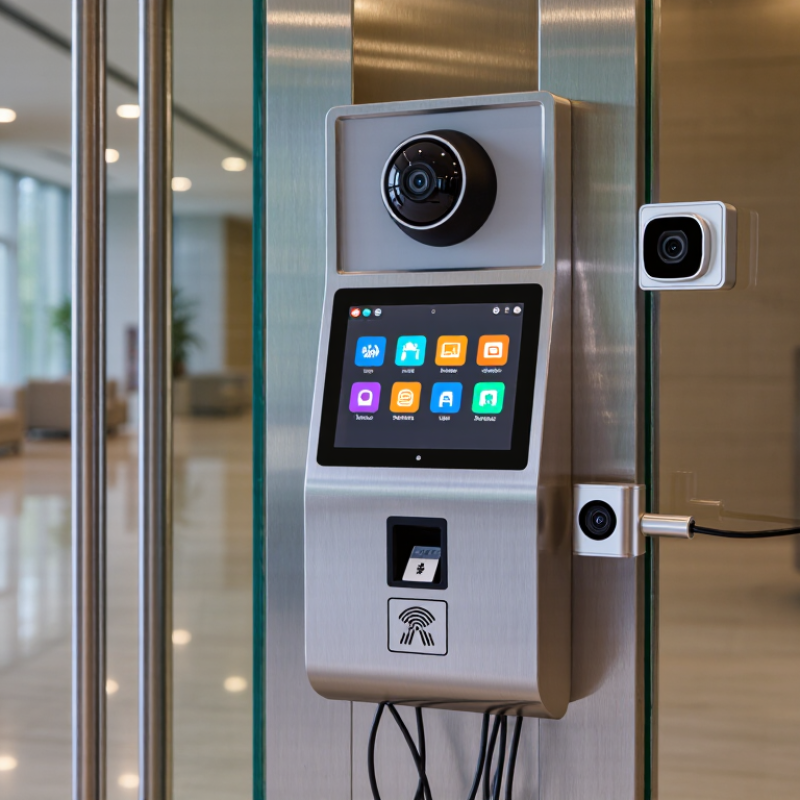
China Top Door Entry Systems Manufacturers and Suppliers?

China’s Door Entry Systems Industry: Market Scope and Product Types

China’s door entry systems industry serves residential, commercial, and institutional markets. Demand is growing in apartment projects, office buildings, hotels, schools, hospitals, and industrial parks. Export-oriented manufacturers also supply systems for overseas construction and renovation projects. Requirements vary widely by climate, building structure, security policy, and installation budget.

Product types range from basic audio intercoms to IP video door entry systems. Common options include indoor monitors, outdoor panels, video doorbells, smart locks, access controllers, card readers, keypad units, and biometric terminals. Cloud-connected systems support remote unlocking, visitor records, and multi-site management. However, networked products need careful planning. Poor wiring, unstable connections, or weak password controls can reduce reliability.

In practical projects, installers usually check door dimensions, power availability, cable routes, and emergency access procedures before selecting equipment. Stainless-steel panels suit exposed entrances, while compact wireless units work better in smaller renovations. Integration with elevators, surveillance cameras, and building management platforms can improve daily operation. Yet the industry is not flawless. Some specifications look impressive but perform poorly under heavy traffic or harsh weather. A cheaper system may also create higher maintenance costs later. Buyers should request test samples, clear warranty terms, software update policies, and evidence of quality management. Data protection deserves equal attention, especially when systems store visitor images or access records.

China Top Door Entry Systems Manufacturers and Suppliers? - China’s Door Entry Systems Industry: Market Scope and Product Types

Market scope and product categories are presented by application, system function, connectivity, and deployment requirements.
Market Segment Product Type Core Functions Common Connectivity Typical Deployment and Requirements
Residential Buildings Audio Door Entry System Two-way voice communication, visitor calling, remote door release Two-wire bus, four-wire bus, or IP network Apartment blocks and multi-unit housing where basic identification and controlled entry are required
Residential Buildings Video Door Entry System Two-way audio, live visitor video, door release, call recording on supported systems IP, Wi-Fi, two-wire digital bus, or PoE Residential compounds, villas, and apartment projects requiring visual verification and centralized management
Residential and Small Business Smart Door Lock Keyless entry, temporary credentials, mechanical override, access-event records Bluetooth, Wi-Fi, NFC, fingerprint, PIN, or mobile application Homes, serviced apartments, rental properties, and offices requiring local or remote access management
Commercial Buildings IP Access Control Door Station Credential verification, door monitoring, visitor calling, alarm linkage, time-based permissions TCP/IP, PoE, SIP, Wiegand, or RS-485 Office buildings, retail facilities, and mixed-use developments integrated with access-control software
Commercial Buildings Video Intercom and Visitor Management Visitor registration, host notification, QR or PIN issuance, identity verification, entry records IP network, web platform, mobile application, or cloud connection Corporate campuses, reception areas, business parks, and buildings with recurring visitors
Public and Institutional Face, Fingerprint, or Card Access Terminal Multi-factor or biometric authentication, attendance records, permission management, anti-passback support Ethernet, PoE, RS-485, Wiegand, Wi-Fi, or cellular communication Schools, hospitals, government facilities, and workplaces subject to controlled-access procedures
Hospitality Hotel Room and Guest Access System Room access, check-in credential management, common-area access, event logging RFID, NFC, Bluetooth, Ethernet, or property-management-system interface Hotels, serviced residences, and short-stay properties requiring time-limited guest credentials
Industrial and Logistics Industrial Access Control and Intercom Entry authorization, emergency communication, gate control, visitor screening, audit trails IP, fiber uplink, RS-485, cellular backup, or dry-contact control Factories, warehouses, utility sites, and logistics parks requiring durable equipment and centralized monitoring
High-Security Facilities Multi-Factor Door Entry System Card plus PIN or biometric verification, door-state monitoring, alarm linkage, detailed audit logs Encrypted IP network, secure card interface, RS-485, or supervised inputs Data rooms, research areas, financial facilities, and restricted operational zones
Vehicle and Perimeter Entry Gate Intercom and Vehicle Access System Two-way communication, vehicle identification, barrier control, visitor authorization IP, cellular, RFID, license-plate recognition interface, or dry contact Residential compounds, industrial parks, parking facilities, and gated campuses
Integrated Security Centralized Door Entry Platform Unified user management, remote administration, video linkage, alarms, reporting, and system integration TCP/IP, API, SIP, ONVIF-compatible video integration, or cloud services Large property portfolios, smart buildings, campuses, and projects requiring multi-site management
Key selection dimensions: authentication method, indoor and outdoor operating conditions, system capacity, network architecture, integration requirements, privacy protection, emergency override, maintenance access, and compliance with applicable Chinese building, cybersecurity, and personal-information requirements.

Key Technologies Used in Modern Door Entry Systems

Modern door entry systems now combine video intercoms, biometric readers, mobile credentials, and cloud management. According to MarketsandMarkets, the global access control market may grow from about USD 9.9 billion in 2023 to USD 14.9 billion by 2028. This growth reflects stronger demand for connected entrances in offices, apartments, hospitals, and warehouses.

Cloud platforms let authorized staff manage doors remotely and review event logs within seconds. Mobile credentials can use encrypted Bluetooth or near-field communication instead of physical cards. Video intercoms add a visible layer, showing a visitor’s face before release. Many commercial systems also support Power over Ethernet, reducing separate cabling for power and data. The International Data Corporation reports continued expansion in smart-building technology, where connected security devices exchange data with wider building systems.

Biometric readers can improve convenience, but accuracy depends on lighting, camera position, and user behavior. Not perfect. A wet finger, winter gloves, or a poorly placed camera can delay entry. Suppliers should therefore offer multiple authentication methods, local operation during network outages, and regular firmware updates. Cybersecurity deserves equal attention: the 2024 Verizon Data Breach Investigations Report found that human involvement remained present in a large majority of breaches. Manufacturers and suppliers should document encryption, access permissions, audit logs, and update policies clearly. Buyers should test these details on a real doorway, not only in a showroom.

Leading Manufacturer and Supplier Categories in China

China’s door entry industry covers several practical manufacturer and supplier categories. Smart lock producers serve apartments, offices, hotels, and rental properties. Intercom manufacturers focus on visitor communication and remote release functions. Access control suppliers provide readers, controllers, credentials, and management software. Turnstile and gate manufacturers support schools, factories, transport sites, and commercial buildings.

Each category requires different technical checks. A lock supplier should explain cylinder design, emergency power, weather resistance, and installation depth. An intercom supplier should show audio clarity in noisy corridors. Access control manufacturers should provide wiring diagrams, software demonstrations, and testing records. During sourcing, sample evaluation is essential. Product photos can hide weak hinges, loose connectors, or unclear instructions. A factory with engineering staff usually handles custom dimensions more reliably. However, some suppliers overstate production capacity. That deserves careful questioning.

Tips: Request a working sample before discussing large quantities. Compare metal thickness, response time, firmware support, and packaging quality. Ask for factory audit documents and recent test reports. Confirm spare-part availability and after-sales response times. A written specification avoids later confusion. It is not flawless, but it is useful. Check whether the supplier can explain failures, not only advantages. Clear communication, stable quality control, and honest limitations often matter more than the lowest quotation.

How to Evaluate China-Based Door Entry System Suppliers

Evaluating China-based door entry system suppliers requires more than comparing catalog prices. Examine their engineering experience, production controls, and support process. Ask for factory photos, sample test records, and a live demonstration. A reliable supplier should explain wiring, relay capacity, access logs, and failure protection in clear language.

Test a sample at your actual entrance. Check voice clarity beside traffic, keypad response with wet fingers, and reader performance after repeated use. Confirm compatibility with your lock, exit button, power supply, and network. Request current certifications and technical files, then verify whether they match your destination’s requirements. A certificate copied into a brochure proves little.

Review warranty terms, spare-part availability, software updates, and response times before placing an order. Ask who handles remote diagnosis and who pays for defective replacements. Contact recent customers if possible. A low price may conceal fragile connectors or difficult firmware support. My own evaluation mistake was trusting a polished video without testing night visibility. That lesson still matters. Suppliers should accept reasonable inspections, provide stable documentation, and admit product limitations instead of promising everything. Clear contracts should define delivery dates, packaging details, acceptance tests, and data-handling responsibilities. Small details protect large installations.

Purchasing, Certification, and Installation Considerations

China Top Door Entry Systems Manufacturers and Suppliers?

Purchasing, Certification, and Installation Considerations

Choosing a Chinese door entry systems supplier requires more than comparing unit prices. Request factory profiles, production photos, sample units, and recent project references. A capable supplier should explain reader range, relay capacity, software support, and replacement procedures clearly. Ask for a written warranty with response times and spare-parts availability. Low prices can hide integration costs.

Certification must match the installation location and local authority requirements. Request current test reports, electrical safety documents, electromagnetic compatibility evidence, and declared ingress protection ratings. Do not accept a certificate photograph without checking its issuing body and model number. Data-handling features also deserve scrutiny. Confirm where access records are stored, who can view them, and how accounts are removed. Requirements differ between residential, commercial, and sensitive facilities.

Installation quality often determines system reliability. Measure the door frame, lock position, cable route, and available power before delivery. Leave space for a backup power supply and service access. Confirm whether the door should fail safe or fail secure during an outage. Emergency release hardware must remain practical, not merely compliant on paper. Test cards, mobile credentials, exit buttons, fire interfaces, and network recovery during commissioning. I have seen attractive systems fail because installers ignored a metal door’s signal interference. That mistake was avoidable. A staged site test is slower, but it exposes weaknesses before handover. Keep photographs, wiring diagrams, configuration files, and training records for future maintenance. Some projects still lack these basics.