Skip to content

Top Feyree EV Charger Malaysia Suppliers for Global Buyers

Global buyers researching Feyree Ev Charger Malaysia suppliers need more than a product list. They need clear specifications, dependable communication, and realistic delivery information. A charger may look suitable in a catalog, yet connector type, output power, cable length, and installation needs can change the buying decision. Small details matter. Buyers should also ask which documents are available for the product and whether its features match requirements in the destination market. Requirements can vary, so confirm them with qualified local professionals rather than relying on broad claims.

This guide introduces supplier considerations for international procurement, including product selection, quotation review, shipping arrangements, warranty terms, and after-sales support. Look for answers that are specific: stated lead times, clear warranty coverage, and responsive help with technical questions. A polished product page is useful, but it cannot replace written confirmation. Even a supplier with an attractive offer may leave practical questions unanswered. That is not necessarily a deal-breaker; it is a reason to ask for evidence before placing an order. Where details remain uncertain, say so and seek clarification. The sections ahead help readers compare options methodically, assess trade-offs, and prepare focused questions for potential suppliers. No single supplier suits every project. A careful comparison can make the next step clearer.
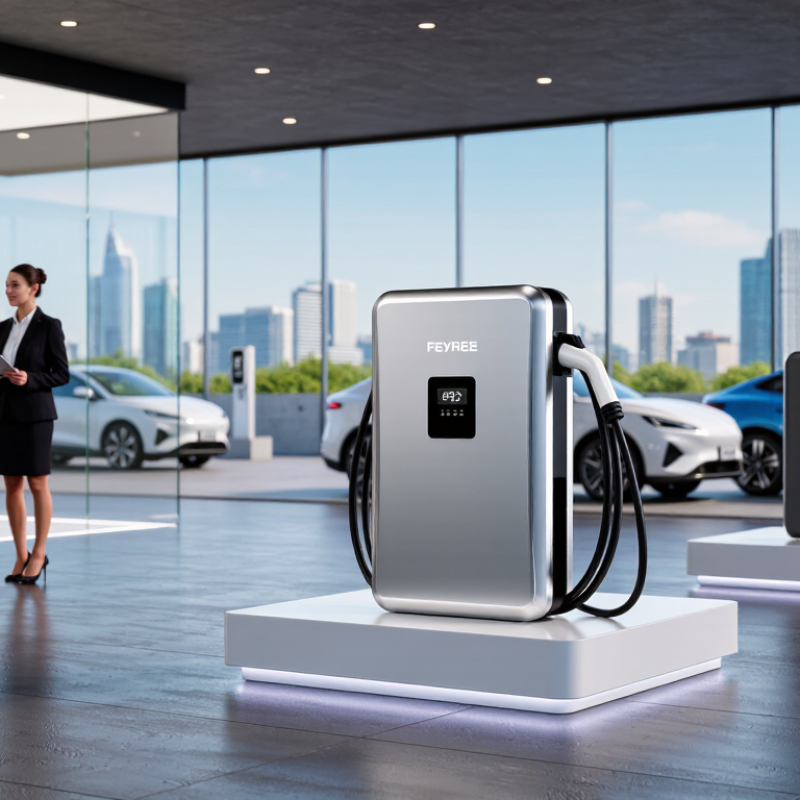
Top Feyree EV Charger Malaysia Suppliers for Global Buyers

Understanding Feyree EV Chargers and Their Main Product Types

Feyree EV Charger Malaysia Suppliers for Global Buyers: Understanding Feyree EV Chargers and Their Main Product Types

An EV charger supplies power through equipment designed for a vehicle’s charging needs. For buyers, the main distinction is charging speed and installation style. Portable AC chargers suit travel or temporary use; a compact unit can fit in a car’s storage compartment. Wall-mounted AC chargers are better for regular home or workplace charging. DC fast chargers serve commercial sites where vehicles need shorter stops. That matters.

Product details vary. AC models may use single-phase or three-phase power, while DC units convert power within the charger. Buyers should check connector compatibility, rated output, cable length, enclosure protection, and local power requirements. The International Energy Agency’s Global EV Outlook 2024 reported more than four million public charging points worldwide in 2023, including over 1.3 million fast chargers. This growth makes clear product specifications and dependable support increasingly important. Yet a tidy catalogue does not guarantee a suitable unit; installation conditions can change the choice.

Tips: Ask suppliers for test documentation, warranty terms, and clear installation requirements. Compare rated output with the site’s available power, not just the vehicle’s maximum charging rate. A small mismatch can mean slower charging.

Top Feyree EV Charger Malaysia Suppliers for Global Buyers - Understanding Feyree EV Chargers and Their Main Product Types

Product type Typical power range Typical electrical supply Common connector type Typical application Checks for global buyers
Portable AC charger About 2.3–3.7 kW, depending on current and supply Usually single-phase AC; voltage and current must match the local circuit Vehicle-side Type 2 or another market-specific AC connector; supply-side plug varies by destination Occasional charging, travel, or locations without a permanently installed EVSE Confirm plug type, rated current, protective features, cable length, and destination-country approvals.
Residential AC wall charger Commonly about 7.4–22 kW; actual output depends on the vehicle and installation Single-phase or three-phase AC; nominal 230 V single-phase and 400 V three-phase systems are used in Malaysia Type 2 is widely used for AC charging in many markets; verify vehicle compatibility Homes, landed properties, and private parking areas Check phase availability, circuit capacity, installation requirements, enclosure rating, and local electrical compliance.
Commercial AC charger Commonly about 7–22 kW per charging point Often three-phase AC for higher output; site supply and load capacity determine the usable power Type 2 socket or tethered Type 2 cable, depending on configuration Workplaces, hotels, retail sites, apartments, and public parking Review access control, metering, load management, network connectivity, warranty, and service response arrangements.
DC fast charger Common product ranges start around 30 kW and extend to 350 kW or more Three-phase AC input converted to DC; installation requires suitable site capacity CCS2 is widely used for DC charging in Europe and many other markets; confirm local vehicle compatibility Highway locations, fleet depots, and sites needing shorter charging stops Compare output-sharing behavior, connector configuration, cooling, communications, maintenance, and grid connection needs.
Smart or networked EV charger Available in AC and DC configurations; power depends on the underlying charger model Depends on the selected AC or DC configuration and site supply Connector depends on charger type and destination market Multi-user properties, charge-point operators, and commercial fleets Ask about software support, remote monitoring, payment options, cybersecurity updates, and OCPP compatibility where required.

Notes: Power ranges are indicative product categories, not guaranteed charging speeds. Actual charging output depends on the vehicle’s onboard charger or DC charging limits, site supply, installation, and operating conditions. Confirm connector compatibility, applicable standards, and approval requirements for the destination country before ordering.

Malaysia’s Role in the Feyree EV Charger Supply Chain

Malaysia’s role in the EV charger supply chain rests on its established electronics manufacturing base. MIDA reported that electrical and electronics exports reached RM575.45 billion in 2023. That figure signals industrial depth, not proof that every factory can produce certified charging equipment. Buyers should check the actual product scope.

Production clusters in Penang, Selangor, and Johor give suppliers access to components, contract manufacturing, and port connections. These can support sourcing of circuit boards, cables, housings, and power electronics. For importers, shorter regional shipping routes may simplify replenishment across Southeast Asia. Still, component availability does not guarantee consistent assembly quality. Ask for traceable test records and sample units.

Demand is expanding. The International Energy Agency’s Global EV Outlook 2024 estimated nearly 14 million electric car sales worldwide in 2023, about 18% of new car sales. This creates opportunity for Malaysian manufacturers, but export readiness depends on validated safety, thermal performance, and vehicle compatibility. That gap deserves scrutiny. An electronics export record is not the same as charger-specific experience. Global buyers should compare factory audits, warranty processes, and after-sales response times before placing large orders.

How to Assess Feyree EV Charger Suppliers in Malaysia

Assessing a Malaysian EV charger supplier starts with evidence, not polished sales claims. Ask for current product datasheets, rated output, connector details, enclosure rating, and protection features. Match these details against the vehicle types and installation conditions you expect to serve. A charger in a covered home bay may face different heat and moisture than one installed outdoors. Small details matter.

Request recent test records and confirm who issued them. Ask directly about unclear paperwork. Check how warranty claims are handled, where replacement parts are stocked, and whether technical staff can help troubleshoot remotely. For overseas orders, verify packaging, lead times, payment milestones, and export documents before placing a large order. A small pilot shipment can reveal cable quality, labeling gaps, or slow responses. It is not a perfect test, but it is better than guessing.

Tips: Compare written specifications across suppliers, request a sample, and keep answers on warranty and support in writing. Ask for proof.

Export Standards, Shipping, and After-Sales Support for Global Buyers

For global buyers assessing Malaysian EV charger suppliers, export readiness means more than a low quotation. The IEA’s Global EV Outlook 2024 reports that public charging points worldwide exceeded four million in 2023, a 40% year-on-year increase. That growth raises expectations for dependable equipment and replacement parts. Request model-specific test reports, clear product labels, and evidence that the charger design aligns with relevant IEC 61851 and IEC 62196 requirements. Destination markets may require additional approvals. A certificate alone is not enough.

Shipping details deserve equal scrutiny. Ask suppliers to confirm Incoterms, export documents, carton dimensions, pallet weight, and moisture protection before booking freight. A charger can arrive with a cracked display after a rough transfer, even when the outer crate looks intact. Check whether spare cables and connectors can ship with the original order. Small details matter. Still, paperwork can look complete while a connector specification is wrong, so verify the exact model and accessories against the purchase order.

After-sales support should be agreed in writing before payment. Set response times, warranty coverage, spare-parts availability, and procedures for remote diagnostics or firmware updates. Ask who handles technical questions across time zones, and request installation and troubleshooting guides in usable English. A realistic service plan is better than a broad promise. Review the supplier’s record of resolving faults, not only its catalogue.

Comparing Suppliers to Choose the Right Business Partner

Comparing EV Charger Suppliers in Malaysia for Global Buyers

Choosing an EV charger supplier is more than comparing unit prices. Buyers should examine product specifications, production capacity, and the support offered after delivery. Ask whether the supplier can provide clear test reports and documentation for the charger models being quoted. Verify that these documents match the exact configuration, cable length, and connector type. Paperwork matters.

A practical comparison starts with a sample. Test it with the intended vehicle and electrical setup, and note how installation instructions handle everyday details, such as cable storage and indicator lights. Ask about output options, weather protection, replacement parts, and warranty terms. A low quote can become costly if spare components take weeks to arrive. A polished brochure is not proof.

Communication deserves the same scrutiny as hardware. Send each supplier the same questions and compare how directly they answer, especially about lead times, packaging, and shipment arrangements from Malaysia. Request a production schedule and clarify how changes are handled after an order is confirmed. If possible, speak with a past buyer about response times when a fault occurs. One detail may still be missed. Even careful checks cannot remove every risk, so record agreed specifications and service commitments in writing before placing an order.

Top Feyree EV Charger Malaysia Suppliers for Global Buyers: Comparing Supplier Portfolios

Typical charger power ratings are a practical starting point when comparing supplier portfolios. These are common market rating classes, not specifications attributed to any particular supplier; confirm product availability and local requirements directly.