By 2026, industry automation will reach far beyond traditional factory robots. Manufacturers will connect machines, software, sensors, and people across entire production networks. The most important systems may include collaborative robots, autonomous mobile robots, industrial IoT platforms, artificial intelligence, robotic process automation, and digital twins. Each type solves a different operational problem. Some reduce repetitive labor. Others improve quality, maintenance, energy use, or production planning.
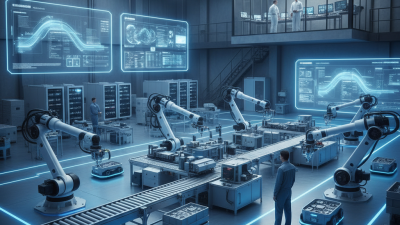
This guide examines how these technologies work in real industrial environments. A vision-guided robot might inspect metal parts under bright LED lighting. A predictive maintenance platform may detect unusual motor vibration before a conveyor stops. Digital twins can model production changes before managers alter a physical line. These examples show why implementation requires more than purchasing advanced equipment. It demands reliable data, trained workers, clear safety procedures, and measurable business goals.
Experience from industrial projects suggests that integration often matters more than novelty. A simple sensor network can deliver greater value than an expensive system with poor data quality. That assumption may be incomplete. Emerging AI tools could change the balance quickly. Forecasts can age badly. Companies should therefore assess security, compatibility, maintenance costs, workforce readiness, and return on investment before deployment. This overview compares the leading types of industry automation expected in 2026, while recognizing that adoption will vary by sector, region, and operational maturity. Readers will gain a practical framework for judging which technologies deserve attention, testing, or a cautious pause.
Industrial automation is the coordinated use of machines, software, sensors, and control systems to perform industrial tasks with less manual intervention. In 2026, it matters because factories face labor shortages, tighter quality demands, and pressure to reduce energy waste. The International Federation of Robotics reported 541,302 industrial robots were installed worldwide in 2023. Its World Robotics 2024 report also recorded more than four million robots operating globally. These figures show that automation is no longer limited to large production sites.
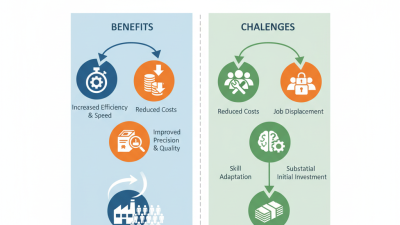
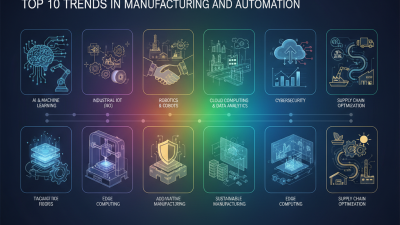
The leading types include robotic arms, autonomous mobile robots, programmable logic controllers, machine vision, industrial Internet of Things systems, and digital twins. Each solves a different problem. Vision systems can detect a small surface defect under factory lighting. Sensors can reveal abnormal motor vibration before a breakdown. Digital twins can test production changes without stopping a real line. The World Economic Forum’s Future of Jobs Report 2025 estimates that 39% of workers’ core skills may change by 2030. That finding suggests automation should support reskilling, not simply remove tasks. The picture is not perfectly tidy. Poor data, weak cybersecurity, and unsuitable equipment can make an automated process slower.
Tips: Start with one measurable bottleneck. Track downtime, defect rates, energy use, and training needs. Keep human oversight for unusual failures. A technically impressive system can still disappoint workers.
Reports provide direction, not certainty. Conditions differ across factories, regions, and industries. Practical trials, documented maintenance results, and transparent performance data remain essential in 2026.
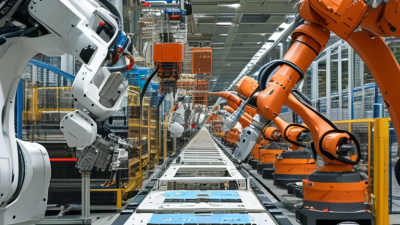
Industrial automation is commonly divided into fixed, programmable, and flexible automation. Each type suits a different production pattern, workforce structure, and level of product variation.
Fixed automation is built for high-volume, repeated production. Transfer lines, conveyor systems, and dedicated assembly stations often use this approach. Machines perform the same sequence with impressive speed and consistency. However, changing the product can require expensive mechanical work. Programmable automation uses stored instructions for different batches. Production teams can adjust recipes, motion sequences, or cutting patterns through industrial control systems. This works well for medium-volume manufacturing. It also depends on accurate programming, testing, and operator training.
Flexible automation handles frequent product changes with limited downtime. Robots, machine vision, servo drives, and networked controllers may work together in one cell. An operator might scan a production order, and the system selects the correct process settings. Useful, but not effortless. Poor data, weak calibration, or unclear maintenance procedures can reduce its value quickly. Integrated automation adds another layer by connecting production equipment, quality checks, energy monitoring, and plant software. In real factory assessments, the best choice depends on volume, product variety, tolerance requirements, and available skills. A fast system is not always the safer or more reliable one. Manual inspection may still catch defects that automated sensors miss. Manufacturers should test these limits before expanding the system.
| Automation Type | Core Operating Principle | Production Volume | Product Variety | Changeover Requirement | Typical Applications | Main Advantage and Limitation |
|---|---|---|---|---|---|---|
| Fixed or Hard Automation | Dedicated equipment performs a predetermined sequence of operations with limited programmability. | High and continuous | Low | Long and often requires mechanical modification | High-speed assembly, transfer lines, packaging, filling, and continuous-process operations | Advantage: Very high throughput and consistent cycle times. Limitation: Expensive and inflexible when products or process requirements change. |
| Programmable Automation | Equipment is controlled by software or stored programs that can be modified for different batches. | Medium to high | Medium | Moderate; program changes and tooling adjustments may be needed | Batch manufacturing, machine tools, process equipment, and production lines with periodic product changes | Advantage: Supports multiple batches and product configurations. Limitation: Changeovers can interrupt production and require technical expertise. |
| Flexible Automation | Computer-controlled systems automatically switch between products with minimal operator intervention. | Medium to high | High | Short; changes are primarily software-driven | Mixed-model assembly, customized products, machining cells, and high-mix manufacturing | Advantage: Combines automation with product flexibility. Limitation: Requires integration, reliable data, and higher initial investment. |
| Integrated Automation | Machines, controllers, production software, quality systems, and material handling operate as a connected system. | Medium to high | Medium to high | Short to moderate, depending on system design | Complete production cells, connected factories, traceability, scheduling, and automated quality management | Advantage: Improves visibility, coordination, and process control. Limitation: Integration complexity and cybersecurity risks increase. |
| Robotic Automation | Programmable robots perform handling, assembly, welding, painting, inspection, or palletizing tasks. | Low to high | Medium to high | Short to moderate, depending on tooling and programming | Material handling, assembly, welding, machine tending, packaging, and repetitive inspection | Advantage: Delivers repeatability, speed, and improved worker safety. Limitation: Needs suitable workholding, safety controls, and skilled programming. |
| Collaborative Automation | Robotic systems are designed to share selected workspaces with people under defined safety conditions. | Low to medium | High | Short, especially for small-batch or mixed-model work | Assembly assistance, screwdriving, inspection, packaging, machine tending, and ergonomic support | Advantage: Flexible deployment and human-machine task sharing. Limitation: Payload and speed may be lower than those of dedicated industrial robot cells. |
| Process Automation | Sensors, controllers, valves, drives, and supervisory systems regulate continuous or semi-continuous processes. | High and continuous | Low to medium | Usually low during continuous operation; planned shutdowns may be required | Chemical processing, food and beverage production, water treatment, energy systems, and pharmaceutical processing | Advantage: Precise control of temperature, pressure, flow, level, and composition. Limitation: Safety, validation, and process continuity requirements can be demanding. |
| Industrial Internet of Things and Data-Driven Automation | Connected sensors and software collect, analyze, and act on operational data for monitoring, optimization, and maintenance. | Applicable across production scales | Medium to high | Usually short because changes are made in software and data workflows | Predictive maintenance, energy monitoring, production analytics, remote supervision, traceability, and quality improvement | Advantage: Supports real-time decisions and optimization without replacing every machine. Limitation: Data quality, interoperability, connectivity, and cybersecurity must be managed. |
Note: Many modern factories combine several automation types. For example, a production cell may use fixed mechanisms for high-speed tasks, programmable controllers for process sequencing, robots for material handling, machine vision for inspection, and connected software for monitoring and optimization.
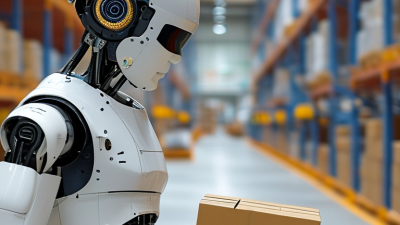
Robotics and cobots are reshaping industrial workflows in 2026. Robots handle repetitive, precise tasks such as welding, palletizing, inspection, and machine tending. Cobots work closer to people, supporting lifting, positioning, and assembly without occupying a separate production cell. Their value comes from coordination, not simple replacement.
A cobot can present a component while an operator tightens fasteners. It can then record torque data and flag an unusual result. This reduces awkward movements and helps workers focus on judgment-based tasks. Small workflow changes matter. A shorter reach can reduce fatigue across hundreds of cycles. Clear screens, adjustable speeds, and simple hand-guiding controls also improve daily usability.
However, automation is not magic. Poorly defined processes can make robotic errors faster and harder to notice. Safety checks, risk assessments, and operator training remain essential before production begins. Maintenance teams should monitor vibration, cycle time, gripper wear, and unexpected stoppages. These details reveal problems earlier than output totals alone. One practical weakness is integration: older machines may not share data cleanly. That can create manual work around an otherwise advanced cell. Engineers should test one process, measure real results, and revise the design when workers report friction. The best system may be less autonomous than expected, but more dependable.
In 2026, industrial automation is shifting from isolated machines to connected decisions. AI can inspect welds, predict motor wear, and adjust production speed within seconds. A camera may detect a hairline crack before an inspector reaches the station. These systems learn from operating data, but skilled workers remain essential. A clean dashboard does not guarantee a correct decision.
IoT gives equipment a continuous voice. Sensors can track vibration, temperature, pressure, and energy use across a production line. When readings change, AI can identify unusual patterns and recommend maintenance before a breakdown occurs. Digital twins extend this capability by creating virtual copies of machines, facilities, or entire processes. Engineers can test a new workflow digitally, observe bottlenecks, and estimate energy demand before changing physical equipment. This reduces disruption and makes experimentation safer.
The difficult part is not installing more sensors. Data quality matters. Old machines may produce incomplete readings, while new devices can create excessive noise. Digital twins also become unreliable when their models are not updated after repairs or process changes. AI predictions can fail during unusual conditions, such as a rare material defect or sudden heat spike. Human review is still necessary. Automation should support practical judgment, not quietly replace it. Field testing often exposes this gap. A system may perform well for months, then struggle with one unexpected production shift. That weakness deserves attention before deployment.
Choosing the right automation strategy for 2026 should begin with business friction, not fashionable technology. The World Economic Forum’s Future of Jobs Report 2025 found that 86% of employers expect artificial intelligence and information processing to transform operations by 2030. Yet adoption alone does not guarantee value. A warehouse with delayed picking needs a different solution from a finance team handling repetitive invoice checks.
Map the process first. Record waiting time, error rates, labor hours, and exception frequency for four weeks. Then choose the least complex tool that solves the bottleneck.
Software automation may suit rule-based approvals, while machine vision or robotics may fit physical inspection and material movement. The International Federation of Robotics reported 541,302 industrial robots installed worldwide in 2023, with more than 4.28 million operating. Scale remains possible, but only where maintenance skills and reliable data already exist.
Start small. Measure before scaling.
A controlled pilot should include a clear baseline, human oversight, cybersecurity checks, and a fallback procedure. The McKinsey Global Survey reported that 72% of organizations used artificial intelligence in at least one business function in 2024. That figure is impressive, but it hides uneven results.
Some pilots will disappoint. That is useful evidence, not failure. Teams should review whether automation improves cycle time without weakening quality, employee judgment, or customer trust. A perfect roadmap is unrealistic; a measurable learning loop is more practical.