Skip to content

7 Best Polyimide Tape Suppliers for Global Buyers

Polyimide Tape has become an important material for electronics, automotive wiring, aerospace insulation, and high-temperature manufacturing. Its thin profile, electrical resistance, and thermal stability make it useful where ordinary pressure-sensitive tape may fail. In practice, buyers often compare adhesive type, film thickness, dielectric strength, temperature range, and clean-removal performance before approving a supplier.

Industry data supports this growing interest. Grand View Research has reported continued expansion in the global polyimide films market, driven by flexible electronics, electric vehicles, and advanced industrial equipment. MarketsandMarkets has also identified electronics and automotive applications as major demand areas for polyimide-based materials. Forecasts differ in market size and growth rate, however. That difference deserves attention.

A supplier’s brochure is not enough. Global buyers should examine traceability, batch consistency, technical data sheets, sample testing, and export experience. A tape that performs well on a smooth laboratory panel may lift from powder-coated metal or leave residue after thermal cycling. Small details matter. This guide reviews seven Polyimide Tape suppliers by product range, customization capability, quality documentation, production capacity, and international service. The assessment considers available evidence rather than marketing claims alone. No ranking is perfect. Local testing remains necessary, especially for aerospace, battery, and high-voltage applications. Some suppliers disclose limited performance data, which makes direct comparison difficult. That limitation is worth stating clearly.
7 Best Polyimide Tape Suppliers for Global Buyers

What Is Polyimide Tape and Why Is It Used Worldwide?

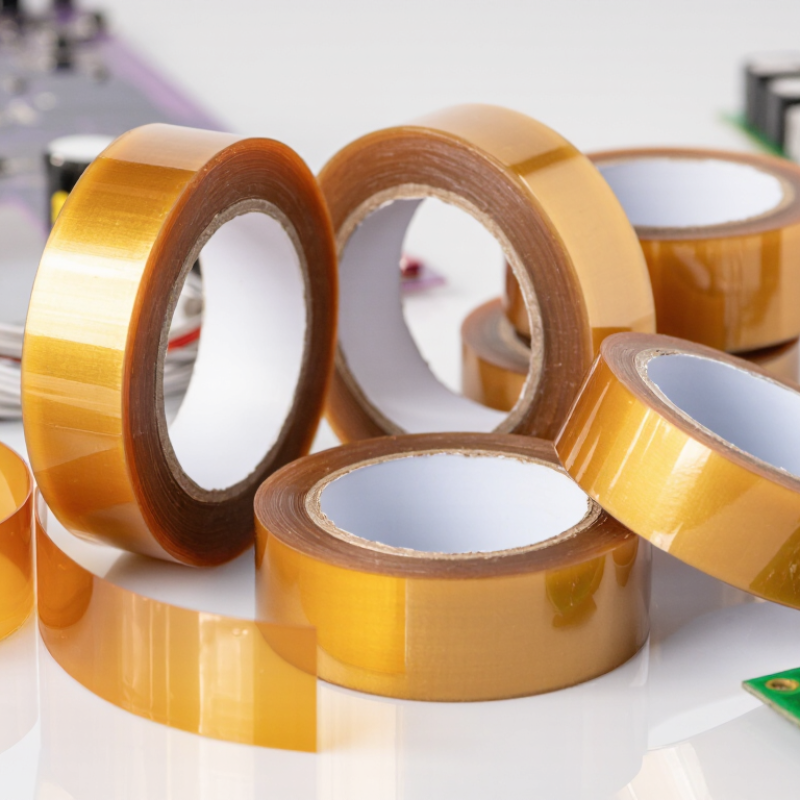
Polyimide tape is a thin, flexible insulation material designed for demanding industrial environments. It combines strong dielectric performance with resistance to heat, chemicals, and abrasion. Unlike ordinary masking tape, it can remain stable near soldering areas, battery assemblies, and electrical coils. Its amber film also makes coverage easy to inspect during production. These features explain its worldwide use in electronics, aerospace components, automotive systems, and precision manufacturing. However, polyimide tape is not a universal solution. Adhesive performance can change with surface texture, pressure, humidity, and storage time.

Tips: Check the required temperature range first. Then confirm adhesive type, thickness, width, and residue behavior. Clean the surface before application. Press the tape firmly, especially around sharp corners. Small samples should be tested before large-volume purchasing. A supplier with clear technical data, batch traceability, and consistent quality control is usually safer for global buyers.

One practical detail is often overlooked: the film may survive high heat, while the adhesive may not. This difference can cause lifting or contamination during processing. In real production, operators should review heating duration, not only peak temperature. They should also inspect removal after cooling. Polyimide tape may look perfect but still leave weak edges. That is why reliable selection requires application testing, documented specifications, and honest discussion with technical suppliers. Supplier claims deserve verification.

Key Factors for Evaluating Polyimide Tape Suppliers

7 Best Polyimide Tape Suppliers for Global Buyers

Choosing among the 7 best polyimide tape suppliers requires more than comparing prices. Buyers should examine adhesive stability, thickness tolerance, dielectric strength, and temperature performance. According to Fortune Business Insights’ 2024 Polyimide Films Market report, the market reached approximately USD 1.1 billion in 2023. This growth reflects rising demand from electronics, aerospace, and battery manufacturing.

A reliable supplier should provide recent test reports, batch traceability, safety data sheets, and clear storage instructions. Ask for samples before approving a large order. Check whether the tape maintains adhesion after thermal cycling, humidity exposure, and repeated removal. Supplier experience matters, but documentation matters more. Some vendors claim high-temperature performance without explaining test conditions. That deserves caution. Buyers should also review minimum order quantities, lead times, export packaging, and technical support across regions.

Tips: Request three sample widths and test them on your actual substrate. Measure peel strength after heating, not only at room temperature. Compare certificates with independent laboratory results when the application is safety-critical. I would also record every result in a simple supplier scorecard. It may feel slow, but memory is unreliable.

Seven Leading Polyimide Tape Suppliers for Global Buyers

Seven leading polyimide tape suppliers are gaining attention as electronics, batteries, aerospace, and industrial manufacturing expand. MarketsandMarkets reports that the global adhesive tapes market could grow from about USD 85 billion in 2023 to over USD 115 billion by 2028. This growth increases demand for stable, heat-resistant insulation materials.

Global buyers should compare seven supplier profiles through measurable performance, not catalog language. Check temperature resistance, dielectric strength, adhesive residue, liner quality, and roll consistency. A practical trial should include narrow slitting, repeated bending, and exposure near 260°C. Clean removal matters too. One poor edge can interrupt an automated assembly line.

Grand View Research projects continued growth in the polyimide films market through 2030, supported by flexible electronics and advanced electrical systems. That trend favors suppliers with strong film control, coating expertise, and international quality documentation. ISO 9001 certification is useful, but it does not prove every batch is reliable. Buyers should request recent test reports, lot traceability, and samples from different production dates. I would also verify carton protection and moisture control during shipping. No ranking is flawless. Supplier claims still require independent testing, especially when tape performance changes after storage, cutting, or contact with unusual substrates.

7 Best Polyimide Tape Suppliers for Global Buyers - Seven Leading Polyimide Tape Suppliers for Global Buyers

Comparison of anonymous supplier profiles and commonly published polyimide tape specifications

Supplier Profile Primary Buyer Coverage Film & Adhesive Construction Typical Thickness Range Temperature Capability Available Formats Common Applications Typical Order Model Buyer Verification Points
Supplier Profile 01 North America, Europe, and Asia-Pacific Polyimide film with silicone pressure-sensitive adhesive Approximately 0.025–0.18 mm total thickness Commonly rated around −73°C to 260°C, depending on construction Master rolls, slit rolls, die-cut parts, and custom widths PCB masking, soldering, coil insulation, and thermal processing Stock rolls for standard sizes; quotation required for custom converting Adhesion, dielectric strength, residue, width tolerance, and export packaging
Supplier Profile 02 European Union, United Kingdom, and Middle East Polyimide film with silicone adhesive; optional acrylic adhesive grades Approximately 0.035–0.15 mm total thickness Usually specified from about −60°C to 200–260°C Standard rolls, narrow slit rolls, sheets, and stamped components Electrical insulation, powder coating, masking, and high-temperature bundling Small trial quantities and repeat industrial supply contracts REACH/RoHS status, technical data sheet, batch consistency, and core size
Supplier Profile 03 East Asia, Southeast Asia, and global distributors Polyimide film with silicone pressure-sensitive adhesive Approximately 0.03–0.20 mm total thickness Commonly marketed for continuous use near 180–200°C and short exposure up to 260°C Bulk rolls, slit rolls, custom labels, and die-cut shapes Transformer and motor insulation, battery assembly, and PCB protection Competitive bulk pricing with minimum quantities for customized formats Minimum order quantity, sample approval, adhesive transfer, and roll winding quality
Supplier Profile 04 North America and Latin America High-temperature polyimide film with silicone adhesive Approximately 0.05–0.18 mm total thickness Typically selected for applications up to approximately 260°C Industrial rolls, slit widths, sheets, and precision die cuts Wave soldering, reflow masking, 3D printing, and composite processing Distributor stock or direct quotation for engineered components Temperature-cycle test, clean removal, tensile strength, and shipping lead time
Supplier Profile 05 Global OEM and contract-manufacturing supply chains Polyimide film with silicone or acrylic pressure-sensitive adhesive options Approximately 0.025–0.15 mm total thickness Grade-dependent; commonly specified between 150°C and 260°C Precision slit rolls, kiss cuts, complex die cuts, and laminated constructions Battery packs, flexible circuits, sensors, and electronic component protection Prototype sampling followed by scheduled production releases Dimensional drawings, die-cut tolerance, adhesive compatibility, and quality records
Supplier Profile 06 India, Southeast Asia, Africa, and regional industrial markets General-purpose polyimide film with silicone adhesive Approximately 0.04–0.18 mm total thickness Often offered for service temperatures from about −60°C to 200°C Standard adhesive rolls, slit rolls, and basic custom widths Electrical repair, insulation, masking, and general maintenance Low-to-medium volume orders with size-dependent minimum quantities Actual film grade, adhesive coat weight, shelf life, packaging, and import documents
Supplier Profile 07 Worldwide online and distributor purchasing Polyimide film with silicone pressure-sensitive adhesive in standardized constructions Approximately 0.03–0.13 mm total thickness Commonly listed for high-temperature exposure up to approximately 260°C Ready-to-ship rolls, pre-cut strips, sheets, and small sample packs Prototyping, laboratory work, 3D printing, soldering, and repair applications Small quantities, online ordering, and rapid dispatch from local inventory Product traceability, stated temperature method, adhesive residue, and return policy
Buyer note: The ranges above represent commonly published industry specifications for polyimide tape constructions and are not guaranteed specifications for any individual supplier. Request a current technical data sheet, sample, certificate of conformity, and application-specific test results before purchase.

Comparing Product Quality, Certifications, Pricing, and Support

7 Best Polyimide Tape Suppliers for Global Buyers

Comparing Product Quality, Certifications, Pricing, and Support

A reliable supplier should provide more than a clean product photo. Compare tape thickness, tensile strength, elongation, dielectric performance, and temperature resistance. Ask for recent test reports, not generic brochures. A 25-micrometer tape may look identical across suppliers, yet its adhesive can behave differently during soldering or thermal cycling. That difference matters.

Certifications deserve careful checking. ISO 9001 can indicate controlled quality processes, while RoHS and REACH documentation supports restricted-substance compliance. For electrical applications, request relevant safety certifications and batch-level certificates of analysis. Verify the certificate number and issuing body. Small details matter. Lot traceability is especially useful when one roll shows uneven adhesion or edge lifting. Specifications can still be incomplete, though; suppliers sometimes omit aging data or peel-test conditions.

Pricing should include samples, minimum order quantities, slitting fees, freight, customs handling, and replacement policies. The lowest quotation is not always economical. A cheaper roll may create waste if the liner wrinkles or the adhesive transfers. Ask each supplier about lead times, production capacity, packaging, and technical response time. Strong support includes application guidance, sample evaluation, and clear corrective-action reports. I would also test two or three production lots before approval. That step costs time, but one overlooked variation can disrupt an entire assembly line.

How to Select the Right Supplier for Your Application

Selecting among seven polyimide tape suppliers requires more than comparing prices. Application fit should lead the decision. A 2024 MarketsandMarkets report identifies electronics as a major growth area for polyimide materials, driven by insulation and flexible circuit demand. That growth increases supplier differences in coating quality. Check adhesive type, tape thickness, dielectric strength, temperature rating, and residue after removal. ASTM D1000 test results can support these comparisons, but supplier laboratories may use different conditioning methods.

Ask for a recent technical data sheet and a certificate for the actual production lot. Confirm thickness tolerance, roll length, core size, and storage conditions. For high-temperature assembly, request aging results at your real exposure temperature, not only the headline rating. UL 510 recognition may help with insulation decisions, while IPC guidance can support electronics process controls. A supplier with documented traceability and responsive engineering support is usually safer than one offering the lowest quotation. I have seen attractive samples fail during long thermal cycles. Datasheets can look perfect.

Tips: Order sample rolls from two or three suppliers. Apply them to the real substrate. Measure peel strength before and after heating. Check edge lifting under a microscope. Record every result. Also review minimum order quantities, lead times, packaging, and export documents. A small pilot batch often reveals coating variation that a single sample cannot show. Do not assume one adhesive suits every surface. That assumption is common, and occasionally expensive.

7 Best Polyimide Tape Suppliers for Global Buyers

How to Select the Right Supplier for Your Application

Use this practical 100-point evaluation framework to compare seven candidate suppliers without relying on brand reputation alone. Technical performance, including electrical insulation and temperature resistance, should receive the highest priority, while quality consistency, documentation, delivery capability, and customization support help confirm long-term suitability.

The percentages represent recommended buyer evaluation weights rather than supplier rankings or company-specific performance data.