Top 10 Study Furniture Manufacturers for Global Buyers
Study Furniture is no longer a simple classroom purchase. Global buyers must balance ergonomics, durability, price, and dependable delivery. OECD’s PISA 2022 assessment covered 81 countries and economies, drawing on roughly 690,000 students. It does not prove that furniture improves achievement. It does show the scale and variety of learning environments that education systems must support.
For market context, Grand View Research’s School Furniture Market report examines demand by product, material, and region. Those categories help buyers compare manufacturers beyond catalogue photos. A desk may look sturdy online, yet wobble after repeated classroom use. Check adjustable height ranges, edge finishing, storage options, surface cleanability, warranty terms, and documented quality controls. Small details matter. Shipping lead times and replacement-part availability can matter just as much.
This Top 10 guide introduces manufacturers serving international buyers, with attention to product range, production capability, and export readiness. It is a practical shortlist, not a universal ranking; suitability depends on local standards, budgets, and project needs. Buyers should verify specifications and certifications directly, since product claims and regional requirements can change. And one caveat: published market reports rarely compare every factory on equal terms. A careful review still needs samples, clear questions, and a little healthy skepticism.
What Study Furniture Manufacturers Produce and Who They Serve
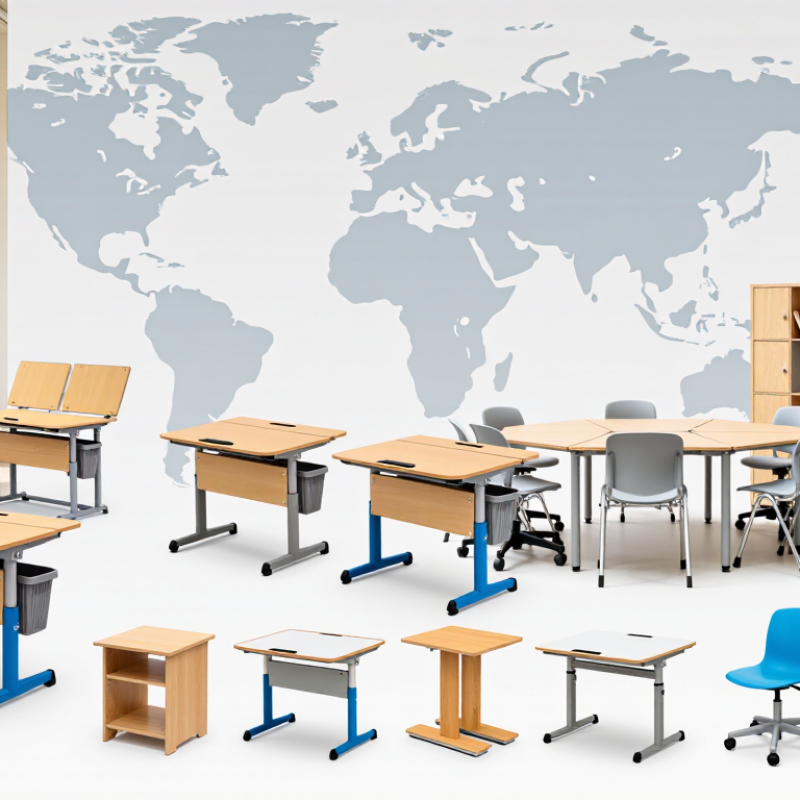
Study furniture manufacturers make more than desks and chairs. Their ranges commonly include adjustable tables, task seating, bookcases, mobile storage, teacher stations, and group-work tables. They serve public and private schools, universities, libraries, tutoring centers, and home learners. Buyers differ: a school district may need hundreds of durable, easy-to-clean units, while a family may prioritize a compact desk and cable access. The National Center for Education Statistics reported about 49.6 million students in U.S. public elementary and secondary schools in fall 2022. That scale helps explain demand for standardized products, but room layouts and student needs still vary widely.
Manufacturers also support procurement with sample testing, layout drawings, replacement parts, and installation guidance. These details matter when furniture must fit narrow aisles, shared classrooms, or changing age groups. Materials and adjustability deserve close review; a low purchase price can hide hard-to-replace components. No catalog solves every room. Buyers should compare load ratings, dimensions, cleaning requirements, warranty terms, and delivery capacity, then confirm specifications against actual floor plans.
Tips: Measure doorways and aisles before ordering. Test chair height with the intended desk, and request finish samples under classroom lighting. Ask how parts can be replaced. It is easy to overvalue appearance; comfort and maintenance often reveal their importance later.
Criteria for Evaluating Manufacturers in the Global Market
Global buyers should assess study furniture manufacturers on product safety, build quality, delivery reliability, and after-sales support. Compare specifications, not just catalog images. Check desk height ranges, rounded-edge finishes, cable access, and whether replacement parts remain available. Small details matter.
The World Bank’s 2023 Logistics Performance Index evaluated 139 economies across six areas, including customs, infrastructure, and shipment timeliness. Use these measures to examine a supplier’s shipping routes and delivery plans, rather than accepting broad promises. UNCTAD’s Review of Maritime Transport 2024 reported that maritime trade grew 2.4% in 2023. That figure is a reminder to ask how manufacturers manage delays, stock, and transport costs.
Request independent test reports for stability, strength, and durability, then confirm that the tested model matches the quoted product. Review material specifications and factory audit records, but treat paperwork as evidence to verify, not proof by itself. A video call can show production lines; it cannot replace an onsite inspection. No score is perfect. Check customer references from markets with similar climate and shipping conditions, and ask how warranty claims are handled. Some buyers overlook this step. They should not.
Criteria for Evaluating Study Furniture Manufacturers
Suggested evaluation weighting for global buyers. Adjust the percentages to reflect your product, market, and procurement priorities.
Ten Study Furniture Manufacturers for International Buyers
Comparing ten study furniture manufacturers gives international buyers a clearer view of product quality, communication, and export readiness. Look beyond polished catalog images. Request dimensions, material specifications, finish options, and assembly instructions for each desk or bookcase. A 120-centimeter desk may look spacious online, but its leg placement can limit chair movement. Ask how the manufacturer checks drawer alignment and surface consistency before packing.
Samples help, but they are not the whole story. Inspect edge banding, drawer movement, and the underside of the desktop. Confirm carton dimensions, protective packaging, production timelines, and who handles questions when an order changes. Get specifications in writing. A responsive sales contact is useful, though one smooth conversation cannot prove consistent production. I would compare the sample against the final order details; small differences can matter. Some buyers overlook spare hardware and clear assembly diagrams. They can save time later.
Tips: Compare the same desk model across suppliers. Ask for a current sample and written packing details. Check whether quoted lead times include production only or shipping, too. Keep a simple scorecard, but leave room for judgment. The lowest price may not reflect the cost of delays or difficult assembly.
Comparing Product Ranges, Quality, and Customization Options
A strong study-furniture supplier should offer more than desks and chairs. Look for coordinated ranges: adjustable-height tables, stackable seating, storage, and pieces for libraries or group work. Grand View Research estimated the global school-furniture market at USD 4.85 billion in 2023, projecting 5.4% annual growth from 2024 to 2030. That points to a broadening market, not proof that every supplier can meet the same needs. Check dimensions, available finishes, minimum order quantities, and replacement-part support before comparing prices. Small details matter. A desk edge that chips or a chair that wobbles can quickly undermine an otherwise attractive quote.
Quality claims need evidence. Ask for test documentation, load limits, warranty terms, and details on scratch-resistant surfaces and easy-to-clean finishes. EN 1729 provides dimensional and functional guidance for educational furniture, while relevant test reports help buyers check individual products. The OECD’s PISA 2022 assessment covered 81 countries and economies, a reminder that classroom layouts and student needs vary widely. Custom options may include multiple seat heights, left- or right-handed desk layouts, durable laminate colors, and cable openings. Yet customization can add lead time and complicate later replacements. It is easy to overlook. Compare one standard product with one customized sample, then inspect both for sharp edges, stable legs, and consistent finish quality.
Key Factors in Choosing a Manufacturer for Your Market
Choosing a study furniture manufacturer starts with the needs of your local market, not a catalogue. Check desk heights, chair adjustments, and storage dimensions against the age and body sizes of intended users. A chair that looks suitable online may feel uncomfortable after a full study session. Ask for product specifications, material details, and relevant test reports, then confirm that they match your market’s requirements. Details matter.
Review how the manufacturer controls quality across repeat orders. Request a sample and inspect its edges, joints, drawer movement, and finish under ordinary use. A polished sample can still hide weak hinges or uneven assembly in later batches. Ask how defects are recorded, corrected, and prevented from recurring. Not always simple. Clear answers matter more than broad promises.
Compare minimum order quantities, lead times, packaging, and replacement-part availability alongside unit price. A low quote may not include protective packaging for long-distance shipping or the adjustments your market needs. Discuss customization early, including colors, dimensions, and cable openings, and get agreed specifications in writing. Communication is part of quality control. If replies are vague before an order, resolving a production issue may be harder later. Allow time for an independent inspection when the order size justifies it, and check warranty terms before committing.