Top 5 Tips for Choosing the Best Agricultural Drones?
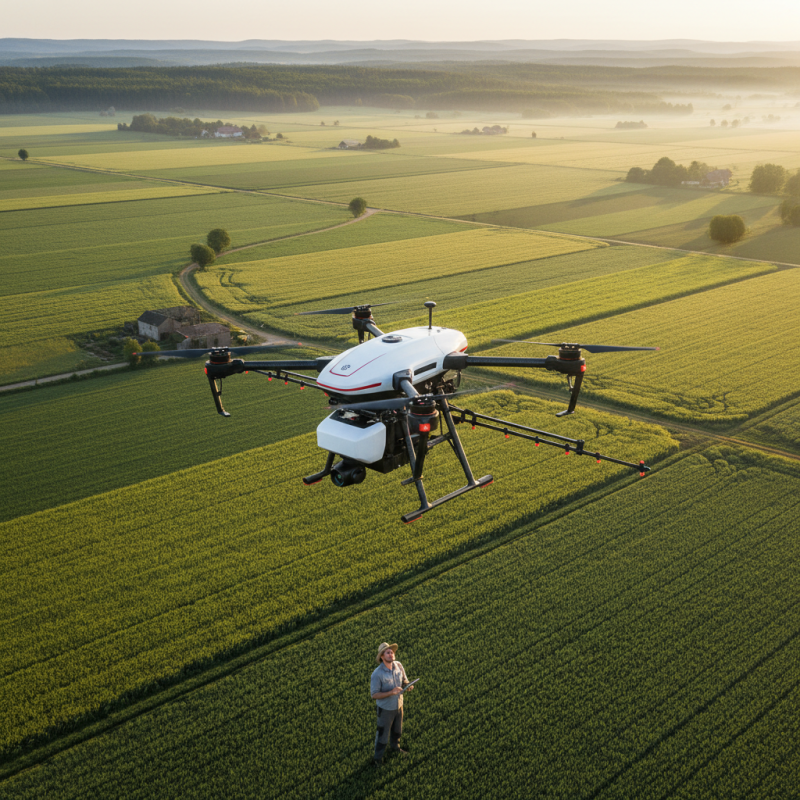
As the agricultural industry evolves, the use of technology becomes increasingly vital. One such innovation is Agricultural Drones, which are transforming how farming is approached. Dr. Sarah Thompson, a renowned expert in precision agriculture, once stated, "Drones are revolutionizing farming, allowing for precise data collection and resource management."
Selecting the ideal Agricultural Drone isn't just about checking specifications. It involves understanding your unique farming needs and challenges. Many farmers often overlook the importance of specifics when choosing a drone. Each model offers different features that cater to varying agricultural tasks. For instance, the payload capacity can significantly impact your ability to monitor crop health or assess field conditions effectively.
Additionally, considering factors like battery life and range can make or break your drone experience. It's not just about flying a drone; it's about maximizing its potential in your farming practices. Farmers should reflect on their actual requirements versus technological trends. A misaligned choice could lead to inefficiencies. Ultimately, choosing the right Agricultural Drone is a significant decision that could shape the future of your farming operations.
Understanding Your Agricultural Needs and Objectives
When considering agricultural drones, understanding your specific needs is vital. Precision agriculture aims to increase yield while reducing costs. According to a 2022 report by the Agricultural Drones Market Analysis, 70% of farmers believe that drone technology improves crop monitoring efficiency. Yet, not all drones are created equal.
Farmers often struggle to identify what they truly require. Is it crop health monitoring, soil analysis, or pest detection? Each application demands different features. A recent survey indicated that 45% of farmers reported difficulty in matching drone specifications to their farming practices. This gap can lead to investments in drones that don't address essential needs.
The choice of drone should align with your farming goals. Consider factors like field size and types of crops. For instance, if you're growing varied crops across large areas, high-resolution cameras and multispectral sensors are crucial. However, if your focus is on smaller plots, simpler models can suffice. Understanding these nuances can avoid overspending and ensure effective use of drone technology in agriculture.
Evaluating Drone Specifications and Features
When evaluating drone specifications, it's crucial to consider camera quality. Higher resolution cameras offer better crop monitoring. Look for drones equipped with multi-spectral imaging capabilities. This feature helps in assessing plant health effectively. You may find that some models excel in this area while others do not.
Battery life is another vital specification. Drones with longer durations allow for extensive surveying without interruptions. However, some models may not deliver on their promised flight times. It’s essential to read user reviews to gauge real-world performance.
Payload capacity matters too. Some agricultural drones can carry additional sensors or nutrient sprayers. This added versatility can be beneficial for diversified farming practices. Assess your specific needs, and you may discover which specifications justify a drone's price. Keep in mind that the market is always evolving, and new features appear frequently. It might leave you questioning if you should wait for the latest model.
Considering Flight Time and Range Capabilities
When selecting agricultural drones, understanding flight time and range is crucial. Most agriculture drones have a flight time between 20 to 60 minutes. Longer flight times are ideal for large farms. A recent report from the Agriculture Drone Market indicates that drones with extended flight ranges can cover up to 100 acres in a single charge, enhancing efficiency significantly.
It's essential to consider the drone's range capabilities. Ranges typically vary from 1 to 5 kilometers. Drones with longer ranges allow for better data collection across expansive properties. However, few drones maintain consistent performance at maximum range. Some may experience signal loss or reduced data quality, leading to incomplete surveys.
Explore options that balance both aspects. Look for drones that offer a practical mix of robust battery life and reliable real-time data transmission. Remember, technology is ever-evolving. The initial cost often reflects the capabilities and longevity of the drone. Not every expensive model guarantees top performance. It's wise to research independent reviews and user experiences to inform your decision.
Assessing Camera Quality and Data Analysis Tools
When choosing agricultural drones, assessing camera quality is crucial. A high-resolution camera can capture detailed images of crops. Look for drones with a minimum of 12MP. Higher megapixels result in clearer imagery, beneficial for precise analysis.
Data analysis tools are equally important. Software that interprets the collected data can reveal insights about crop health. Some drones come with integrated analysis tools, while others require third-party applications. Ensure the software is user-friendly and compatible with your systems.
Consider the specific needs of your farm. If you focus on large fields, look for drones with longer flight times and robust data capabilities. Also, reflect on the learning curve of using these technologies. You may need time to fully understand their potential. Ultimately, the right drone enhances efficiency and productivity in agricultural practices.
Top 5 Tips for Choosing the Best Agricultural Drones: Camera Quality and Data Analysis Tools
Comparing Budget and Return on Investment Options
When choosing agricultural drones, understanding budget and return on investment (ROI) is crucial. You need to assess initial costs. Some drones may seem affordable but can lead to high maintenance costs. Others might have a higher price tag but offer advanced features. They could save labor and increase crop yields. That’s an essential factor.
Consider the features you need. Drones with enhanced imaging and precision agriculture capabilities can provide significant savings in the long run. They reduce waste and optimize inputs. However, shallow analysis may lead to overspending on unnecessary features. Take time to evaluate your farm's specific needs. This will guide you to a better choice, one that balances cost and functionality.
Think about long-term savings versus short-term expenses. A drone that costs more upfront might deliver better efficiency and higher yields. Regular assessments of performance can reveal whether a purchase is indeed worthwhile. Stay informed about the evolving technology. Each innovation could impact your ROI significantly. Stay open-minded to new adapted technologies within your budget constraints.
Top 5 Tips for Choosing the Best Agricultural Drones
| Aspect | Budget Options | High-End Options | ROI Potential |
| Price | $500 - $1,500 | $3,000 - $10,000 | High (up to 300% return within 3 years) |
| Camera Quality | 720p - 1080p | 4K and Multispectral | Improved crop monitoring |
| Flight Time | 10 - 20 minutes | 30 - 50 minutes | More coverage per flight |
| Ease of Use | Beginner-friendly | Requires training | Higher operational efficiency |
| Sensors | Basic RGB | Multispectral, Thermal | Precision agriculture applications |