Skip to content

What Are the Top Types of Welded Pipe for Buyers?

Choosing the right Welded Pipe starts with understanding how it will perform in a real installation, not just comparing prices. Buyers may encounter longitudinal welded pipe, spiral welded pipe, electric resistance welded pipe, and stainless steel welded pipe. Each type suits different pressures, diameters, temperatures, and corrosion conditions. A pipe used beneath a city road faces different demands from one carrying water inside a food-processing facility. The weld method, material grade, wall thickness, and surface finish all deserve careful review.

This guide examines the top types of Welded Pipe from a buyer’s perspective. It considers manufacturing consistency, dimensional accuracy, connection requirements, and long-term maintenance. Experienced procurement teams also check inspection reports, traceability records, testing procedures, and applicable industry standards before placing an order. Small details matter. A clean weld profile can simplify installation. A poorly matched coating may create problems much later. No single option wins every project. Even a technically correct selection can disappoint when delivery control, storage, or site handling is ignored. That is where buyers often learn the hard way.

The discussion will compare practical strengths and limitations across common welded pipe categories. It will also explain when carbon steel, stainless steel, or larger spiral-welded designs may offer better value. Cost matters, but it should not stand alone. A lower purchase price may bring higher repair or replacement expenses. Product data, supplier experience, and independent inspection can reduce uncertainty. Still, every project has unusual conditions. Careful questioning remains essential.
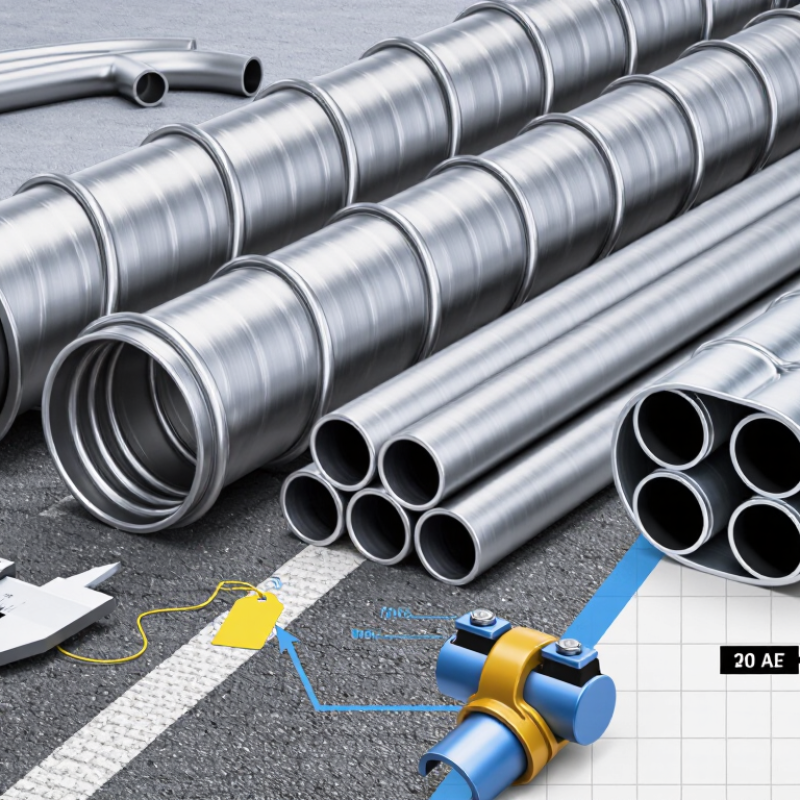
What Are the Top Types of Welded Pipe for Buyers?

What Is Welded Pipe and How Is It Manufactured?

Welded pipe is made by forming flat steel strip or plate into a round shape, then joining the edges with heat and pressure. The process begins with chemical and mechanical testing. Mills then level, cut, and form the steel before welding the seam. Ultrasonic or radiographic inspection can reveal incomplete fusion, cracks, or hidden porosity.

The main types include electric resistance welded (ERW), high-frequency welded (HFW), longitudinal submerged arc welded (LSAW), and spiral submerged arc welded (SSAW) pipe.

ERW and HFW pipe suit many water, structural, and low-to-medium pressure applications. LSAW pipe uses heavier plate and often serves larger-diameter transmission lines. SSAW pipe can produce long, wide sections efficiently, but its helical seam requires careful inspection.

Seam quality matters.

The World Steel Association reported about 1.89 billion tonnes of crude steel production in 2023. That scale supports broad pipe availability, but it does not guarantee consistent quality.

Buyers should check the mill’s heat numbers, welding procedure, dimensional tolerances, and non-destructive testing records. ISO 3183 and ASTM specifications provide useful benchmarks for line pipe and general service pipe.

Still, selecting only by diameter and price is risky. A cheaper pipe may require extra coating, repairs, or field adjustments. I have seen specifications look complete while omitting impact testing and operating temperature. That omission deserves a second review.

How Are Welded Pipe Types Classified?

Welded pipe is classified by how it is made, where the seam appears, and what service it must handle. In practical purchasing, the manufacturing route is often the clearest starting point. Electric resistance welded pipe usually has a straight longitudinal seam and suits many moderate-pressure systems. Longitudinal submerged arc welded pipe uses a larger welding process for thicker walls and larger diameters. Spiral Welded Pipe forms a helical seam and can produce wide diameters efficiently.

The material creates another useful category. Carbon steel welded pipe is common in structural frames, water lines, and general industrial service. Stainless steel welded pipe offers stronger resistance to corrosion, especially where moisture or chemicals are present. Alloy grades may be selected for heat or pressure, but their higher cost needs technical justification. Material certificates matter here. A polished surface alone proves very little.

Buyers also classify pipe by outside diameter, wall thickness, end finish, and pressure rating. Plain ends support fabrication, while beveled ends help prepare field welds. Coated pipe may suit buried or wet environments, but coating quality and repair procedures deserve close inspection. Recognized standards define testing, dimensions, and tolerances, yet one standard cannot solve every design problem. I have seen orders fail because buyers compared diameter but ignored wall thickness. That mistake is easy to make. Check the fluid, temperature, joining method, and delivery conditions together before choosing a type.

What Are the Top Types of Welded Pipe for Buyers?

How are welded pipe types classified? A useful starting point is the orientation of the primary weld seam.

How to read this chart: ERW and LSAW pipes have a longitudinal seam, while SSAW pipes have a helical seam. Each type is shown with one primary seam; submerged-arc processes may use multiple weld passes to form that seam. Buyers typically compare manufacturing process, diameter, wall thickness, material grade, and applicable specification.

What Are the Main Types of Welded Pipe?

Welded pipe is commonly grouped by how its seam is made. Electric resistance welded (ERW) pipe starts with a flat steel strip, formed into a tube and joined along a straight seam using electrical heat and pressure. It is often selected for water lines, structural work, and general industrial service. Check wall thickness, outside diameter, and inspection records against the project specification; the label alone says little about suitability.

Submerged arc welded (SAW) pipe uses an arc beneath a layer of granular flux. Longitudinal SAW pipe has a seam running along the pipe, while spiral SAW pipe is formed from coiled plate with a helical seam. These methods can produce larger diameters and heavier walls. They are often considered for transmission and infrastructure projects, but handling and fabrication costs matter too. Details vary.

Stainless steel pipe may also be welded using processes such as TIG, especially when clean seams and controlled heat input are important. Material grade, corrosion exposure, operating pressure, and end connections all affect the choice. A pipe that looks smooth can still have defects inside. Review the stated manufacturing method and applicable test results before buying; I would not judge quality from appearance alone.

Which Materials and Standards Matter to Buyers?

When buyers compare welded pipe, material selection should come before price. Carbon steel suits structural frames, water lines, and general industrial service. Stainless steel performs better where moisture, chemicals, or repeated cleaning create corrosion risks. Low-alloy steel can provide greater strength, but it may require tighter welding and heat-treatment controls.

The standard must match the pipe’s actual duty. ASTM A53 commonly covers general mechanical and pressure applications, while ASTM A106 is designed for seamless carbon steel pipe at high temperatures, so it should not be applied to welded products without careful review. For line-pipe service, API 5L defines requirements for suitable grades, testing, and manufacturing controls. ASME B36.10M helps buyers confirm outside diameter and wall-thickness dimensions. European projects may instead require EN 10217, depending on service conditions and certification needs.

Do not trust a standard number alone. Check the grade, manufacturing process, weld inspection, chemical limits, pressure rating, and test reports. A pipe marked “carbon steel” may still vary greatly in toughness and corrosion resistance. I have seen purchasing decisions focus on wall thickness while overlooking temperature changes and fluid chemistry. That is an expensive mistake. Ask for traceable mill certificates, dimensional records, and evidence of required non-destructive testing. Standards reduce uncertainty, but they do not replace engineering judgment. The specification should also state end preparation, coating needs, and acceptable tolerances. Even experienced buyers can miss one detail.

How Should Buyers Choose the Right Welded Pipe?

Choosing the right welded pipe starts with service conditions, not catalogue diameter. ERW pipe suits many low- and medium-pressure water, structural, and mechanical applications. Longitudinal submerged arc welded pipe offers thicker walls for demanding transmission lines. Spiral welded pipe can provide large diameters efficiently, especially for water infrastructure. The weld is only one part of the decision.

Review the fluid, pressure, temperature, corrosion exposure, and installation method. A 24-inch water line buried in wet soil needs different protection from a steam line inside a plant. Specify wall thickness using the design code, not a visual estimate. Check yield strength, toughness, weld inspection, hydrostatic testing, and traceable mill certificates. ASTM, API, ISO, and regional standards may differ in testing requirements, so the project specification should name the exact edition.

Market context also matters. The World Steel Association’s October 2024 Short Range Outlook forecast global steel demand at about 1.77 billion tonnes in 2025. That scale does not guarantee consistent pipe quality. Buyers should verify heat numbers, coating thickness, ovality, and end preparation before shipment. Independent inspection is useful for critical lines. It is not excessive paperwork.

A practical mistake is comparing price per metre alone. Calculate total installed cost, including coating, welding, transport, supports, and future maintenance. I would also question unusually short delivery promises. They may reflect stock availability, or weaker inspection. The safest choice balances code compliance, operating life, supplier evidence, and realistic project risks.