Skip to content

How to Choose Electronics Automation Solutions in 2026?

Choosing an electronics automation solution in 2026 requires more than comparing machine prices. The right system must fit your products, people, factory space, and future production plans. A compact PCB line may need high-speed placement, precise soldering, machine vision, and reliable traceability. Another facility may value rapid changeovers more than maximum speed. The details matter.

Robotics pioneer Joseph Engelberger once said, “I can’t define a robot, but I know one when I see one.” His observation remains useful. Automation should be judged by practical results, not impressive demonstrations. Examine cycle time, feeder flexibility, defect detection, software integration, maintenance access, and operator training. Ask suppliers to show performance using products similar to yours. A polished showroom trial may hide difficult setup conditions.

Cybersecurity and data ownership also deserve careful attention. So do spare parts, remote support, energy use, and upgrade policies. These costs often appear after installation. They can reshape the original return-on-investment calculation. A solution that runs quickly but creates frequent stoppages is not genuinely efficient. That seems obvious. It is still overlooked.

This guide will help manufacturers compare electronics automation platforms with clearer criteria. It will examine technical capability, supplier reliability, workforce readiness, and long-term operating value. It will also challenge one common assumption: newer equipment is not automatically better. Sometimes, a simpler system with stronger local support delivers more dependable production. The best choice may be less glamorous, but more resilient.
How to Choose Electronics Automation Solutions in 2026?

Defining Electronics Automation Solutions and Their Core Functions

How to Choose Electronics Automation Solutions in 2026?

Defining Electronics Automation Solutions and Their Core Functions

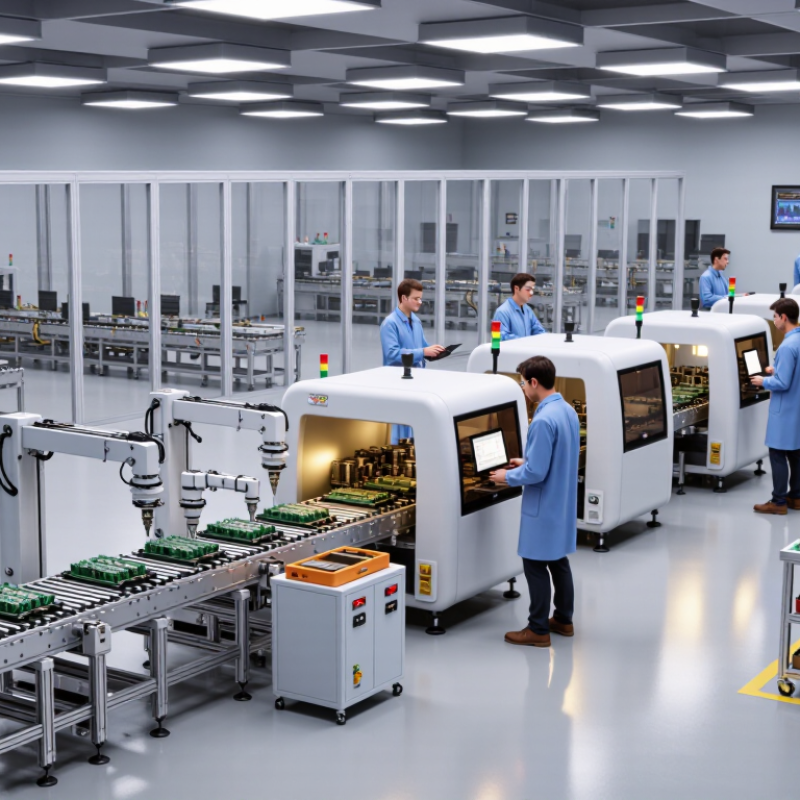
Electronics automation solutions combine machines, software, sensors, and control systems for repeatable production. They support tasks such as component placement, soldering, testing, inspection, and packaging. Their core function is not simply speed. They must reduce variation, protect product quality, and provide usable production data. A practical system records torque values, inspection images, error codes, and operator actions. Engineers can then trace a faulty board to a specific process step.

During a line evaluation, examine the physical workflow carefully. Can feeders change quickly when a product model changes? Can vision sensors detect a misplaced component under uneven lighting? Does the system connect with existing manufacturing software without manual data entry? These details often decide whether automation performs well after installation. A short pilot run can reveal cycle-time losses, unstable fixtures, or excessive maintenance needs. Small faults matter.

Reliable solutions also include access controls, backup procedures, and clear maintenance instructions. Experienced teams should test accuracy with real materials, not only demonstration samples. Independent performance records are more useful than attractive claims. I have seen automated lines meet target speed but create difficult inspection bottlenecks downstream. That weakness is easy to miss. Therefore, selection should consider training time, spare parts, calibration routines, and the skill level of local technicians. No system is flawless. A thoughtful review should identify where human judgment remains necessary.


How to Choose Electronics Automation Solutions in 2026? - Defining Electronics Automation Solutions and Their Core Functions

A practical evaluation matrix for selecting scalable, connected, and measurable automation capabilities in electronics manufacturing.

Automation Function Definition and Business Purpose Typical Data Inputs Key Outputs and KPIs Core Technologies or Interfaces 2026 Selection Criteria
Material Handling and Traceability Automates the movement, identification, storage, and verification of components, subassemblies, and finished products. Part numbers, lot codes, serial numbers, inventory records, production orders, location data, and barcode or RFID readings. Inventory accuracy, traceability completeness, material shortages, handling time, line stoppages, and misplacement rate. Barcode, RFID, machine vision, conveyors, autonomous mobile robots, warehouse systems, SQL databases, and REST APIs. Require end-to-end genealogy, controlled access to records, exception handling, and integration with production and inventory systems.
Machine and Process Control Controls equipment sequences and process parameters so operations are repeatable, safe, and within approved limits. Sensor readings, recipes, setpoints, equipment status, alarms, interlocks, operator commands, and maintenance conditions. Cycle time, process capability, alarm frequency, downtime, first-pass yield, parameter deviations, and energy consumption. PLCs, industrial PCs, motion controllers, sensors, actuators, HMI systems, OPC UA, and industrial Ethernet. Evaluate deterministic control, safety functions, recipe management, offline testing, change control, and equipment interoperability.
Automated Optical Inspection Uses cameras, lighting, and image analysis to detect visible defects, placement errors, marking issues, and assembly deviations. High-resolution images, reference models, inspection recipes, component coordinates, defect classifications, and production context. Defect detection rate, false-call rate, escape rate, inspection coverage, review workload, and inspection cycle time. Industrial cameras, controlled lighting, 2D or 3D vision, machine-learning models, SPC software, and manufacturing databases. Request validation results using representative defects, documented model updates, audit trails, and human-review workflows.
Test and Measurement Automation Automates electrical, functional, environmental, and performance tests while recording evidence for each unit or batch. Test limits, instrument readings, firmware versions, product identifiers, calibration status, test sequences, and operator permissions. Test coverage, repeatability, measurement uncertainty, retest rate, test time, failure modes, and pass or fail yield. Digital multimeters, oscilloscopes, programmable power supplies, electronic loads, boundary-scan tools, Python, and standardized instrument protocols. Confirm calibration management, measurement traceability, secure test recipes, automated result capture, and controlled software revisions.
Production Scheduling and Execution Coordinates orders, operations, work instructions, labor, equipment, and material availability across the production floor. Production orders, bills of material, routings, work-center status, inventory, labor availability, quality holds, and due dates. Schedule adherence, throughput, work-in-process, changeover time, order lead time, utilization, and on-time completion. MES functions, ERP integration, digital work instructions, dashboards, event-driven APIs, SQL, and standardized manufacturing data models. Prioritize real-time visibility, finite-capacity planning, version-controlled instructions, and integration without duplicate master data.
Quality Management and SPC Monitors process variation, manages nonconformities, and supports corrective action based on production and test evidence. Inspection results, process measurements, control limits, defect codes, corrective actions, audit records, and supplier quality data. First-pass yield, scrap, rework, process capability, defect pareto, closure time, and recurring defect frequency. Statistical process control, electronic records, workflow engines, dashboards, data historians, and role-based approvals. Look for closed-loop alerts, immutable audit trails, configurable control rules, genealogy links, and risk-based escalation.
Predictive Maintenance Uses equipment condition and historical behavior to identify maintenance needs before failures interrupt production. Vibration, temperature, current, pressure, runtime, alarm history, maintenance records, spare parts, and failure events. Mean time between failures, mean time to repair, unplanned downtime, maintenance compliance, alert precision, and spare-parts consumption. Sensors, historians, time-series databases, statistical models, machine learning, computerized maintenance systems, and secure gateways. Validate data quality, explainability, alert prioritization, model monitoring, cybersecurity, and integration with maintenance workflows.
Data Integration and Analytics Connects equipment, applications, and databases to create a consistent operational view for monitoring and decision-making. Machine events, production records, quality results, energy data, inventory transactions, user actions, and maintenance history. Data completeness, refresh time, dashboard adoption, root-cause analysis time, exception response time, and reporting accuracy. OPC UA, MQTT, REST APIs, SQL, event streaming, edge computing, cloud services, data lakes, and time-series analytics. Choose open interfaces, clear data ownership, semantic consistency, edge-to-cloud options, API documentation, and export capability.
Cybersecurity and Governance Protects connected automation assets, production data, user identities, and operational continuity from unauthorized access or disruption. User accounts, access roles, network events, software versions, configuration changes, vulnerability records, and backup status. Patch compliance, access-review completion, incident response time, backup recovery results, privileged actions, and audit findings. Network segmentation, multifactor authentication, encryption, centralized logging, secure remote access, backups, and role-based access control. Assess alignment with recognized industrial cybersecurity practices, secure development processes, incident support, data residency, and lifecycle maintenance.
Recommended evaluation approach: Compare solutions using the same production scenarios, data sources, acceptance criteria, integration requirements, cybersecurity controls, total cost of ownership, and expected time to measurable value.

Assessing Production Needs, Workflows, and Automation Readiness

When choosing electronics automation solutions in 2026, start with production reality. Record daily output, defect rates, changeover time, and operator interventions. A line producing 10,000 boards may still need manual checks at three critical points. That detail matters more than a supplier’s impressive demonstration.

Map the complete workflow before evaluating equipment. Observe material loading, component verification, solder inspection, testing, rework, and packaging. Look for repeated decisions, awkward movements, and delays between stations. Automation should remove measurable friction, not simply add machines. Do not automate confusion. If a work instruction changes every week, stable automation may be premature.

Readiness also depends on people and data. If operators cannot explain a fault code, maintenance training needs attention. If production records remain handwritten, reliable performance analysis becomes difficult. Data quality comes first. Test a limited process during one shift, then compare cycle time, first-pass yield, downtime, and error recovery. A pilot may expose problems that a polished presentation hides. One shift is not enough. Review the results with operators, technicians, and quality engineers.

A practical solution should support safe access, clear status signals, traceability, and manageable changeovers. I have seen teams overestimate readiness because the equipment worked well during testing. The same system struggled when product variants doubled and experienced staff were absent. That gap deserves honest discussion. Automation plans improve when teams document these weaknesses instead of hiding them.

How to Choose Electronics Automation Solutions in 2026?

Assessing production needs, workflows, and automation readiness

The readiness score uses five practical criteria: process stability, digital data availability, traceability, equipment connectivity, and workforce readiness. Higher scores indicate a stronger foundation for automation investment and integration.

Comparing Technologies, Integration Options, and System Compatibility

Choosing electronics automation solutions in 2026 requires more than comparing machine speed. The real test is compatibility across your production environment. Vision inspection, robotics, edge computing, and software-based control each solve different problems. A vision system may detect tiny solder defects, while edge processing reduces delays near the production line. However, higher performance can bring greater maintenance demands. I have seen teams choose advanced equipment, then struggle with unclear data ownership and limited technician skills.

Integration options deserve careful testing. Check whether the solution supports common industrial protocols, documented APIs, and readable data formats. It should connect with existing controllers, manufacturing software, quality systems, and warehouse records. Compatibility also includes physical details, such as connector types, network capacity, response time, and available floor space. A successful pilot is useful, but it can hide problems during shift changes or production peaks. My own early evaluations sometimes focused too much on technical specifications. That was a mistake.

Tips: Build a small test cell before approving full deployment. Measure cycle time, false rejects, recovery time, and operator training hours. Ask for transparent lifecycle costs, cybersecurity controls, software update policies, and repair procedures. Keep manual override options where safety and continuity require them. Do not assume every open interface guarantees smooth integration. Document failure cases, too. They often reveal more than demonstrations. Choose systems your team can verify, maintain, and adapt without depending on one specialist.

Evaluating Costs, Safety, Scalability, and Return on Investment

Choosing electronics automation solutions in 2026 requires more than comparing purchase prices. A reliable evaluation starts with the total cost of ownership. Include installation, software updates, operator training, spare parts, energy use, and scheduled maintenance. A low-cost system may become expensive after repeated stoppages. I have seen small maintenance fees reshape an entire production budget. That detail is easy to miss.

Safety should be measured on the factory floor, not only in a sales document. Check emergency stops, guarding, access controls, noise levels, and fault recovery procedures. Ask for documented risk assessments and independent testing records. Train operators with realistic scenarios, including sensor failure and unexpected shutdowns. Human error remains part of the system. Ignoring it is a serious weakness.

Scalability affects both cash flow and long-term productivity. A practical solution should support additional workstations, changing product sizes, and higher production volumes. Test one process before approving a full deployment. Record cycle time, defect rates, downtime, and labor requirements for several weeks. Then calculate return on investment using conservative figures, not optimistic forecasts. A pilot may reveal integration costs that were underestimated. That is useful evidence, even when disappointing. Review the results with production, maintenance, finance, and safety teams. Their concerns often expose risks that technical teams overlook.

Selecting Vendors and Planning a Future-Ready Implementation

Choosing an electronics automation vendor in 2026 requires more than comparing machine speed. Examine how each supplier handles traceability, software updates, operator training, and unplanned downtime. Ask for a live demonstration using components close to your production mix. Watch changeover time, inspection records, alarm clarity, and recovery after a simulated fault. Request references from facilities with similar volumes, staffing, and quality requirements. Their experience often reveals practical limits that sales documents hide. Verify cybersecurity controls, data ownership, service response times, spare-parts access, and training materials before signing. A polished interface is not proof of dependable engineering.

Tips: Build a weighted vendor scorecard before meetings begin. Give measurable weight to uptime, integration, safety, maintainability, and total cost. Ask vendors to state assumptions in writing. Include a paid pilot with acceptance tests. Keep one technical reviewer independent from procurement. Small detail. Require exported production data in a usable format, not screenshots.

Plan implementation in stages, beginning with one cell and a narrow product family. Map current workflows, including manual checks that operators perform without formal documentation. Connect the automation layer to planning and quality systems through documented interfaces. Reserve time for electrical validation, staff practice, and controlled failure tests. Future-ready does not mean buying every available feature. It means leaving room for modular upgrades and secure data exchange. Our first scoring model was too neat; it ignored cleaning time and shift-change confusion. That mistake cost weeks. Revisit assumptions after the pilot, record defects without blame, and revise the rollout schedule using measured evidence. Some uncertainty remains. Manage it visibly.