Manufacturing industry automation is changing how factories manage speed, quality, safety, and labor demands. Yet automation is not a magic switch. Real progress depends on matching each solution to a specific production problem.
This guide explores ten practical automation solutions used across modern manufacturing environments. These include industrial robots, collaborative robots, automated guided vehicles, machine vision, programmable logic controllers, manufacturing execution systems, predictive maintenance, digital twins, industrial IoT platforms, and automated quality inspection. Each solution has a different purpose. A robotic arm may handle repetitive welding, while machine vision checks tiny surface defects under consistent lighting. An MES platform can connect production schedules, inventory, and operator records in one system.
The strongest projects usually begin with measurable evidence. A factory manager may track changeover time, unplanned downtime, defect rates, and energy consumption before purchasing equipment. That discipline matters. A high-speed robot can still create bottlenecks if upstream processes remain manual. Data can also be incomplete, especially in older facilities. That weakness deserves attention.
Small pilots often reveal hidden costs. Sensors need calibration. Employees require training. Existing machines may not communicate smoothly. Cybersecurity must be considered from the beginning, not after deployment. This overview therefore focuses on practical value, implementation risks, and long-term reliability. It does not assume every factory needs the newest technology. The best solution is usually the one that improves a clear process, supports workers, and delivers dependable results over time. Mistakes remain possible, but careful testing can make them less expensive and easier to correct.
Top 10 Manufacturing Industry Automation Solutions
Manufacturing automation covers machines, software, data, and human decisions across the production floor. Its scope includes material handling, assembly, inspection, packaging, and maintenance. Ten practical solutions include industrial robots, collaborative robots, automated guided vehicles, CNC systems, machine vision, programmable controllers, production monitoring, manufacturing execution software, predictive maintenance, and digital twins. Each solution should fit the process, not simply follow a trend. A robot beside a poorly designed workstation may increase delays.
The main goals are safer work, stable quality, shorter cycle times, and lower waste. Core technologies connect sensors, controllers, networks, analytics, and cloud or edge computing. Machine vision can detect a missing component under consistent lighting. Predictive systems can identify unusual motor vibration before a stoppage. Digital twins can test layout changes without moving equipment. However, automation does not remove every problem. Poor data, weak training, and unclear ownership can make a modern line unreliable. Results should be measured through downtime, defect rates, energy use, and operator feedback.
Tips: Start with one bottleneck and record its baseline performance. Choose open communication standards and document every control change. Keep manual override procedures clear. Review alarms weekly, because excessive alerts often hide serious faults. Train operators before installation, not after a failure. A small pilot may expose unexpected maintenance costs, but that lesson is valuable. Human judgment still matters when products, materials, or demand change.
| No. | Automation Solution | Manufacturing Scope | Primary Goals | Core Technologies | Typical Applications | Key Performance Indicators |
|---|---|---|---|---|---|---|
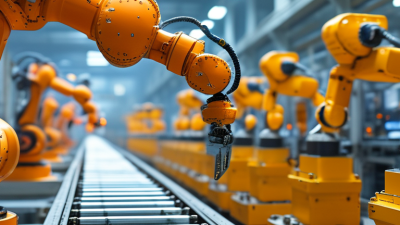
| 1 | Robotic Assembly | Automated joining, fastening, insertion, and component placement on production lines. | Improve repeatability, reduce ergonomic risk, and maintain consistent cycle times. | Industrial robots, end-of-arm tooling, force sensing, machine vision, programmable logic controllers, and safety systems. | Automotive components, electronics, appliances, and general mechanical products. | Cycle time, first-pass yield, unplanned downtime, and ergonomic incident rate. |
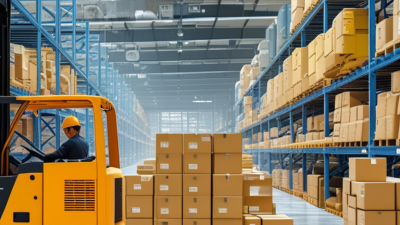
| 2 | Automated Material Handling | Movement of raw materials, work-in-process, finished goods, and containers inside facilities. | Reduce manual transport, improve traceability, and create a smoother material flow. | Automated guided vehicles, autonomous mobile robots, conveyors, lifts, warehouse-control software, and barcode or RFID identification. | Line-side replenishment, pallet movement, kitting, storage, and dispatch operations. | Material travel time, inventory accuracy, delivery-in-full rate, and operator walking distance. |
| 3 | Machine Vision Inspection | Automated visual inspection, measurement, identification, and defect detection. | Detect defects earlier, standardize quality decisions, and reduce inspection subjectivity. | Industrial cameras, lighting, optical measurement, image-processing software, and machine-learning models. | Surface inspection, dimensional checks, label verification, assembly confirmation, and presence-orientation checks. | Defect escape rate, false-reject rate, inspection coverage, and inspection cycle time. |
| 4 | Industrial Internet of Things | Connected monitoring of machines, utilities, production lines, and environmental conditions. | Create real-time operational visibility and support data-driven decision-making. | Sensors, edge gateways, industrial networks, time-series databases, dashboards, and cloud or on-premises analytics. | Equipment monitoring, energy tracking, production reporting, condition monitoring, and asset utilization analysis. | Data availability, overall equipment effectiveness, energy per unit, and alarm response time. |
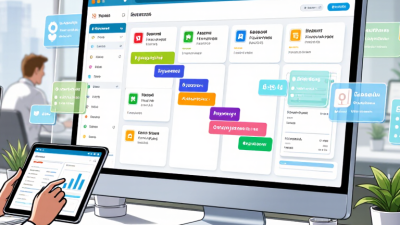
| 5 | Manufacturing Execution Systems | Digital coordination of production orders, work instructions, quality records, and genealogy. | Synchronize shop-floor activities with planning, quality, and inventory processes. | Production tracking software, electronic work instructions, traceability databases, integration interfaces, and role-based dashboards. | Work-order dispatching, batch records, electronic travelers, labor reporting, and process compliance. | Schedule adherence, work-in-process accuracy, traceability completeness, and production reporting time. |
| 6 | Predictive Maintenance | Prediction and prevention of equipment failures using machine-condition and process data. | Reduce unplanned downtime, improve maintenance planning, and extend asset life. | Vibration, temperature, current, and pressure sensors; signal processing; anomaly detection; and maintenance analytics. | Motors, pumps, compressors, machine tools, conveyors, and process equipment. | Mean time between failures, planned-to-unplanned maintenance ratio, downtime hours, and maintenance cost per asset. |
| 7 | Digital Twin and Simulation | Virtual representation and analysis of products, machines, production cells, or complete facilities. | Test process changes digitally, reduce commissioning risk, and optimize capacity. | 3D modeling, discrete-event simulation, physics-based models, live data connections, and virtual commissioning. | Line balancing, layout planning, capacity studies, throughput analysis, and new-equipment commissioning. | Throughput, utilization, bottleneck time, commissioning duration, and changeover impact. |
| 8 | Automated Storage and Retrieval | Computer-controlled storage, retrieval, buffering, and inventory positioning. | Improve space utilization, inventory accuracy, and order fulfillment reliability. | Storage and retrieval machines, shuttle systems, vertical lifts, warehouse-management software, and identification technologies. | Raw-material storage, finished-goods warehouses, spare-parts management, and work-in-process buffering. | Storage density, picking accuracy, retrieval time, inventory discrepancies, and order cycle time. |
| 9 | Process Control and Supervisory Automation | Monitoring and control of continuous, batch, and discrete manufacturing processes. | Maintain stable process conditions, improve safety, and reduce variation. | Programmable logic controllers, distributed control systems, supervisory control software, industrial networks, and human-machine interfaces. | Chemical processing, food production, utilities, packaging, machining, and assembly lines. | Process stability, control-loop performance, yield, alarm frequency, and energy consumption. |
| 10 | Collaborative and Flexible Robotics | Robotic assistance for tasks performed alongside operators or in frequently changing production environments. | Support labor-intensive work, enable fast changeovers, and automate low-volume or high-mix operations. | Force and torque sensing, safety-rated monitoring, adaptive grippers, vision guidance, and simplified robot programming. | Machine tending, screwdriving, packaging, inspection assistance, dispensing, and small-batch assembly. | Changeover time, operator exposure to repetitive tasks, utilization, quality consistency, and output per labor hour. |