Why Choose Laser Automation for Your Manufacturing Needs?
In today’s fast-paced manufacturing landscape, the adoption of laser automation systems is transforming production processes. A report by MarketsandMarkets estimates that the laser automation market will reach $8.82 billion by 2025, highlighting its growing significance. Experts emphasize that laser automation enhances precision and efficiency, making it an appealing choice for many industries.
Dr. Emily Carter, a renowned laser technology expert, states, "Laser automation not only boosts productivity but also reduces operational costs." This perspective aligns with industry trends showing a 30% increase in production rates for companies that implement laser solutions. However, transitioning to laser automation is not without challenges.
Some manufacturers face obstacles like initial setup costs and the need for advanced training. The shift requires careful consideration and adaptation. While the benefits are substantial, the journey to integration can be complex. Ensuring that the workforce is prepared is crucial. Embracing these technologies can lead to significant advancements in manufacturing capabilities. A reflective approach will enhance the long-term success of laser automation in various sectors.
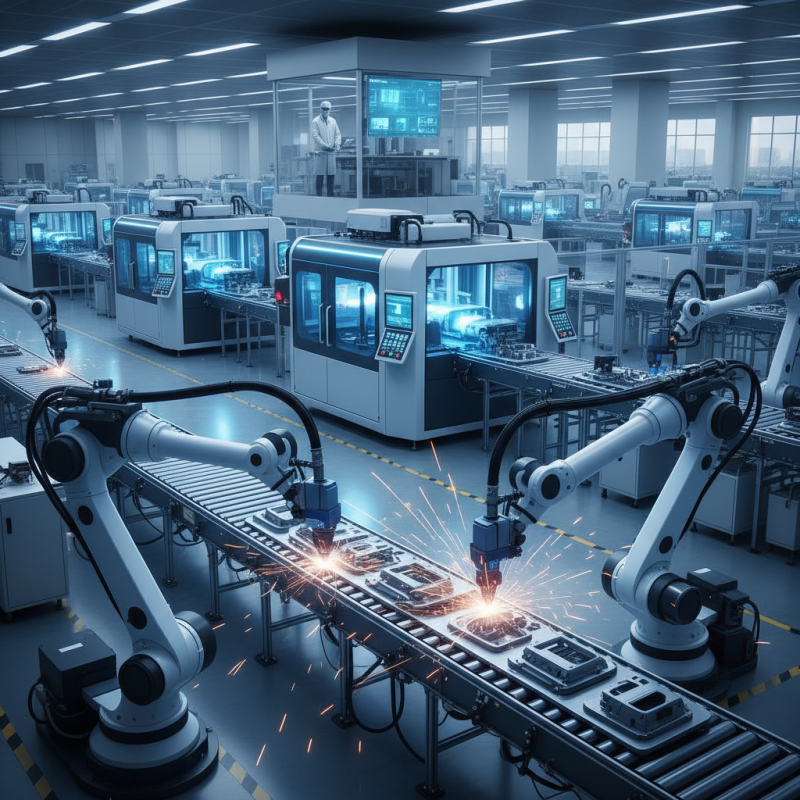
Advantages of Laser Automation in Manufacturing Processes
Laser automation offers remarkable advantages in manufacturing processes. This technology enhances precision in cutting and engraving materials. The laser can achieve intricate designs that traditional methods struggle to replicate. Accuracy is vital, especially in industries like aerospace and medical equipment. The ability to produce complex parts reliably can reduce errors and save time.
Moreover, laser automation improves efficiency. It minimizes waste by using precise energy where needed. This leads to lower material costs and a more sustainable manufacturing process. Rapid production cycles mean that businesses can respond quickly to market demands. With laser technology, the time from concept to production shrinks, allowing for faster innovation.
However, implementing laser automation can pose challenges. The initial investment may be significant. Understanding the technology requires training and expertise. Many firms may need to adjust their workflows to integrate this new tool. While the benefits are clear, companies must weigh the upfront costs against long-term gains. This reflection is crucial for meaningful adoption.
Comparative Analysis: Laser Automation vs. Traditional Methods
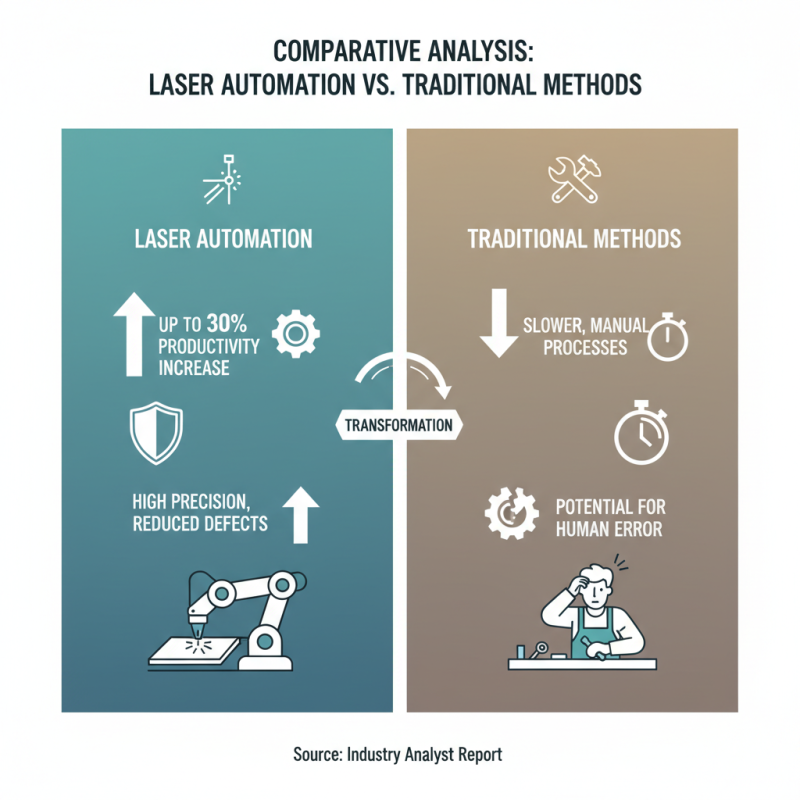
Laser automation is rapidly transforming manufacturing across various sectors. A recent report by a leading industry analyst highlights that businesses adopting laser automation experience productivity increases of up to 30%. Traditional manufacturing methods often rely on slower, manual processes that can introduce human error. In contrast, laser automation provides precision. It drastically reduces the likelihood of production defects.
Cost efficiency is another area where laser automation shines. According to the same report, companies can reduce operational costs by as much as 20%. Traditional methods can incur higher labor costs and require more extensive training for staff. Laser systems often require minimal setup time, allowing for quicker transitions between projects. This agility is crucial in a market demanding rapid response times.
However, organizations may face challenges when transitioning to laser automation. Initial investments can be significant, and not all staff may be readily equipped to handle new technology. A percentage of manufacturers report resistance to change within their teams. Future training and upskilling are crucial. Adopting laser automation can be daunting, but the long-term benefits can outweigh initial hurdles.
Key Industries Benefiting from Laser Automation Technology
Laser automation is revolutionizing multiple industries by enhancing precision and efficiency in manufacturing. Notably, sectors like automotive, electronics, and medical devices see significant advantages. A report by McKinsey highlights that manufacturers using laser technology see productivity increases of up to 30%. This technology improves material processing with minimal waste and maximizes yield.
In the automotive industry, laser automation facilitates high-speed cutting and welding processes, which reduces production time and costs. According to a study from the International Journal of Advanced Manufacturing Technology, automotive manufacturers can cut assembly times by approximately 25% with laser technologies. Similarly, in electronics, laser marking offers high fidelity and detail, allowing for intricate designs on circuit boards without damaging sensitive components.
Medical device manufacturing also benefits greatly from laser automation. The ability to create complex geometries with precision is vital. Research indicates that companies using laser technology can enhance product consistency, reducing error rates by as much as 15%. However, the implementation of laser systems requires skilled operators and comprehensive training. This raises concerns about worker skill gaps that might hinder productivity gains. Such challenges highlight the need for ongoing investment in workforce development to fully realize the benefits of laser automation in manufacturing.
Why Choose Laser Automation for Your Manufacturing Needs? - Key Industries Benefiting from Laser Automation Technology
| Industry |
Benefits of Laser Automation |
Key Applications |
Future Trends |
| Automotive |
Increased precision and reduced cycle time |
Cutting, welding, and marking |
Integration with AI for smarter manufacturing |
| Aerospace |
Improved material processing and weight reduction |
Precision cutting and engraving |
Advanced materials and automation |
| Electronics |
Higher efficiency in miniaturization |
PCB cutting and component marking |
Increased use of laser in microfabrication |
| Medical Devices |
Enhanced cleanliness and reduced contamination |
Surgical instrument manufacturing |
Personalized medical devices through customization |
| Textiles |
Creative design capabilities and rapid prototyping |
Fabric cutting and engraving |
Sustainability in materials and processes |
Cost-Effectiveness and Efficiency of Laser Automation Solutions
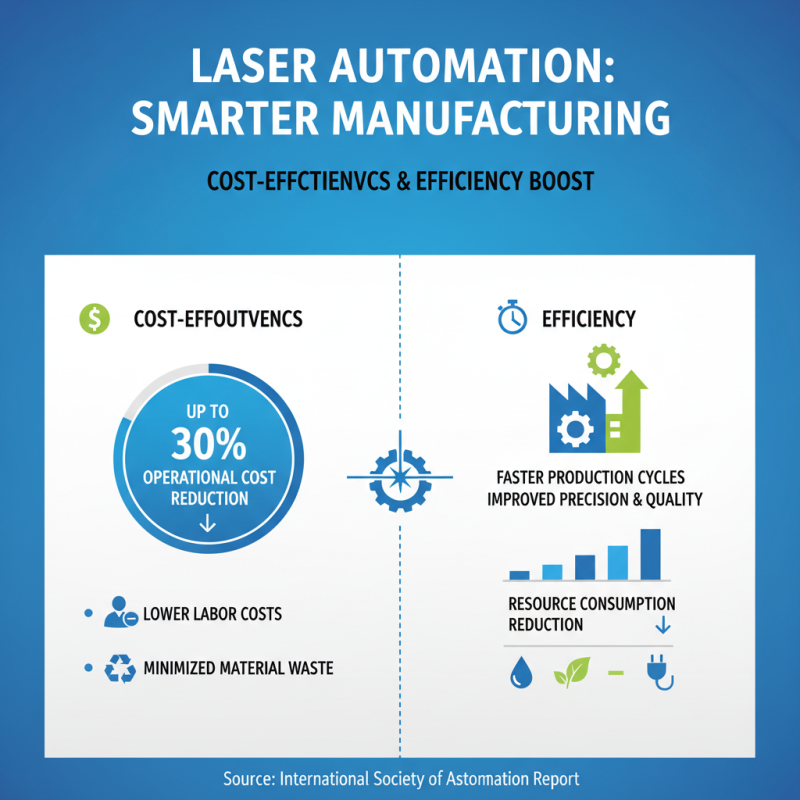
Laser automation has transformed manufacturing by enhancing cost-effectiveness and efficiency. According to a report by the International Society of Automation, laser automation can reduce operational costs by up to 30%. This is largely due to lower labor costs and minimized material waste. Companies utilizing laser cutting and engraving see significant reductions in resource consumption.
Furthermore, manufacturers report faster production cycles. Data from the Manufacturing Institute reveals that laser automation can boost productivity by approximately 40%, leading to quicker turnaround times. As technology progresses, the capabilities of laser systems evolve, offering improved precision and speed. This creates a direct link between investment in laser solutions and increased profitability.
Despite the benefits, some companies hesitate to transition. Initial setup costs and employee training can be challenging. Organizations must reflect on the long-term gains versus short-term hurdles. However, the data indicates that embracing laser automation leads to sustained growth and elevated operational standards in the competitive landscape.
Future Trends in Laser Automation for Manufacturing Applications
Laser automation is increasingly becoming a pivotal trend in manufacturing. The integration of laser technology streamlines processes and enhances precision. As industries evolve, laser systems adapt to meet the growing demand for customization. They provide quick adjustments to designs, significantly reducing lead times.
Future trends in laser automation indicate a move towards greater efficiency and sustainability. Advanced algorithms will allow for real-time monitoring and adjustments. This could lead to less waste and better resource management. Moreover, laser systems are being integrated with AI technologies. This partnership may optimize production schedules and predict maintenance needs. With these developments, manufacturers can expect a more agile production environment.
Despite the advancements, challenges persist. Training staff to operate new systems can be daunting. The initial investment in technology might also deter some businesses. Continuous learning and adapting to technology are crucial. It is essential to evaluate whether current capabilities align with future technological needs. Balancing innovation with practicality is vital for lasting success in laser automation.