Why Streamline Global Sourcing Through Automation?
Global sourcing is entering a more measurable, connected phase. Buyers now manage suppliers across time zones, currencies, factories, and compliance requirements. A single sourcing event can involve hundreds of quotations, revisions, and approval messages. Manual coordination often hides delays inside spreadsheets and email threads.
Industry evidence supports a practical shift through automation. Gartner predicts that 75% of commercial supply chain management application vendors will provide embedded generative AI by 2026. McKinsey’s 2024 State of AI report also found that 72% of surveyed organizations regularly use AI in at least one business function. Procurement is clearly moving in that direction. Yet adoption does not guarantee better decisions. Data quality still matters.
Lora Cecere, founder of Supply Chain Insights, often emphasizes a useful warning: “You cannot automate a broken process.” Her point deserves attention. Automation can compare supplier bids, flag unusual price changes, route approvals, and create a searchable audit trail. It can also repeat bad assumptions at remarkable speed. Imagine an outdated supplier code blocking a valid quote before a buyer sees it. That small error can affect cost, delivery, and trust.
A strong sourcing strategy therefore combines human judgment with reliable digital workflows. Automation should remove repetitive work, not remove accountability. Deloitte’s 2023 Global CPO Survey identified digital transformation as a major procurement priority, but execution remains uneven across organizations. The opportunity is substantial. The approach must remain cautious, testable, and transparent.
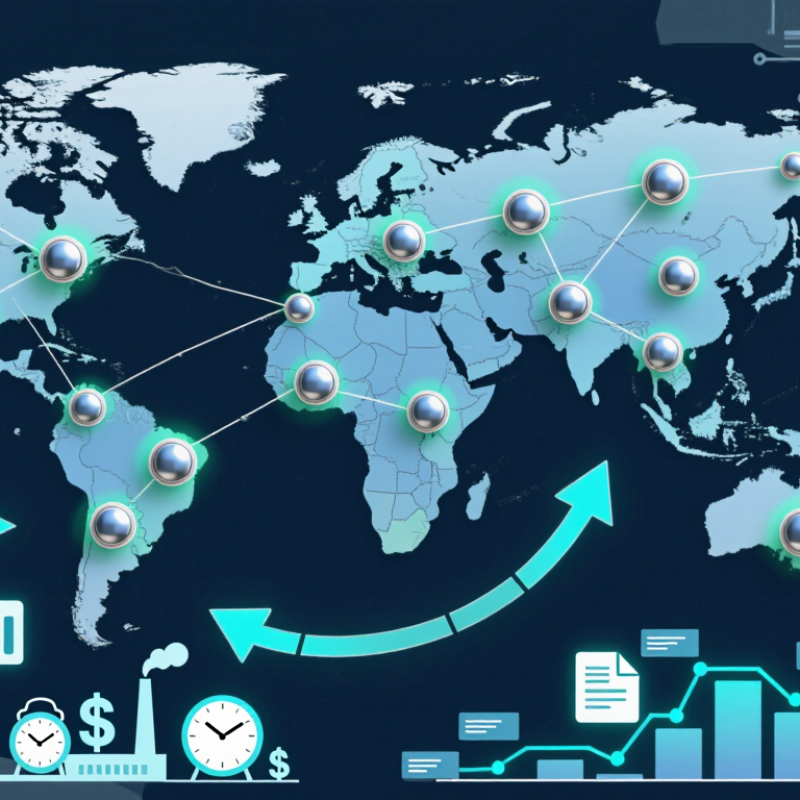
Global Sourcing Complexity: Over 80% of World Trade Moves by Sea, UNCTAD
Why Streamline Global Sourcing Through Automation?
According to UNCTAD, more than 80% of global trade moves by sea. That figure explains why global sourcing rarely follows a simple path. A purchase order may cross several borders before reaching a factory, port, warehouse, and final customer. Each handoff creates opportunities for delays, missing documents, or inaccurate inventory updates. A vessel can wait offshore while teams search through emails for one revised packing list. Small errors become expensive when cargo travels thousands of kilometers.
Automation can connect supplier orders, production milestones, shipping schedules, and customs documents in one visible workflow. It can flag a late production update before a container misses its booking window. It can also compare planned quantities with actual receipts, helping teams investigate problems earlier. The strongest systems preserve an audit trail, apply approval controls, and protect sensitive commercial data. Human review still matters, especially when weather, port congestion, or unusual supplier conditions disrupt a plan.
Automation is not a magic fix. Poor data will produce faster confusion. A polished dashboard may hide weak supplier communication or unrealistic lead times. Teams should test workflows with real shipments, measure exception rates, and adjust rules when conditions change. That practical feedback makes automation more trustworthy. It also keeps sourcing decisions grounded in evidence, not attractive forecasts.
Manual Procurement Costs: McKinsey Estimates 40% of Activities Are Automatable
Manual procurement is expensive because small tasks repeat all day. A buyer opens email attachments, checks three quotations, copies prices into a spreadsheet, and waits for approval. These minutes become hours across regions. McKinsey estimates that 40% of procurement activities are automatable. That figure matters. It points to a practical opportunity: automate intake, supplier comparisons, approval routing, and purchase-order updates. Automation can reduce rekeying, expose missing fields, and create a searchable audit trail. Those gains are operational, not theoretical. The World Economic Forum’s Future of Jobs Report 2023 says 44% of workers’ skills may be disrupted within five years. Procurement teams will need new skills, not fewer people.
However, the 40% estimate should not become a blind target. Supplier descriptions are inconsistent. Tax codes vary. Urgent purchases still require judgment. A rules engine may reject a valid exception or approve a weak quotation. Experienced teams should start with low-risk, high-volume workflows, then measure cycle time, touchless processing, error rates, and savings. Deloitte’s 2023 Global CPO Survey identifies digital capability and cost control as major procurement priorities. Yet capability depends on clean data and accountable governance. Human review remains essential for unusual prices, conflicts, and supplier changes. That is the uncomfortable part. Automation removes friction, but it also reveals poor process design. Without disciplined ownership, faster mistakes are still mistakes.
Supplier Discovery at Scale: Automation Expands Access to Global Vendor Markets
Global supplier discovery is no longer limited by geography. Automation can scan public registries, certification records, production categories, and trade data within minutes. It can also compare capacity, location, lead times, and minimum order quantities across thousands of vendors.
The opportunity is substantial. The World Trade Organization reported that digitally delivered services reached about 3.82 trillion dollars in 2022, 50% above 2019 levels. This growth shows how quickly cross-border commercial activity is becoming digital. Meanwhile, the World Bank’s 2023 Logistics Performance Index gathered evidence from over 4,000 supply-chain professionals across 60 economies. Their findings underline a practical issue: delivery reliability still varies sharply between markets.
Automation helps procurement teams see more options before choosing a supplier. A buyer might filter for food-grade materials, audited facilities, monthly capacity, and a port within 100 kilometers. The system can flag missing certificates before a conversation begins. It can also monitor price changes and new market entrants. Useful, but not flawless. Supplier databases may contain outdated factories, copied documents, or misleading capacity claims. Human verification remains essential. This is where our process still needs improvement. A fast search is not the same as a trusted partnership. UNCTAD’s 2023 Global Trade Update estimated global trade at roughly 31 trillion dollars, despite a yearly decline. In such a large and shifting market, automated discovery gives teams broader reach, while disciplined checks protect quality, continuity, and responsible sourcing.
Risk-Based Decisions: Real-Time Data Improves Compliance and Supply Continuity
Why Streamline Global Sourcing Through Automation?
Risk-Based Decisions: Real-Time Data Improves Compliance and Supply Continuity
Global sourcing becomes more manageable when automation turns scattered information into timely risk signals. Supplier documents, shipment milestones, inspection records, and corrective actions can appear in one working view. A missing certificate may trigger review before goods leave a facility. An unusual route or repeated delay may reveal a continuity risk. That matters.
Risk-based decisions help teams focus their time where exposure is highest. A procurement manager can review supplier scores each morning and adjust approval levels when conditions change. Real-time updates also support practical alternatives, such as qualifying another approved source or increasing safety stock for a critical component. Every decision should retain its evidence, including timestamps, document versions, and responsible reviewers.
Automation is not a substitute for professional judgment. Data may arrive late, contain errors, or miss local operating details. False alerts can also distract experienced teams. Humans still decide. Controls should include access permissions, audit trails, regular data checks, and clear escalation rules. A small pilot often exposes weaknesses before wider adoption. The first model may be wrong. That is useful feedback, not failure. Teams should test assumptions against actual delivery records, supplier responses, and compliance reviews, then refine the workflow without hiding its limitations.
Measuring Automation Value: Track Cost, Cycle Time, Accuracy, and Supplier Risk
Automation creates value only when sourcing teams measure the right outcomes.
Track four signals: cost, cycle time, accuracy, and supplier risk.
McKinsey estimates that digital procurement can reduce process costs by 30–40% when workflows are redesigned, not merely digitized.
Start with baselines. Record the average hours needed to issue a request, compare bids, and approve an award. Then measure savings against a consistent should-cost model. A dashboard might show a cycle falling from twelve days to five, while invoice or specification errors decline from 4% to 1.5%.
Small errors still matter. They create rework, disputes, and hidden labor.
Accuracy needs regular sampling.
Review automated classifications, price comparisons, and extracted contract terms each month. Set an agreed tolerance, such as 98% field accuracy, before expanding automation. Supplier risk requires a different lens. Monitor delivery variance, financial signals, geographic concentration, and unresolved compliance documents. The 2024 Procurement Leaders CPO survey highlights resilience and risk management as continuing executive priorities. Yet risk scores can become stale. A supplier may pass screening today and face disruption next quarter. Human review remains necessary for exceptions, unusual pricing, and critical materials.
Perfect measurement is unrealistic. Consistent measurement is achievable.