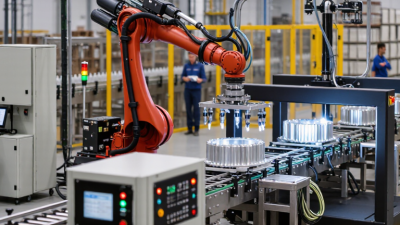
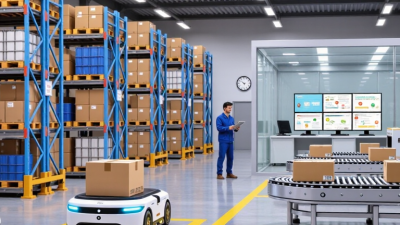
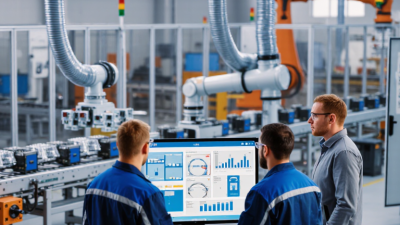
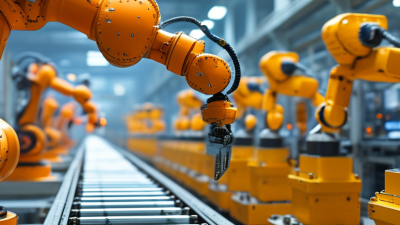
China’s automation landscape is vast, fast-moving, and difficult to judge from product brochures alone. The International Federation of Robotics’ World Robotics 2024 report recorded 276,288 industrial robot installations in China during 2023—51% of global installations. The report also identified China as the world’s largest market for industrial robots. The scale is striking. It shows why factories across automotive, electronics, and general manufacturing are investing in robots, machine vision, motion control, and connected production systems.
IFR President Marina Bill has described China as “by far the largest market for industrial robots.” That observation matters to buyers, but market size does not prove that every supplier offers the same service quality or application expertise. A supplier’s real value often appears on the factory floor: in a robot cell’s cycle time, the stability of a control system, the clarity of its safety documentation, and the speed of local technical support. These details are less dramatic than a sales presentation. They matter more over time.
This guide introduces ten manufacturing automation suppliers in China and considers their products, technical focus, industry experience, and support capabilities. It is not a universal ranking. Company strengths can vary by application, region, and project scale, and public information may not reveal every weakness. Readers should verify specifications, references, integration capacity, and after-sales arrangements before making a shortlist. A careful comparison is worthwhile.
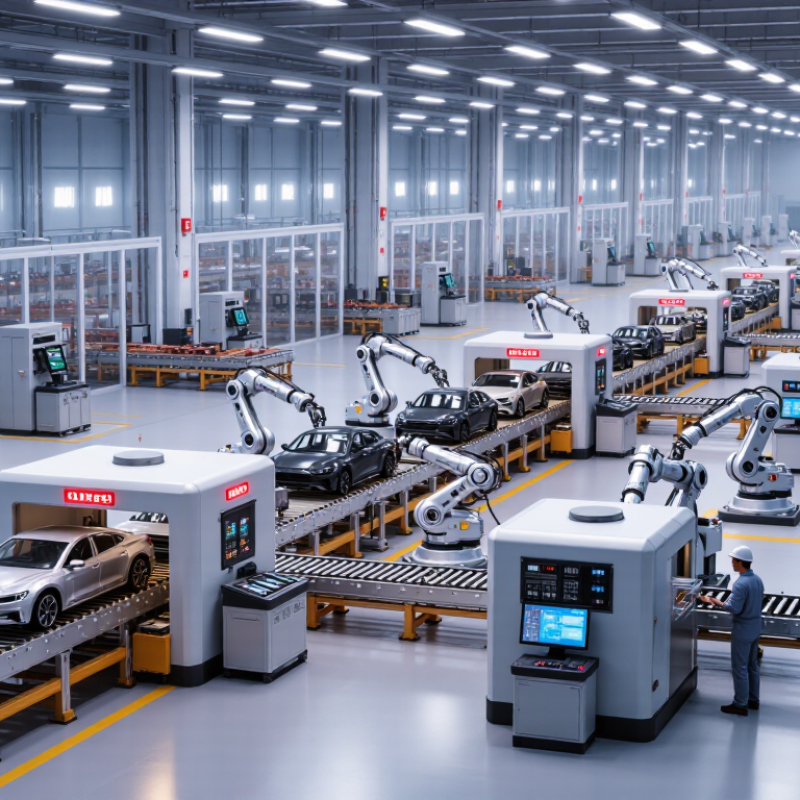
China’s manufacturing automation covers more than robot arms on assembly lines. It includes machine tools, material handling, inspection, warehouse systems, and production software. Factories range from electronics workshops to automotive and food-processing plants. Their needs differ. A flexible cell may suit short product runs, while a dedicated line can support stable, high-volume work. Automation choices should reflect product mix, cycle time, floor space, and operator skills.
Key technologies often work together rather than alone. Industrial robots move parts; machine vision checks dimensions, surface defects, or label positions. Programmable controllers coordinate sensors, conveyors, and safety interlocks. Industrial networks send machine data to supervisory systems, where teams track downtime, energy use, and output. Digital twins and predictive maintenance can help model changes or flag unusual vibration. Data quality matters. A sensor cannot explain every stoppage.
Deployment is rarely plug-and-play. A line may need redesigned fixtures, stable lighting, guarding, and careful tuning before inspection results become repeatable. Integration with older equipment can take longer than expected. Even a capable system may frustrate operators if alarms are unclear or recovery steps are awkward. On a night shift, a misaligned camera may reject good parts until an operator cleans the lens and checks calibration. Reliable evaluation should examine uptime across real shifts, changeover time, service access, spare-part availability, and training.
A category-level overview of supplier segments, common technologies, and manufacturing applications. Entries describe industry capabilities rather than individual companies or brands.
| No. | Supplier Category | Typical Automation Solutions | Key Technologies | Common Manufacturing Applications | Role in an Automation System |
|---|---|---|---|---|---|
| 1 | Industrial robot and system-integration suppliers | Robot arms, robotic workcells, material handling, machine tending, and integrated production lines | Multi-axis motion control, teach-pendant programming, end-of-arm tooling, safety-rated robot functions | Automotive assembly, metal fabrication, electronics handling, palletizing, and welding | Automate repeatable physical tasks and connect robots with machines, fixtures, and production-line controls |
| 2 | PLC and industrial-control suppliers | Programmable controllers, remote I/O, operator panels, and machine-control systems | IEC 61131-3 programming languages, real-time control, distributed I/O, industrial Ethernet | Packaging lines, processing equipment, assembly machines, and factory utilities | Coordinate machine sequences, read sensor signals, and control actuators and equipment interlocks |
| 3 | Servo-drive and motion-control suppliers | Servo motors, drives, motion controllers, and positioning systems | Closed-loop feedback, encoder-based position control, coordinated multi-axis motion, electronic gearing | CNC equipment, printing and converting, packaging, pick-and-place, and precision assembly | Provide accurate speed, torque, and position control for moving machine components |
| 4 | CNC and machine-tool control suppliers | CNC controllers, machine-tool electronics, and machining-process control | Tool-path interpolation, spindle and axis control, feedback compensation, program-based machining | Turning, milling, grinding, drilling, and other subtractive manufacturing processes | Translate part programs into coordinated machine movements and support repeatable machining operations |
| 5 | Machine-vision and inspection suppliers | Industrial cameras, vision sensors, image-processing systems, and inspection stations | Image acquisition, pattern matching, measurement, optical character recognition, defect detection | Electronics inspection, packaging verification, dimensional checks, and component identification | Check product features and guide or verify automated operations using image data |
| 6 | Industrial sensor and instrumentation suppliers | Proximity, photoelectric, pressure, temperature, flow, and position sensors | Non-contact detection, analog measurement, digital sensing, condition monitoring | Machine status monitoring, process control, part detection, and equipment protection | Convert physical conditions into signals that control systems can monitor and act upon |
| 7 | Industrial networking and connectivity suppliers | Industrial switches, gateways, communication modules, and network infrastructure | Industrial Ethernet, fieldbus communication, protocol gateways, network diagnostics | Machine-to-machine communication, production-line networking, and equipment data collection | Transport control and status data between devices, controllers, and higher-level systems |
| 8 | AGV and AMR suppliers | Automated guided vehicles, autonomous mobile robots, fleet controls, and charging systems | Navigation and localization, obstacle detection, fleet scheduling, wireless communication | In-plant transport of components, work-in-process, finished goods, and warehouse materials | Automate material movement and connect production areas with storage and logistics operations |
| 9 | Manufacturing execution system (MES) suppliers | Production tracking, work-order dispatch, quality records, and shop-floor reporting | Production data integration, traceability, workflow management, equipment-status monitoring | Discrete manufacturing, electronics production, automotive supply chains, and regulated production | Coordinate and record production activities between planning systems and shop-floor operations |
| 10 | Industrial safety and machine-protection suppliers | Safety controllers, interlocks, light curtains, emergency-stop devices, and safety sensors | Safety-rated control, guard monitoring, presence detection, risk-reduction circuits | Robot cells, presses, packaging lines, machine tools, and automated material-handling areas | Help reduce exposure to machine hazards and support safe access and equipment operation |
Note: This table groups common supplier categories in China’s manufacturing-automation ecosystem. It is not a company ranking, market-share table, or representation of specific supplier performance.