Skip to content

Top 10 Sustainable Automation Companies in China?

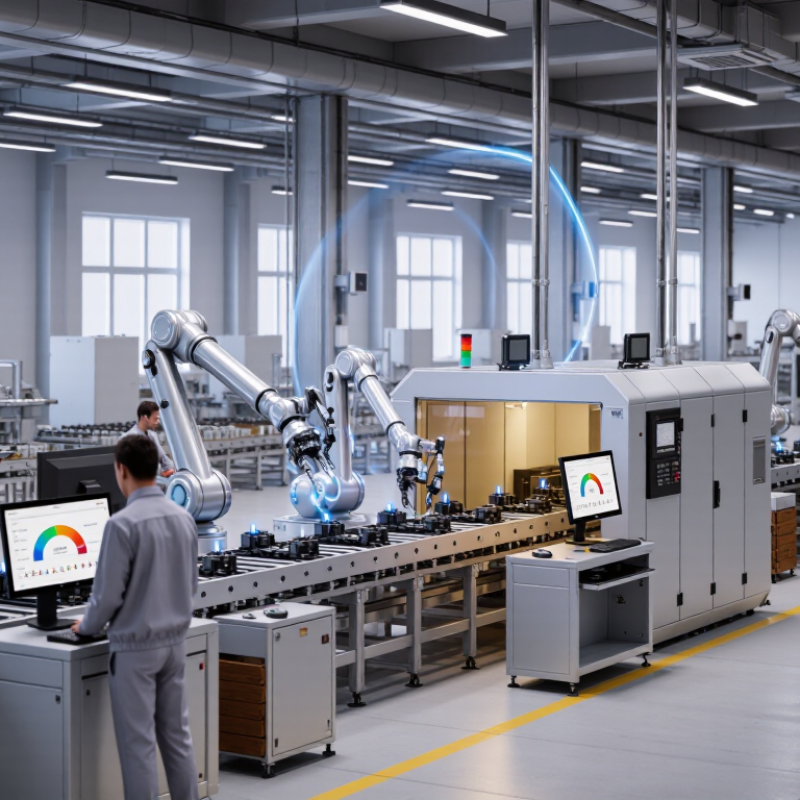
China’s automation sector is changing how factories use energy, materials, and labor. On a production line, a well-tuned robotic arm can reduce idle time, while machine-vision sensors may catch defects before products are discarded. These gains are not automatic. Poor integration can add complexity without reducing a plant’s footprint.

This introduction frames a guide to ten companies associated with sustainable automation in China. The focus is practical: industrial robotics, smart manufacturing software, motion-control systems, machine vision, and energy monitoring. A company’s relevance depends not only on its products, but also on how those products perform in real operating conditions. Useful indicators include measurable energy savings, equipment uptime, material efficiency, system compatibility, and clear customer documentation. Claims should be checked against company disclosures, product specifications, and independent reporting where available.

No ranking can capture every factory’s needs. A solution suited to a large automotive plant may be too costly or complex for a smaller workshop. Sustainability claims also deserve careful scrutiny: “smart” equipment is not automatically low-carbon, and results vary with installation, maintenance, and electricity sources. That is worth remembering. The companies profiled here offer a starting point for comparison, not a guarantee of environmental performance. Readers should verify current capabilities and assess each system against their own production data, safety requirements, and long-term operating costs.
Top 10 Sustainable Automation Companies in China?

Defining Sustainable Automation in China

Defining sustainable automation in China means looking beyond robot counts. The International Federation of Robotics reported 276,288 industrial robot installations in China in 2023, about 51% of global installations. Scale matters. Each automated line also uses electricity, compressed air, sensors, and replacement parts. A robot that runs quickly but sits idle between orders may raise energy use without improving output.

The International Energy Agency’s Energy Efficiency 2023 report estimates that industry consumes roughly 37% of global energy. For a Chinese factory, sustainability therefore needs measurable operating targets: kilowatt-hours per finished unit, material scrap, compressed-air leaks, and equipment downtime. Operators can compare these figures across shifts, then adjust motion paths, standby settings, and maintenance schedules. Not just speed. Sustainable automation also considers repairability and equipment life, since frequent replacements carry material and energy costs. The numbers are useful, but they do not tell the whole story; production mix and product quality can distort comparisons. A meaningful assessment should track performance over time, using consistent boundaries and verified meter readings.
Criteria for Evaluating Sustainable Automation Companies

Evaluating sustainable automation companies requires more than counting robots or quoting energy savings. The International Energy Agency’s Energy Efficiency 2023 report estimates that industry accounts for about 37% of global energy use. That makes energy per unit of production a useful starting point. Ask for measured results, not just projections: kilowatt-hours per cycle, idle power during night shifts, and compressed-air losses across a production line. Small leaks matter.

Disclosure is another test. The International Federation of Robotics reported 276,288 industrial robot installations in China in 2023, around 51% of global installations. That scale makes lifecycle performance important. Check whether a supplier reports operational emissions, tracks key upstream materials, and designs equipment for repair, upgrades, and reuse. A replacement drive should not require scrapping an entire control cabinet. Look for consistent measurement boundaries; figures from different factories can be hard to compare.

Safety and worker experience belong in the assessment too. Review risk assessments, maintenance access, training plans, and whether operators can safely intervene when a line stops. Ask for evidence from operating sites, including energy data before and after installation. The awkward part: a faster cycle may increase energy use per hour, even while lowering energy per unit. No single metric settles it. A transparent company should explain that trade-off, including where its data remains incomplete.

Top 10 Sustainable Automation Companies in China

China’s sustainable automation field spans robot makers, control-system integrators, machine-vision specialists, and energy-management providers. A useful Top 10 comparison should examine documented performance, not promotional claims. Look for audited energy data, installation records, safety procedures, and service coverage. That matters. In a food plant, a well-tuned conveyor may reduce idle motor time while keeping washdown routines practical. In an electronics workshop, vision inspection can limit rework and material waste.

Strong suppliers also explain how their systems connect with older equipment. They should offer maintenance training, spare-parts plans, and clear estimates of energy savings. Still, trade-offs remain. Automation can shift energy use rather than eliminate it, and sensors need calibration. Buyers should ask for baseline figures, measurement periods, and results from comparable sites. A credible shortlist may include firms serving robotics, smart logistics, process control, and factory software, but rankings vary by sector and project scale. Some public data is incomplete; that is worth admitting. Independent verification and careful site visits help distinguish durable gains from neat dashboards. The best partner is not always the one with the largest installation. It is the one that can demonstrate safer work, lower waste, and reliable output over time.

Key Technologies and Industries Served

China’s sustainable automation story is less about robots alone and more about how factories use energy, materials, and data. The International Federation of Robotics reported 276,288 industrial robot installations in China in 2023, around 51% of global installations (World Robotics 2024). That scale makes efficient motion control, regenerative drives, and smart scheduling important. Machine vision can reduce inspection errors; predictive maintenance can prevent a small vibration from becoming a costly line stoppage. Not every upgrade saves energy, though. Poorly tuned systems can simply run faster and waste more power.

Key applications include battery production, electronics, automotive parts, food processing, and warehouse logistics. Battery lines use precise handling and inspection to limit material defects, while logistics systems coordinate conveyors and autonomous mobile equipment. Digital twins can help operators test production changes before altering real machinery. The International Energy Agency estimated that industry used about 37% of global energy in 2022 (Energy Efficiency 2023), underscoring the value of measuring energy per unit produced. Useful indicators include idle-time power, scrap rates, and compressed-air losses. The data can be messy. Factories may also struggle to connect older equipment with newer monitoring systems.

Environmental Impact and Future Developments

Sustainable automation in China is increasingly judged by what happens beyond production speed. Efficient motors, variable-speed drives, and smart controls can reduce electricity use on factory floors. A well-tuned system may also cut scrap by catching defects before entire batches are wasted. Small changes count: fewer rejected metal parts, less compressed-air leakage, and shorter idle periods between shifts. That matters.

But automation also carries an environmental cost. Robots, sensors, and control equipment require metals, electronics, and energy to manufacture and operate. A faster production line is not automatically a cleaner one. Companies need to track electricity use, material waste, equipment lifespan, and repair rates—not just output per hour. Measurement can be imperfect, and reported savings may depend on the factory’s original conditions.

Future development is likely to focus on real-time energy scheduling, repairable equipment, and systems that work flexibly with renewable power. Better forecasting could shift energy-intensive tasks to lower-demand periods, where local grids allow it. Modular components may extend service life instead of forcing a complete replacement. Yet efficiency gains can encourage factories to produce more, offsetting some benefits. That tension deserves scrutiny. Automation’s environmental value depends on transparent data, practical maintenance, and targets that include total resource use.

Top 10 Sustainable Automation Companies in China? – Environmental Impact and Future Developments

Scope and data note: Comparable, independently verified environmental data for individual automation companies is not consistently available in the public domain. To avoid inventing company-level rankings or results, the table below presents ten relevant automation sector profiles in China, without company or brand names. Environmental contributions describe potential mechanisms; they are not claims of measured savings by specific firms.

No. Anonymized automation sector Environmental impact pathway Evidence and measurement to look for Likely future development
1 Industrial robotics and flexible manufacturing Robots can improve process consistency and reduce defective parts, rework, and material scrap. Their electricity use must also be included in any net-impact assessment. Measure scrap rate, first-pass yield, electricity use per unit, and robot-system standby consumption before and after deployment. More energy-aware motion planning, efficient drives, and production scheduling that reduces idle running.
2 Factory energy-management and control systems Monitoring and automated control can identify avoidable electricity use and coordinate equipment with production demand. Track metered energy consumption per unit of output, peak demand, and the share of energy use covered by sub-metering. Greater use of connected meters, real-time optimization, and integration with on-site renewable generation and storage.
3 Building automation for industrial and commercial facilities Automated heating, ventilation, air conditioning, and lighting controls can reduce energy use when systems are properly commissioned and maintained. Compare weather-adjusted energy use, operating hours, indoor conditions, and equipment efficiency against a documented baseline. More fault detection, occupancy-aware control, and coordination between building systems and electricity tariffs.
4 Water-treatment and wastewater process automation Instrumentation and process control can help operators manage treatment conditions and avoid unnecessary pumping, aeration, or chemical dosing. Measure electricity per volume treated, water-quality compliance, chemical use, and water reuse rates. Improved sensor reliability, predictive process control, and tighter integration of water reuse with industrial operations.
5 Smart-grid and power-system automation Grid monitoring and control support reliable electricity delivery and can help balance variable generation and changing demand. Assess interruption duration, technical losses, renewable-energy curtailment, and the availability of demand-response capacity. Expanded digital monitoring, flexible demand, storage coordination, and automation for distributed energy resources.
6 Warehouse and logistics automation Automated storage, picking, and routing can improve space use and reduce unnecessary handling; environmental benefits depend on facility energy and transport patterns. Track electricity per order, packaging material per shipment, vehicle distance, load utilization, and damage or return rates. More integrated warehouse-and-transport planning, efficient material-handling equipment, and electrified internal fleets.
7 Precision agriculture and greenhouse control Sensors and automated irrigation can support more targeted water and input use, subject to local crop, soil, and climate conditions. Measure water and fertilizer use per unit of harvested output, crop yield, and energy use for pumping or climate control. More site-specific sensing, decision support, and efficient control of irrigation and protected-crop environments.
8 Automated sorting and recycling systems Automated identification and sorting can help separate recyclable materials and improve feedstock quality for recycling. Record material recovery rate, contamination rate, reject fraction, throughput, and energy use per tonne processed. Better sensor-based identification and process integration to handle more complex material streams.
9 Industrial process control and optimization Control systems can stabilize production and help reduce excess heat, raw-material losses, and off-spec output in energy- and material-intensive processes. Use process-specific measures such as energy and material input per tonne of product, yield, emissions, and product quality. Broader use of advanced process analytics, predictive maintenance, and optimization across connected production stages.
10 Automation equipment lifecycle and maintenance services Maintenance and refurbishment can extend equipment life and prevent performance losses; responsible end-of-life handling can support material recovery. Track equipment lifetime, repair and reuse rates, spare-parts use, maintenance-related downtime, and end-of-life recovery. More repairable designs, condition-based maintenance, and documented take-back or recycling processes.

China market context: The International Federation of Robotics reported 276,288 industrial robot installations in China in 2023, equivalent to 51% of global installations that year (IFR, World Robotics 2024). This is a measure of robot adoption, not a measure of environmental performance or company sustainability.